
Vandaag of morgen in huis

Kwaliteit gegarandeerd

Welkomstaanbiedingen ontgrendelen: GRATIS bezorging | Tot 80% korting | Gratis 30 dagen JoyPlus-proefperiode
Download de app
Wireless Bluetooth earbuds are handy for listening to music and podcasts, making calls, joining online meetings and commuting. However, it can be difficult to compare deals properly. A low price may look tempting, but the fit, microphone or battery life may disappoint in everyday use.
Look out for these three common pitfalls:
Most true wireless earbuds are in-ear models with silicone tips. These partially seal the ear canal, which can help reduce background noise. A good fit also means you’re less likely to keep turning up the volume.
An open-ear or ear-clip model, such as the Lenovo LE302, lets in more background noise. This can be useful in the office or while out walking, but the sound and bass may feel different from those of a closed in-ear model.
When buying, check:
Manufacturers often quote total battery life including the charging case. So check both figures:
For example, according to the product specifications, the Redmi Buds 6 Play offer up to 7.5 hours per charge and 36 hours including the case. The Baseus Bass EP10 Pro is quoted at around 11 hours per charge at 50% volume and approximately 55 hours including the case. Actual use may vary depending on volume, codec, calls and noise cancellation.
ANC earbuds use active noise cancellation to counter certain background sounds. This works particularly well with constant noise, such as train engines or aircraft noise. Voices and sudden sounds may not be completely filtered out.
It’s also worth knowing the difference between:
According to the product description, the Baseus Bass EP10 Pro has six microphones and adaptive hybrid ANC. The MINISO MS106 is also listed as having six microphones and adaptive noise cancellation. This information comes from the brands’ product descriptions; actual performance depends on fit, surroundings and device.
Read an IP rating literally. IPX4 is designed to protect against splashes and sweat. IPX5 offers protection against water jets under certain test conditions. IP55 combines protection against dust with protection against water jets. None of these ratings means that the charging case automatically has the same protection. Always check whether the rating applies to the earbuds, the case or both.
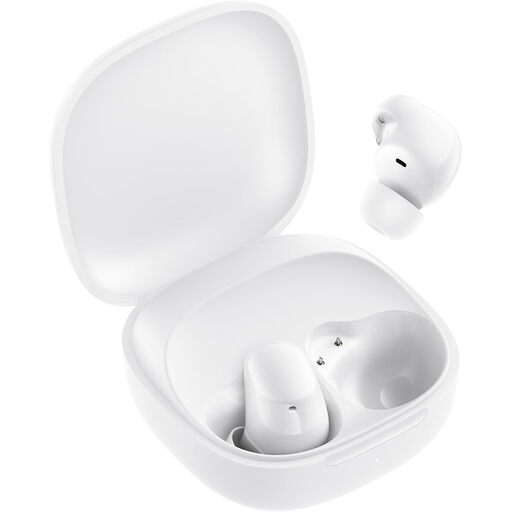
Why it suits this profile: A straightforward choice for everyday listening, podcasts and short phone calls, without extra features you may not use.
The product specifications list 7.5 hours of playback separately from 36 hours with the charging case. IPX4 is also listed for the earbuds only, not the case.
Bluetooth 5.4, USB-C, a 10 mm driver and a weight of 3.6 grams per earbud, according to the product information.

Why it suits this profile: Designed for users who value adjustable audio, ANC, call quality and integration with compatible Galaxy devices.
The product specifications break down the battery life: up to 6 hours with ANC and 7 hours without ANC, with a total of 26 or 30 hours using the case.
According to the product information: two-way speakers, 24-bit/96 kHz audio, six microphones, IP57 and wireless charging.
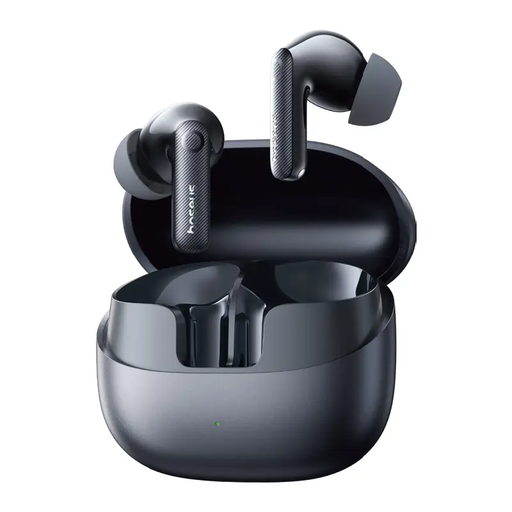
Why it suits this profile: Suitable for commuting, long listening sessions and calls in places where noise cancellation is useful.
The manual quotes around 11 hours per charge at 50% volume. The IP55 rating offers splash resistance, but the earbuds are not designed to be submerged.
Bluetooth 5.4, support for SBC, AAC and LDAC, USB-C, six microphones and a quoted total battery life of around 55 hours.
We’ve put together a complete, up-to-date list of products that meet these strict selection criteria and the applicable European safety regulations.
Open the charging case and take out the earbuds. Turn on Bluetooth on your smartphone and select the product name from the list of available devices. If you’ve already paired the model before, it will often connect automatically. If it doesn’t, remove the old pairing and follow the reset instructions in the manual.
Their lifespan depends on battery use, charging cycles, storage and care. Battery capacity decreases over time. Keep the earbuds dry, clean the charging contacts carefully and avoid leaving the case for long periods in extreme heat or cold. You should also avoid using them at high volume for extended periods.
That depends on the fit and IP rating. For light exercise, water-resistant earbuds with a rating such as IPX4, IPX5 or IP55 may be suitable for sweat and light rain. Always check whether the protection applies to the earbuds only. None of the models mentioned should be submerged unless they have an explicit swimming rating.
