
Vandaag of morgen in huis

Kwaliteit gegarandeerd

Welkomstaanbiedingen ontgrendelen: GRATIS bezorging | Tot 80% korting | Gratis 30 dagen JoyPlus-proefperiode
Download de app
Wireless Bluetooth earbuds are useful for listening to music, making phone calls, travelling and commuting. However, many models look more similar on paper than they do in everyday use. For example, a long battery life may only apply when noise cancellation is switched off. A high IP rating also does not automatically mean that you can swim with your earbuds.
As a Joybuy Product Recommendation Officer, I filter product information for practical details. Pay particular attention to these three common pitfalls:
Noise-cancelling earbuds and ANC earbuds use microphones and electronics to reduce ambient noise. According to Soundcore’s product information, the A30i can reduce noise by up to 46 dB; Baseus states an adaptive hybrid ANC rating of up to 50 dB for the Bass EP10 Pro. These are brand or product claims, not a guarantee of the same experience in every situation.
For commuting, the combination of ANC and a good fit is particularly important. A transparency mode can also be useful when you want to continue hearing announcements, traffic or colleagues. Do not use noise cancellation when awareness of your surroundings is important, for example when cycling or crossing the road.
For calls, wireless earbuds with a microphone are more practical when they have multiple microphones and some form of voice or noise reduction. Do not just look at the number of microphones; also consider the conditions in which you make calls. Wind, traffic and a busy office can affect speech clarity.
Always check two figures:
For example, the Soundcore A30i states 7 hours of listening per charge and up to 24 hours with the case. The Baseus Bass EP10 Pro quotes 11 hours at 50% volume and up to 55 hours including the charging case. The JBL Wave Buds 2 are listed as offering up to 40 hours in total when ANC is switched off. According to the product specifications, ANC, volume, codec and phone calls can affect the actual battery life.
If you travel frequently or work long days, earbuds with long battery life and a USB-C connection are a worthwhile choice. Fast charging is particularly useful if you regularly forget to charge the case. Also check how long a full charge takes and whether a cable is included.
The right fit determines comfort, sound isolation and stability. Traditional in-ear earbuds partially seal the ear canal and are usually supplied with multiple ear-tip sizes. Clip-on and open-ear models apply less pressure, but generally provide less isolation from ambient noise.
Pay attention to the IP code:
Bluetooth 5.3, 5.4 or 6.0 may sound appealing, but a newer version number does not automatically guarantee better sound. Also check support for multipoint, the audio codecs used and compatibility with your phone or laptop. True wireless earbuds work completely without a cable between the two earbuds; this is convenient, but makes the charging case essential.
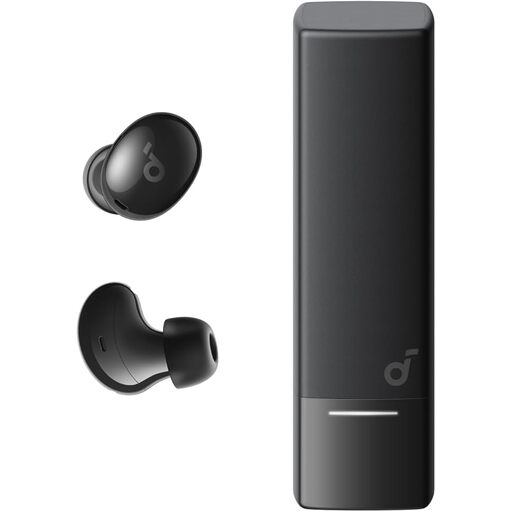
Why it suits this profile: This compact model combines in-ear comfort, Bluetooth 5.4 and active noise cancellation for everyday use, travelling and studying.
The product information states both the playtime per charge and the total duration with the charging case. The IP54 rating also makes it clear that this is protection against splashing water and dust, not waterproofing.
According to the product specifications: up to 7 hours of playback, up to 24 hours with the case, four built-in microphones and multipoint connectivity.

Why it suits this profile: Designed for listeners who value high resolution, extensive settings and integration with Galaxy devices.
The stated battery life is listed separately for ANC on and off. IP57 is also clearly specified; this does not replace the instruction not to submerge the product for extended periods.
According to the product specifications: 2-way speakers, 24-bit/96 kHz audio, six microphones, Bluetooth 6.1 and wireless charging.
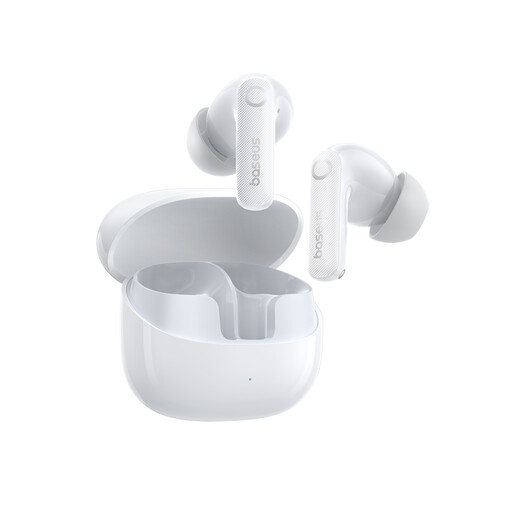
Why it suits this profile: An option for long working days, travelling and users who want clear conversations and a high total battery capacity.
The specifications state the test conditions for the battery life: 11 hours at 50% volume. The IP55 rating is described as splash-resistant, so it does not mean the earbuds are suitable for swimming.
According to the product information: up to 55 hours with the case, LDAC support, six microphones, Bluetooth 5.4 and USB-C charging.
We have put together a complete, up-to-date list of products that fully meet these strict selection criteria and the applicable European safety regulations.
First, charge the earbuds and the case. Then open your phone’s Bluetooth settings, put the earbuds into pairing mode and select the product name. A first-time connection may require a manual or app. If pairing does not work, remove the previous Bluetooth connection and try again.
Battery capacity decreases over time, particularly if you frequently run the battery completely flat or expose the product to high temperatures. Store the earbuds in the charging case, keep the USB-C port dry and use a suitable charger. Overall lifespan also depends on charging cycles, maintenance and daily use.
That depends on the fit and the IP rating. For fitness and light rain, models with IPX4, IP54 or IP55 are, according to the stated product information, intended to withstand splashing water. Avoid submersion and heavy rain. For running outdoors, an open-ear model may be more practical because it allows you to remain more aware of traffic and other sounds around you.
