
Vandaag of morgen in huis

Kwaliteit gegarandeerd

Welkomstaanbiedingen ontgrendelen: GRATIS bezorging | Tot 80% korting | Gratis 30 dagen JoyPlus-proefperiode
Download de app
Wireless Bluetooth earbuds may look alike, but they differ greatly in fit, noise isolation, battery life and water protection. A low price can be tempting, but the wrong choice can quickly lead to buds that fall out while you’re running, poor call quality or a battery that doesn’t last long enough.
So don’t focus only on buzzwords like “AI”, “noise cancelling” or “long battery life”. Check which specifications are actually listed and whether they suit how you’ll use them here in the UK: on the train, at the office, while studying or outside during a rainy run.
A quoted playtime often applies per earbud, with the supplied case included, or at a specific volume level. ANC can shorten runtime. Compare:
A model boasting 55 hours’ total battery life sounds generous, but always check whether this figure refers to use without ANC and under the manufacturer’s conditions.
An IP rating consists of two digits. The first covers dust protection, the second water. At IPX4, it typically means splash resistance; immersion isn’t allowed. IPX5 is about water jets, but even then swimming isn’t part of the intended use. The charging case may also have a lower or no water rating.
For sports earbuds, it’s important to check whether only the earbuds are protected. Keep the case dry and only charge a damp port once it’s completely dry.
Active noise cancellation, also known as ANC, uses electronics to reduce ambient noise. ENC or microphone noise suppression is primarily intended to transmit your voice more clearly during calls. They’re not the same functions.
According to product information from various brands, ANC modes, transparency modes and microphones can support your listening or calling experience. Treat these claims as the manufacturer’s specifications, not a guarantee of the same results in every environment. In a busy train, for example, the experience can differ from that in an office.
True wireless earbuds are completely wireless and are usually stored in a charging case. In‑ear models partially seal the ear canal and can therefore be suitable for travel or a quiet work environment. The right ear tip is crucial for comfort and noise isolation.
An open‑ear design or clip‑on model sits on or around the ear. You’ll stay more aware of ambient sound. That can be pleasant when walking or exercising, but music may sound less isolated in busy surroundings. A bone conduction headphone uses a different construction and shouldn’t automatically be equated with a traditional open‑ear model.
When cycling, crossing the road or working with machinery, always rely on your own awareness and follow safety instructions. ANC and music can make ambient sounds less audible.
Bluetooth 5.3 earbuds and Bluetooth 5.4 models often offer a modern wireless connection and low power consumption according to the product specifications. Final stability also depends on your phone, tablet or laptop, distance and environment.
Look for features that matter to you:
Bluetooth 5.3 or 5.4 alone says nothing about sound quality. Also consider supported codecs, drivers and the fit.
If you often join online meetings or make calls, earbuds with a microphone are a smart choice. A model with multiple microphones can, according to the manufacturer, better distinguish your voice from background noise, but your conversation partner, wind and microphone placement still matter.
Check whether the touch controls can answer and end calls. A physical button can be more practical when you’re wearing gloves or exercising outdoors.
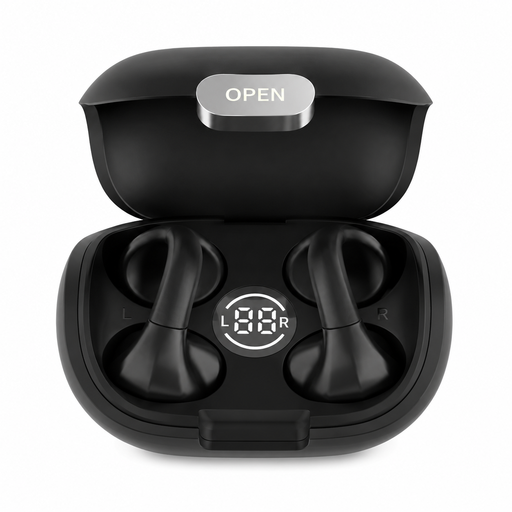
Why it suits this profile: This clip‑on model is aimed at everyday use, travel, work and fitness. The product specifications list roughly 5 to 7 hours of playtime and Bluetooth 5.4.
The stated battery life and Bluetooth version make comparison easier than with models that only claim “long battery life”. Note that the description doesn’t mention an IP rating.
Clip‑on design, touch controls, a digital display on the case and a stated range of up to 15 metres.

Why it suits this profile: The product information lists ANC, a 2‑way speaker system, Bluetooth 6.1, six microphones and support for wireless charging.
The quoted playtime is split between use with and without ANC. The IP57 rating and charging methods are clearly stated too; swimming isn’t covered.
24‑bit/96 kHz audio as per the product specifications, 360 Audio, multipoint features and a quoted total playtime of up to 30 hours without ANC.
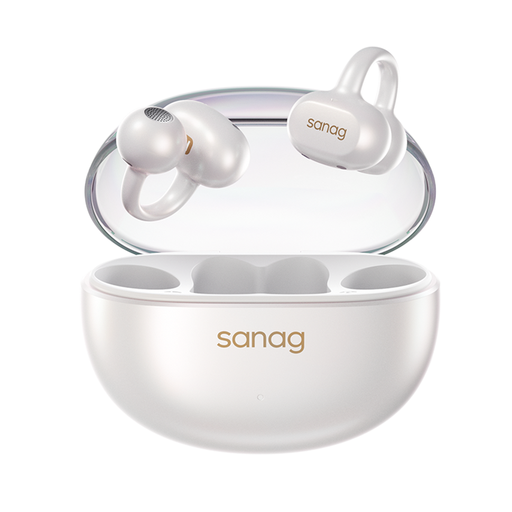
Why it suits this profile: The open‑ear design is intended for users who want to stay aware of their surroundings during sport or everyday use.
The description explicitly states the on‑ear, non‑in‑ear design. The manufacturer mentions ANC support, but check the manual for the available modes and don’t use ANC when ambient awareness is required.
Ear‑clip fit, touch controls and support for music, calls and voice assistants.
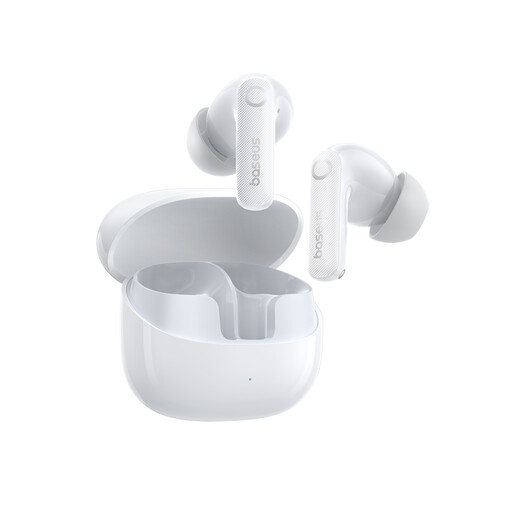
Why it suits this profile: This in‑ear model combines a stated long listening time with ANC, multiple microphones and an IP55 rating for splash and dust resistance.
The product specifications separately list 11 hours of listening per charge and 55 hours with the case at 50 per cent volume. IP55 isn’t permission for immersion or heavy rain.
Bluetooth 5.4, support for SBC, AAC and LDAC, USB‑C and a stated range of 10 metres.
We’ve put together a complete, up‑to‑date list of products that fully meet these strict selection criteria and comply with current European safety regulations.
Charge the earbuds and case first. Open the case, switch on Bluetooth on your phone and select the product name in the list of available devices. If they were paired before, they may connect automatically. If not, remove the old pairing and follow the reset instructions in the manual.
Battery life per charge for many models ranges from a few hours to around eleven hours, depending on volume, codec and ANC. The total usage time is extended by the charging case. Physical lifespan depends on charge cycles, moisture, drops and cleaning. Keep the earbuds dry and charge them with a suitable USB‑C charger.
Besides the purchase price, there are usually few ongoing costs. Do allow for possible replacement of the charging case, earbuds or ear tips, and for power consumption during charging. A model with longer battery life can be practical if you don’t want to top up regularly on the go, but always compare the quoted figures under the same conditions.
