
Jazz transcribers
If you listen to passages repeatedly to follow the instruments, phrasing and timing, first check that the headphones fit well and connect to your playback device. Judge the sound using your own recordings.


If you want to replay passages frequently without relying on a battery, closed-back wired headphones are a sensible option, provided they’re compatible with your playback device. If background noise affects your concentration, compare a model with noise cancellation too. Check the fit, whether you can use them with a flat battery, and how to handle moisture. Noise cancellation won’t make everything silent, and specifications can’t tell you how you’ll hear the finer details in jazz.
If you listen to passages repeatedly to follow the instruments, phrasing and timing, first check that the headphones fit well and connect to your playback device. Judge the sound using your own recordings.
If background noise distracts you, compare the fit, noise cancellation and whether you can hear ambient sounds. Turning up the volume isn’t necessarily the answer.
If you can’t charge your headphones regularly, weigh up wired use against the stated battery life. Repairability may also matter if you want to use them for longer.
A good fit if: you often rewind passages and your playback device has a compatible audio output.
Trade-off: you’re reliant on the cable, but don’t need a Bluetooth battery for this way of listening.
A good fit if: background noise affects your concentration and you can charge the headphones.
Trade-off: noise cancellation doesn’t guarantee silence. Check the fit and how well it reduces noise similar to what you’ll encounter.
A good fit if: replaceable parts are important; Fairphone says the redesigned Fairbuds XL has them.
Trade-off: check the version and its water-resistance rating. IP54 doesn’t mean it’s suitable for every wet situation.
| What to consider | What should you check? | Who is this important for? |
|---|---|---|
| Details when listening repeatedly | Fit and connection; compare the sound with your own recording. | If I often rewind passages, I want to be able to follow the instruments and timing clearly. Around 31% of consumers prioritise detail when listening repeatedly. |
| Concentration amid background noise | Compare the fit, noise cancellation and any ambient sound mode. | If noise from other campers or traffic distracts me, I want to listen in greater peace without constantly turning up the volume. Around 25% of consumers prioritise reducing distracting background noise. |
| Listening without frequent charging | Check whether the headphones can be used wired, and the stated playback time with the features you want to use. | If I don’t always have access to a charging point, I want to be able to keep listening. Around 19% of consumers give listening without frequent charging top priority. |
| Fit and moisture | Assess the comfort and check the water-resistance rating for the exact version. | If I listen for a long time and use my headphones outdoors, I want a comfortable fit and to know how to handle moisture. Around 13% of consumers prioritise comfort and use in damp conditions. |
| Longevity and parts | Check which parts can be replaced and which version they’re compatible with. | If I want to use my headphones for longer, replaceable parts matter to me. Around 12% of consumers give repairability top priority. |
The stated maximum may depend on how the headphones are used. Fairphone lists different playback times for the redesigned Fairbuds XL with noise cancellation on and off.
Compare battery life using the same settings, and check whether you’ll be able to charge the headphones during your stay.
How much noise is reduced depends on the type of background noise and the fit. The World Health Organization recommends listening at a safe volume.
Check the fit and noise reduction, keep the volume down, and use suitable protection if your surroundings are genuinely loud.
For using the Fairbuds XL with a 3.5mm source, Fairphone specifies a separate cable.
Check your player’s connection and whether the cable you need is included with the version you’ve chosen.
Fairphone says the redesigned version has different drivers. The model name alone doesn’t tell you which edition it is.
When buying the headphones or ordering parts, check which version you have.
The closed-back, wired ATH-M50x is an option if you want to listen without Bluetooth and your playback device has a compatible output.
The closed-back, wired HD 620S is an alternative if you want to listen using a cable.
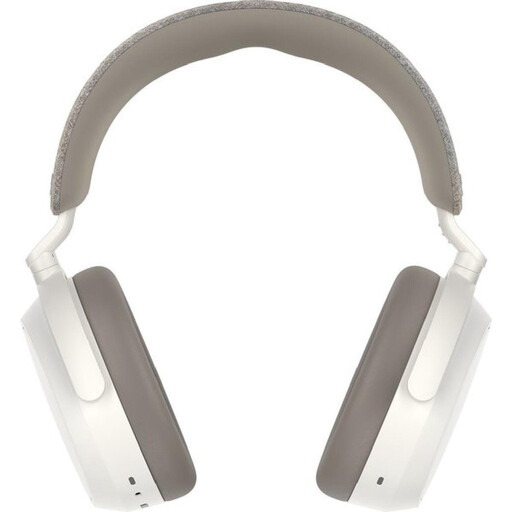
According to Sony, the WH-1000XM6 combines wireless listening and noise cancellation with wired, passive operation.
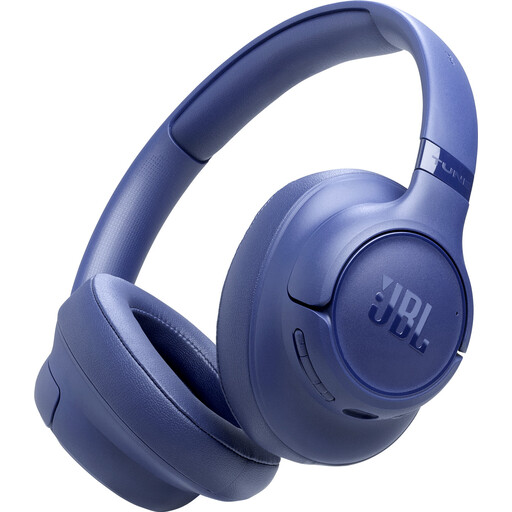
The Tune 770NC is a foldable wireless over-ear headphone with noise cancellation.
The redesigned Fairbuds XL is worth considering if repairability matters as much as wireless listening.
This selection includes wired headphones and wireless over-ear models. Compare the connections, noise cancellation and stated battery details with your playback device and the conditions at the campsite.
 No image available
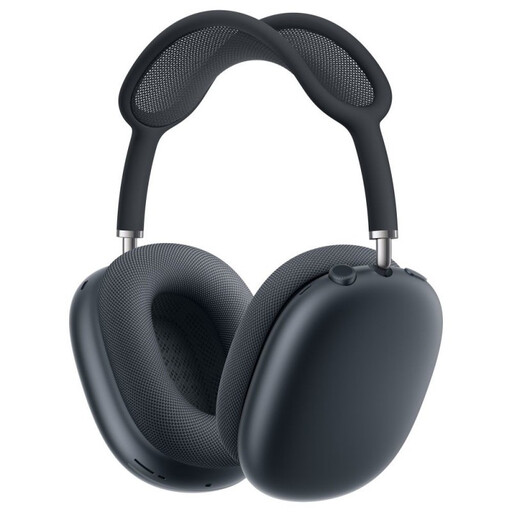
Compare noise cancellation with the option to hear ambient sounds. The product information lists active noise cancellation, Transparency mode and Adaptive Audio.
 No image available
A Bluetooth headphone to compare wireless listening and battery use. The product information lists up to 76 hours of playback and a foldable design.
 No image available
Compare wireless listening with noise cancellation and wired passive use. The product information lists adaptive noise cancellation, a Transparency mode, up to 60 hours of playback and a 42mm transducer system.
 No image available
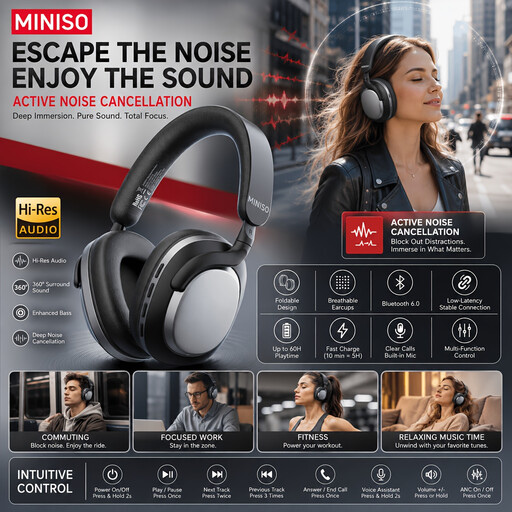
A wireless over-ear model to compare noise cancellation with other ways of listening. The product title lists a battery life of 24 hours.
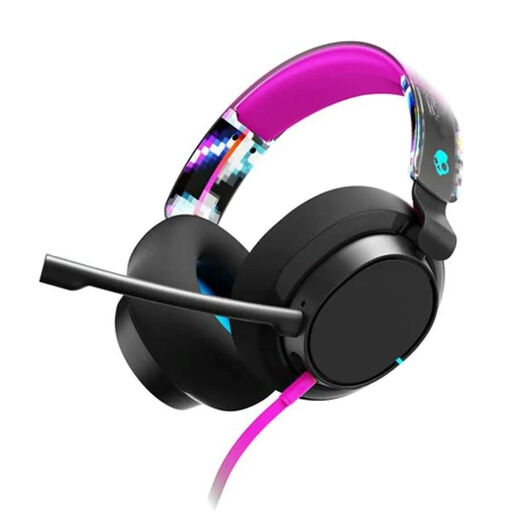 No image available
A wired over-ear headset for anyone who doesn’t want to rely on Bluetooth. The product information lists USB-C and 3.5mm connections; check which output is compatible with your playback device.
No, don’t expect complete silence. The Consumers’ Association tests noise reduction separately; compare the fit and the kind of background noise you want to reduce at your campsite.
Don’t automatically turn up the volume. The World Health Organization recommends well-fitting headphones and noise cancellation to reduce the need for higher volume. As an example, it recommends a maximum of 40 hours a week at an average of 80 dB. This is listening advice, not a measured sound level or a legal campsite limit.
It depends on the model and connection. Sony lists passive operation and an audio cable for the WH-1000XM6. Fairphone lists USB-C audio for the redesigned Fairbuds XL and specifies a separate cable for 3.5mm sources. Check the exact model and the cable you need before buying.
Follow the instructions for your model. For the WH-1000XM6, Sony recommends wiping away sweat and raindrops and leaving the headphones to dry at room temperature. An IP54 rating on another model doesn’t mean all headphones have the same protection.
According to the Government of the Netherlands, you should contact the seller if there’s a problem, not the manufacturer. A manufacturer’s warranty is additional; the expected lifespan depends, among other things, on the product and the sales information. This isn’t a fixed Dutch warranty period for every pair of headphones.