
Vandaag of morgen in huis

Kwaliteit gegarandeerd

Welkomstaanbiedingen ontgrendelen: GRATIS bezorging | Tot 80% korting | Gratis 30 dagen JoyPlus-proefperiode
Download de app
For many garden owners, burying or pegging down hundreds of metres of boundary wire is the biggest hurdle to purchasing a robotic mower. The arrival of the wire-free robotic mower promises to end this hassle. However, this new technology also introduces new pitfalls. Before you invest, it's crucial to know what to look for to avoid a purchase you'll regret.
Many models are advertised with smart navigation, but in practice, this doesn't always work flawlessly. These are the three most common problems:
To make the right choice, it's helpful to understand the key specifications. These determine how well the automatic lawn mower will perform in your specific garden.
The method a mower uses to determine its position is crucial. Most models without a perimeter wire use one of these techniques, or a combination of them.
A combination of these technologies, such as RTK with Vision, often provides the most robust solution.
A traditional robotic mower gently bumps into an obstacle and changes direction. A modern wire-free robotic mower needs to be smarter. Advanced models use cameras with AI or 3D ToF (Time-of-Flight) sensors to recognise and avoid objects from a distance. This is a critical safety feature, especially in a garden where children or pets play. Check which types of objects the manufacturer claims it can recognise.
A smart lawn mower with an app is standard, but the software quality varies immensely. A good app allows you to easily:
Based on objective specifications, we have selected several models that suit different needs and gardens.
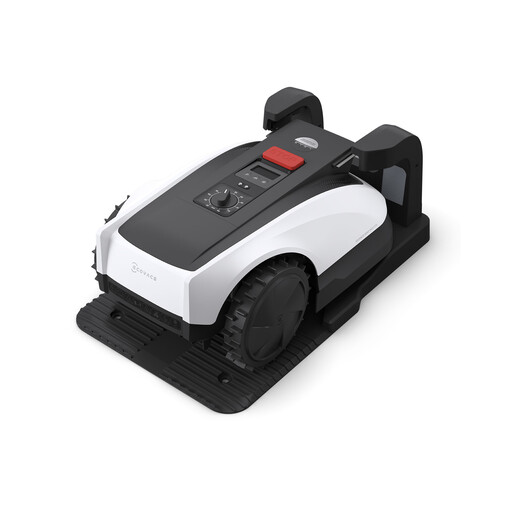
Why This Fits Their Persona: Ideal for those seeking a reliable, 'set-and-forget' solution for a medium-sized garden (up to 800m?) with trees, shrubs, and narrow passages.
The combination of RTK navigation and a Vision sensor ensures stable positioning, even with signal loss under trees (pitfall 1). The AIVI 3D obstacle detection technology recognises and proactively avoids objects (pitfall 2).
Automatic map creation via the app simplifies setup. The mower plans a logical, efficient mowing path in straight lines for a clean finish.
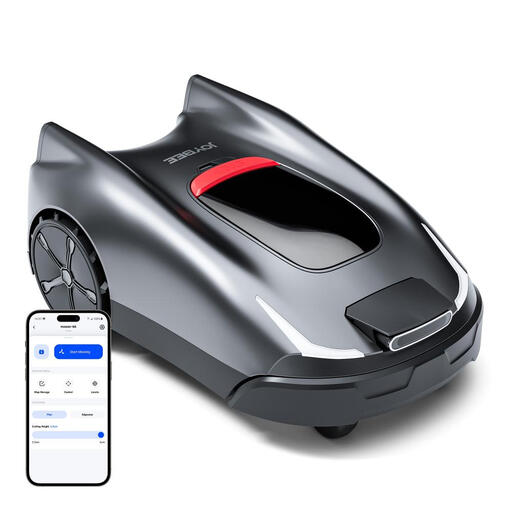
Why This Fits Their Persona: Suitable for homeowners with a very large garden (up to 3000m?) and steep slopes, who want the most advanced features and maximum control via an app.
The combination of RTK and VSLAM positioning provides centimetre-level accuracy (pitfall 1). The 3D ToF sensors and an auto-extending camera deliver advanced obstacle recognition (pitfall 2). The app allows for the management of up to 50 no-go zones (pitfall 3).
According to the manufacturer, it can handle slopes up to 45% (25 degrees) and has a large capacity. Its IPX6 water resistance allows for easy cleaning with a garden hose.
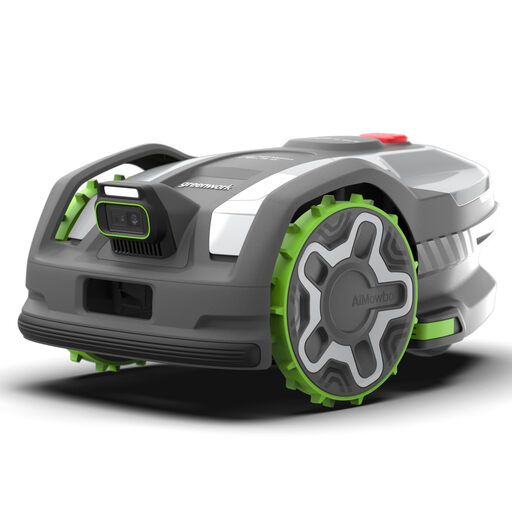
Why This Fits Their Persona: A great entry point into the world of RTK mowers for those with a standard to medium-sized garden (up to 600m?) who want the precision of RTK without paying a premium.
It uses an RTK-GPS system for precise virtual boundaries, which is more reliable than GPS-only models (pitfall 1). The app is designed for easy management of zones and mowing schedules (pitfall 3).
Offers solid RTK navigation at a competitive price. According to the manufacturer, the system adjusts mowing frequency based on the weather and operates relatively quietly at 58 dB(A).
We have compiled a complete, up-to-date list of products that meet these selection criteria and comply with current regulations.
The accuracy heavily depends on the technology used. Models with only GPS can have deviations of several metres. An RTK robotic mower that receives a correction signal from a base station can achieve an accuracy of 1-2 centimetres. This is comparable to the precision of a traditional mower with a boundary wire and is more than sufficient for a pristine lawn and for navigating precisely along edges and through narrow passages.
This is a valid concern, especially in gardens with many tall trees or buildings. The better models have a solution for this. They often combine RTK with other sensors, such as cameras (Vision) or an internal IMU (Inertial Measurement Unit). If the satellite signal is temporarily lost, the mower can continue its route for a short period based on this additional data until the signal is restored. This minimises the risk of the mower stopping or getting lost.
Generally, installing an RTK station is quite straightforward. You place the station in a location with a clear view of the sky, for example, on a pole in the garden or mounted on an exterior wall. You then pair the station with the mower via the app, which guides you through the process. It is important to follow the manufacturer's instructions for optimal placement, as this affects the performance of the entire system. It is significantly less work than laying a physical boundary wire.
