
Vandaag of morgen in huis

Kwaliteit gegarandeerd

Welkomstaanbiedingen ontgrendelen: GRATIS bezorging | Tot 80% korting | Gratis 30 dagen JoyPlus-proefperiode
Download de app
A perfectly manicured lawn without lifting a finger. That's the promise of a robotic lawnmower. But the reality of burying hundreds of metres of perimeter wire is a major deterrent for many people. The latest generation of the wire-free robotic mower solves this with smart navigation. However, not all wireless models are created equal. Many marketing promises lead to frustration and a lawn that looks worse than before.
Before you invest in this piece of electric garden equipment, it's crucial to understand the common pitfalls. This will help you avoid an expensive mistake.
automatic lawnmower must be smart enough to avoid toys left lying around, a forgotten garden hose, or a hedgehog. Cheaper sensors don't "see" these objects, resulting in damage to the mower, your belongings, or worse.smart lawnmower with an app is supposed to make your life easier. In practice, some apps are illogical, respond slowly, or make setting up virtual boundaries a frustrating chore. The convenience of "wire-free" quickly disappears.To bypass these pitfalls, it's helpful to focus on a few technical specifications that truly make a difference in your lawn care performance.
The way the mower finds its path is crucial. The two main technologies are RTK and Vision.
Look beyond just the navigation. The specifications must match your garden.
An cordless lawnmower is only as good as its battery. Pay attention to the ratio between runtime and charging time. A good mower can cut a significant portion of the lawn on a single charge and automatically returns to its charging station when needed. After charging, it resumes mowing where it left off.
Based on these criteria, we have selected several models that suit different user profiles.
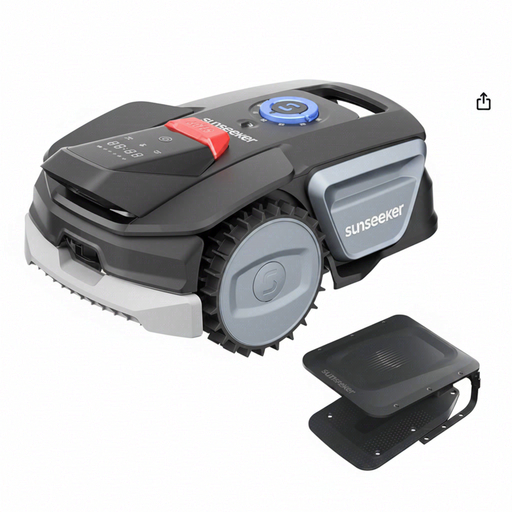
Why it's a match: A practical choice for those with a smaller garden (up to 300 m?) who want to avoid the hassle of perimeter wire. This model offers an accessible entry point into the world of wire-free mowing, without an overload of complex features.
This model avoids the pitfall of a complex setup. It uses an AI vision system for navigation and obstacle detection, which is sufficient for a straightforward garden and eliminates the need for an RTK base station.
Operation is focused on simplicity, with a 'one-click start' function via the app. Ideal for users who are primarily looking for convenience and a basic automatic mower.
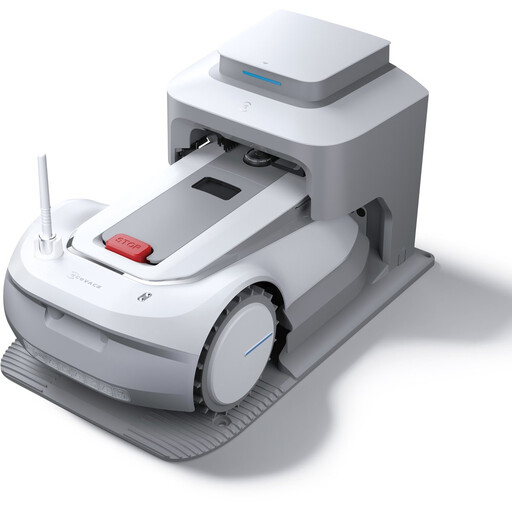
Why it's a match: For the owner of a medium-sized garden (up to 800 m?) who values precision and smart features. This model offers an advanced solution that goes beyond basic navigation.
Tackles the pitfall of inaccurate navigation with a system that combines navigation beacons and cameras. According to Ecovacs, this 'TrueMapping' system ensures reliable positioning, even in areas where a GPS signal is weaker.
Boundaries are set entirely via the app. The AIVI 3D algorithm is designed to accurately recognise and avoid objects, including moving pets.
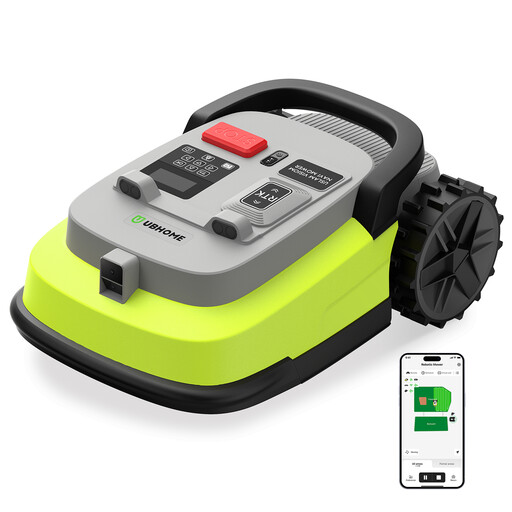
Why it's a match: Designed for large, challenging gardens with steep slopes, multiple zones, and many obstacles. The combination of a powerful motor and robust wheels makes it suitable for tougher terrain.
Addresses both navigation and obstacle pitfalls with a combined system of RTK for centimetre-level precision and AI Vision. According to the manufacturer, the system can recognise over 200 different object types, which minimises the risk of getting stuck or causing damage.
According to its specifications, it can handle slopes up to 55% and supports up to 15 separate mowing zones. This makes it highly suitable for gardens with a complex layout.
A robotic mower is a significant investment in your garden. If the choices above don't quite match your needs, be sure to check out our full range.
The accuracy heavily depends on the technology used. Models with RTK technology can operate with centimetre-level precision, provided the signal from the base station and satellites is strong. Systems that rely solely on cameras (Vision/AI) are generally good at recognising clear edges and larger obstacles. The most advanced mowers combine both techniques (fusion technology) for the most reliable results under varying conditions.
This is a valid concern, especially in gardens with many tall trees or buildings. The better models have a solution for this. A smart lawnmower with an app that combines RTK and vision can switch to its camera data to maintain its position or pause the mowing session until the signal is restored. Simpler models may stop or become disoriented, waiting for manual intervention.
The installation is different, but not necessarily more difficult than burying a perimeter wire. The most important step is placing the base station (the RTK antenna) in a location with a clear view of the sky, for example, on a wall, fence, or pole. Next, you map out the garden via the app. You typically do this by manually guiding the automatic lawnmower along the edges of your lawn one time. This process is generally significantly faster than physically laying a cable.
