
Vandaag of morgen in huis

Kwaliteit gegarandeerd

Welkomstaanbiedingen ontgrendelen: GRATIS bezorging | Tot 80% korting | Gratis 30 dagen JoyPlus-proefperiode
Download de app
A perfectly manicured lawn without lifting a finger. That's the promise of an automatic lawn mower. But anyone who has ever installed one knows the frustration: burying hundreds of metres of perimeter wire. A broken wire means hours of searching and repairing. Fortunately, a new generation has arrived: the wire-free robotic mower.
Before you invest in this new technology, it's important to know what to look for. There are a few common pitfalls that can quickly spoil the convenience.
To ensure you choose a model that delivers on its promises, there are a few technical specifications you need to check. These will determine whether you're buying a truly smart lawn mower or a source of new frustrations.
A wire-free robotic mower needs an advanced system to determine its position.
Don't just look at the maximum area, but also at how the mower handles complexity. Do you have a garden with separate front and back yards, or a narrow passage? Check if the model can manage multiple zones. For an average-sized garden, a robotic mower for 800m? is often a good guideline, but the ability to easily set up separate zones via the app is just as important.
The way a mower avoids obstacles is crucial for safety and for protecting your belongings.
Based on these criteria, we have selected a model that meets the needs of homeowners looking for convenience and precision.
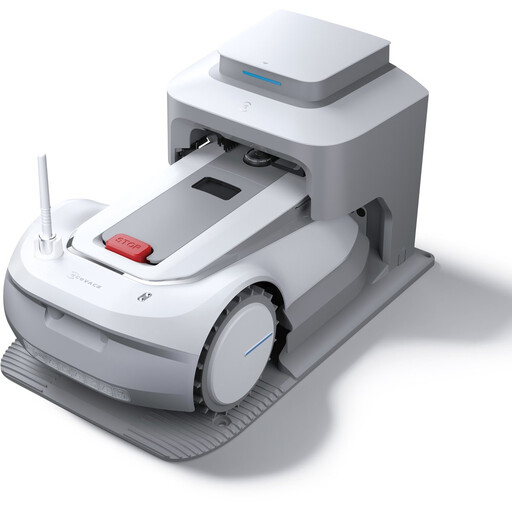
Why This Fits Their Persona: This model is designed for those who refuse to compromise. It's perfect for a garden up to 800m? with trees, play equipment, or multiple zones. The wire-free installation and advanced obstacle detection provide the convenience and peace of mind you expect from a premium automatic lawn mower.
ECOVACS combines visual navigation with localisation beacons, which the manufacturer claims provides centimetre-level positioning, avoiding the pitfall of inaccurate GPS. The AIVI 3D system is designed to proactively avoid objects rather than bumping into them. You set the boundaries via the app, which solves the hassle of clunky software.
Completely Wireless Setup: According to ECOVACS, installation is completed in about 20 minutes via the app.
Advanced Obstacle Detection: The AIVI 3D system is engineered to recognise and avoid people, pets, and objects.
We have compiled a complete, up-to-date list of products that meet these strict selection criteria and local regulations.
This is significantly faster than with traditional models. For a mower like the ECOVACS Goat G1-800, the manufacturer states that installation via the app takes about 20 minutes. This includes placing the navigation beacons and virtually mapping the garden, all without needing a spade.
Models with advanced systems are designed with safety as a priority. Systems that use AI and cameras, like AIVI 3D, are engineered to recognise and avoid common obstacles, people, and animals. It is always wise to read the manufacturer's safety instructions and check for certifications, such as the T?V Rheinland data protection certification that some brands offer.
Standard GPS provides a general location but can be inaccurate due to obstacles like trees or buildings. Navigation with a camera (visual navigation) allows the mower to "see" its environment, use landmarks, and detect obstacles in real time. The best results are often achieved with a combination of technologies, such as GPS enhanced with RTK and supplemented by cameras, for robust and reliable operation in complex gardens.
