
Vandaag of morgen in huis

Kwaliteit gegarandeerd

Welkomstaanbiedingen ontgrendelen: GRATIS bezorging | Tot 80% korting | Gratis 30 dagen JoyPlus-proefperiode
Download de app
A wine fridge can be useful if you want to store your wine neatly without creating a large wine cellar. However, not every model is suitable for every home. A compact wine fridge, for example, is ideal for a flat or office, while a larger wine storage cabinet offers more room for a collection.
When choosing a model, don’t just look at the bottle capacity or an attractive glass door. The actual interior space, temperature settings and positioning will determine whether the appliance works well for your situation.
A capacity of 12 or 33 bottles is generally based on standard wine bottles. Wider bottles, champagne bottles and bottles with unusual shapes take up more space. As a result, a 12-bottle wine fridge may hold fewer bottles in practice than the product title suggests.
So don’t just count your current stock. Leave some space between the bottles and check whether the shelves can be removed or adjusted.
A wine cabinet with a glass door lets you see the contents, but in itself says nothing about cooling performance. Check the stated temperature settings, the number of temperature zones and how the temperature is displayed.
According to a brand’s own research, a particular feature may be described as beneficial for wine. Don’t automatically view such a claim as a guarantee for every type of wine or storage environment. Focus instead on verifiable specifications and the conditions of use.
A 35-litre wine fridge may look compact, but it still needs sufficient space around it for ventilation. Do not place the appliance directly next to a radiator, oven or other heat source. Measure the following in advance:
For a smaller stock of wine, a small wine fridge with a capacity of around 35 litres is often a practical choice. The TCL WC035WBG0 is offered as a 12-bottle wine fridge with a capacity of 35 litres and a glass door. This makes this type of appliance interesting for a flat, home office or kitchen with limited space.
If you buy wine more frequently or want to store several bottles at once, you could consider a 33-bottle wine fridge. According to the product listing, the TCL WC097WBF0 has room for 33 bottles and a capacity of 97 litres. Do check that your bottle sizes match the interior layout.
A wine storage cabinet should allow you to set a temperature that suits your needs. Red, white and sparkling wines are not always served at the same temperature. A single-zone model is particularly practical when you store one type of wine at a time. Two zones can be useful if you want to keep different types separate.
Before buying, check:
Don’t choose solely on the basis of terms such as “climate cabinet” or “wine refrigerator”. The full specifications are more important than the marketing name.
A wine fridge in the living room, bedroom or office should ideally have a suitable noise level. Check the stated number of decibels. Also look at energy consumption and the energy rating on the energy label, where this information is available.
A glass door is practical for visibility, but exposure to light and the position of the appliance may require extra consideration. Ideally, don’t place the appliance in direct sunlight for extended periods. Also check that the door closes properly and that the hinge side suits your layout.
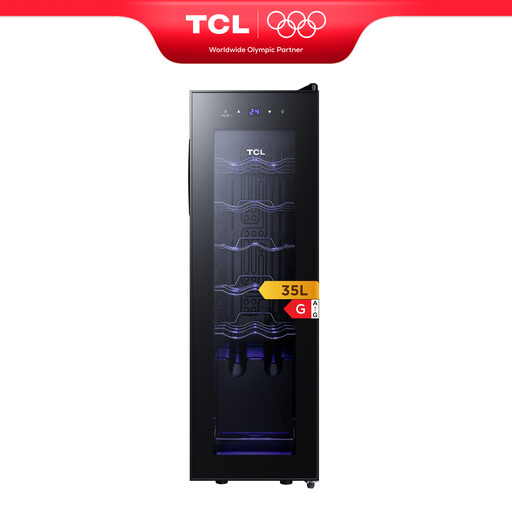
Why it suits this profile: The 35-litre capacity and room for 12 bottles are well suited to a small stock and limited living space. The glass door lets you see the contents immediately.
The capacity and volume are clearly stated. However, check in advance whether wider or sparkling wine bottles will fit the layout.
35-litre capacity; room for 12 bottles; glass door.
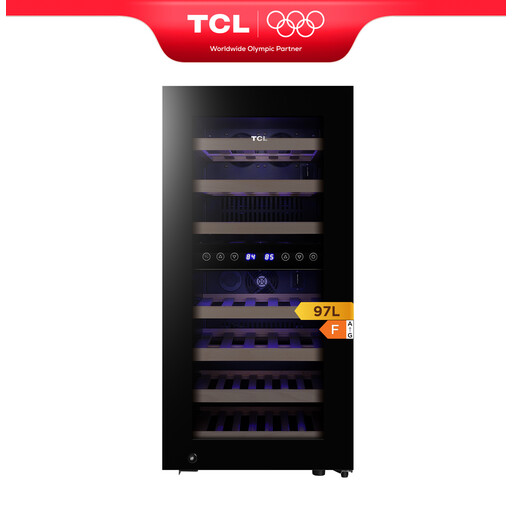
Why it suits this profile: The larger 97-litre capacity provides room for a more extensive wine collection at home, in an office or in a small hospitality setting.
The higher capacity means you won’t need to stack bottles outside the appliance. Measure the available space and check the bottle layout before ordering.
97-litre capacity; room for 33 bottles; glass door.
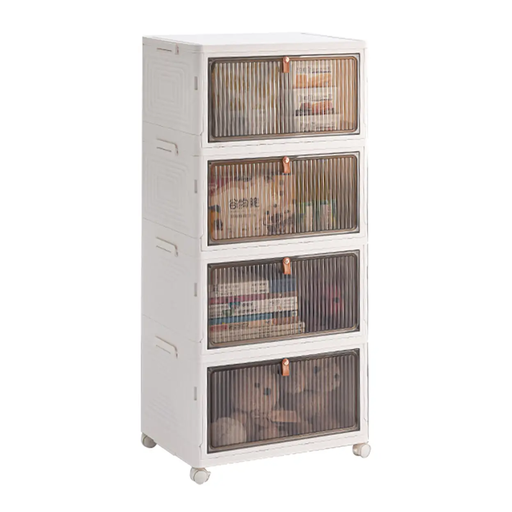
Why it suits this profile: This is not a wine fridge, but a mobile storage cabinet for anyone looking for extra space alongside a wine storage cabinet for glasses, corkscrews and accessories.
The product’s purpose is clearly defined: the cabinet does not cool. This prevents a standard storage unit from being used as a climate-controlled cabinet.
Four tiers; mobile design; tool-free assembly according to the product description.
Place a wine fridge on a flat, stable surface and leave enough space around it for ventilation. After transporting the appliance, wait for the period specified in the manual before switching it on. Do not load the shelves beyond their stated capacity and keep the door open for as short a time as possible.
A 35-litre wine fridge is generally easier to position than a 97-litre model. For a larger wine cabinet, it’s sensible to check in advance that the floor, shelf or cabinet can support the weight. Do not use a standard storage cabinet as a substitute for active cooling.
We’ve put together a complete, up-to-date list of products that fully meet these strict selection criteria and the applicable European safety regulations.
That depends on the temperature range and the number of zones. Check the technical specifications of your chosen model. A single-zone appliance is particularly suitable if you store your collection at one preferred temperature.
The required clearance varies by model. Follow the manual and allow for ventilation at the back, sides and top. Do not place the fridge next to a heat source, and measure the alcove before ordering.
Consumption depends on the capacity, insulation, temperature setting, ambient temperature and energy rating. Check the energy label and annual consumption information when available. A well-stocked fridge that is opened infrequently may operate differently from an appliance in a warm room where the door is opened often.
