
Someone moving into a home with a dusty hallway mirror
They want to remove dust and marks first, then vacuum up the moisture. Vileda recommends washing the surface before vacuuming up dirty water, so a window vacuum does not replace this step.


First measure the clear width of the mirror and loosen dust and marks left by the move before vacuuming up the moisture: a window vacuum does not replace washing the glass first. For narrow mirror panels, choose a model that comes with a narrow suction nozzle. A compact model may be enough for one small job, while a longer stated battery life could be useful if you plan to clean more glass afterwards. Always check what is included with the exact set and read the product information for the appliance.
They want to remove dust and marks first, then vacuum up the moisture. Vileda recommends washing the surface before vacuuming up dirty water, so a window vacuum does not replace this step.
They want to compare the clear glass width with a narrow suction nozzle that is actually included with the chosen set. Bosch DIY and Leifheit list different head widths for specific complete sets.
They want to clean other smooth surfaces after the hallway mirror, so they pay attention to the stated battery life and how to empty the dirty-water tank. Kärcher and Leifheit state the battery life for specific models.
| What to consider | What to look for | Who it matters most to |
|---|---|---|
| Washing the surface first | Check whether the exact set includes a suitable cloth, washer or spray bottle; loosen the dirt first. | If I need to loosen dust and marks left by the move before vacuuming up moisture, I want to know what preparation is needed. Around 36% of consumers say washing the surface first is their top purchasing priority. |
| Suction nozzle width | Measure the clear glass width and check whether the narrow nozzle is included with the chosen set. | For a narrow mirror panel or a framed mirror, I want a nozzle that fits the glass. Around 29% of consumers give choosing a suitable suction nozzle their highest priority. |
| Several surfaces | Compare the stated battery life of the exact model and check how to empty the dirty-water tank. | If I want to clean other smooth surfaces after the hallway mirror, I’ll consider the run time and the tank. Around 21% of consumers say using the appliance on several surfaces is their top priority. |
| Parts included in the set | Compare everything included and check whether a narrow nozzle is available separately. | For one small mirror-cleaning job, I don’t want to choose parts I don’t need. Around 14% of consumers make avoiding unnecessary parts in the set their top priority. |
When dealing with dirt left by a move, wash the surface first; the window vacuum is designed to remove the moisture afterwards.
Loosen any visible dirt first with a suitable cloth or washer, and check whether it is included with the set.
If no suitable cleaning tool is included, allow for the cost of a separate cloth or washer.
The narrow 17 cm suction nozzle for the Leifheit Dry & Clean 51000 is sold separately; the complete set 51016 does include it.
Compare the full model number and everything included with the clear width of your mirror.
On the same product page for the Nemo 51030, Leifheit states both 130 m² and 115 m². These figures do not provide one clear coverage value.
Don’t base your choice on a direct comparison of these coverage claims; also consider the stated battery life and the preparation your job requires.
Kärcher says the WV 1 Compact Extra+ Black is suitable for surfaces including mirrors.
The GlassVAC complete set 06039G6000 is aimed at anyone looking for both a narrow and a wide suction nozzle in one set.
The Dry & Clean complete set 51016 is designed for anyone who wants a washer and a narrow suction nozzle; the Nemo 51030 is a different product range for mirrors and smooth surfaces.
Vileda says the Window I is suitable for mirrors and other smooth surfaces.
The Joybuy products below are manual squeegees for cleaning mirrors or glass, not window vacuums. Consider them only if manually wiping the glass dry is a suitable alternative for your job.
 No image available
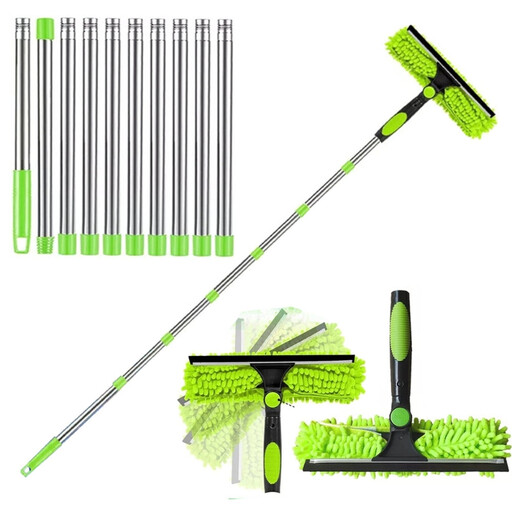
A manual set for anyone who wants to clean mirror glass and reach higher panes too; this is not a window vacuum.
The product name mentions a microfibre cloth, a 2-in-1 squeegee and a 180° swivelling head.
 No image available
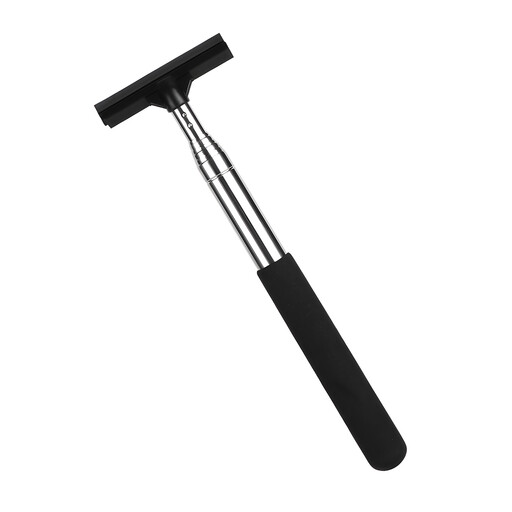
A manual squeegee for anyone looking for an extendable model; check that its shape suits the area around your hallway mirror.
The product name states that it extends to 98 cm. This is not a window vacuum.
 No image available
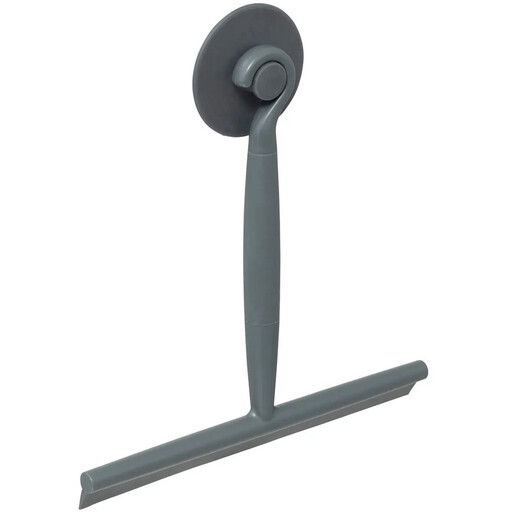
A manual glass squeegee for anyone who wants to wipe moisture away by hand after washing the surface first; this is not a window vacuum.
The product name states a width of 22 cm and a dark grey finish.
First loosen dust and marks with a suitable cloth or washer. Vileda recommends washing the surface first and then vacuuming up dirty water; Leifheit advises washing the surface before using a window vacuum.
No, you can’t assume that based on the product category. Measure the clear glass width and check the nozzle included with the exact set: Bosch DIY lists a 140 mm head for the GlassVAC complete set 06039G6000; Leifheit lists a 17 cm nozzle for the Dry & Clean complete set 51016.
Empty the dirty-water tank according to the product instructions. Bosch DIY lists a 120 ml tank for the GlassVAC complete set 06039G6000; check the manual for any other model.
Check the product markings, manual and relevant product information for the specific model. According to the Dutch government, electronic appliances covered by the applicable EU rules must bear the required CE marking; the European Union’s Your Europe website states that the manufacturer is responsible for compliance. A CE marking does not tell you whether the suction nozzle will fit your mirror.
No. According to the Dutch government, there is no fixed period for the statutory guarantee in the Netherlands; what you can expect depends on factors including the product and its price. If a product is faulty, the retailer is your point of contact.