
The exhibition photographer
You want to print a windmill landscape and may want to crop it. So compare the image pixels after cropping, the lens and the file requirements set by your printer.


For a windmill landscape you want to display, start by choosing your viewpoint and the print size you want. Then decide whether a fixed angle of view will do or whether you need an interchangeable lens. A compact camera can be handy if you’re walking around to try different viewpoints, while a mirrorless camera gives you more choice of lenses. After any cropping, compare the image pixels with your printer’s file requirements and, if possible, make a test print.
You want to print a windmill landscape and may want to crop it. So compare the image pixels after cropping, the lens and the file requirements set by your printer.
You’re looking to explore different viewpoints on foot, and weighing up the weight of the complete kit against the freedom to change lenses.
You know where you want to stand and want to work out whether one fixed angle of view will capture both the windmill and its surroundings, or whether an interchangeable lens will suit your framing better.
Start with the print and your viewpoint. This will help you decide which combination of angle of view, room to crop and portability is right for your windmill photo.
| What to consider | What should you check? | Who is this most relevant to? |
|---|---|---|
| Print detail | Compare the pixel dimensions after your planned crop with the print size and your printer’s file requirements. | I want to know whether my photo will retain enough detail for the exhibition after cropping. Around 31% of consumers put print detail first. |
| Framing the windmill and landscape | Check whether the camera and lens’s angle of view will capture both the windmill and its surroundings from your viewpoint. | I want to capture the windmill and landscape together from the spot I’ve chosen. Around 31% of consumers give framing flexibility top priority. |
| Portability of the kit | Compare the weight of the camera body with that of the lens and any other equipment you want to take with you. | I want to try several viewpoints on a walk without carrying a kit that’s too heavy. Around 23% of consumers put portability first. |
| Outdoor use | Check the protection conditions for both the camera body and the lens, and follow the care instructions. | I want to take my camera out when the weather is changeable and know what protection applies to my complete kit. Around 15% of consumers put protection for outdoor use first. |
The pixel count alone won’t tell you whether a photo will be suitable for your chosen print size after cropping. The lens and the shot itself also matter.
Start with the print size and your printer’s file requirements. Then compare the image pixels after your planned crop and, if possible, make a test print.
With a mirrorless camera, the lens mount and the lens you choose will also affect the framing you can achieve.
Before buying, check which lens and accessories are included in the exact bundle, and whether the lens is compatible with the camera. You may need to buy a compatible lens, memory card or another essential item separately.
A rating for the camera body doesn’t automatically tell you how well every lens or every use case is protected.
Check the conditions for both the body and lens, and bear maintenance in mind when using the camera outdoors. Change lenses in as clean a place as possible, following the Consumentenbond’s care tips.
The EOS R50 is an APS-C mirrorless camera for anyone looking to frame shots with RF or RF-S lenses.
The X-T5 is an APS-C mirrorless camera with interchangeable X-mount lenses.
The Z5II is a full-frame mirrorless camera for anyone considering a kit with Z lenses.
The GR IV is a compact camera with a fixed wide-angle lens, designed for anyone who wants to shoot from a suitable viewpoint without changing lenses.
The OM-5 Mark II is a compact mirrorless camera for anyone who wants to consider kit protection as well as other factors when shooting outdoors.
This selection includes compact pocket cameras and APS-C mirrorless cameras. Compare the stated features and, where applicable, the lens with your viewpoint and the print size you want.
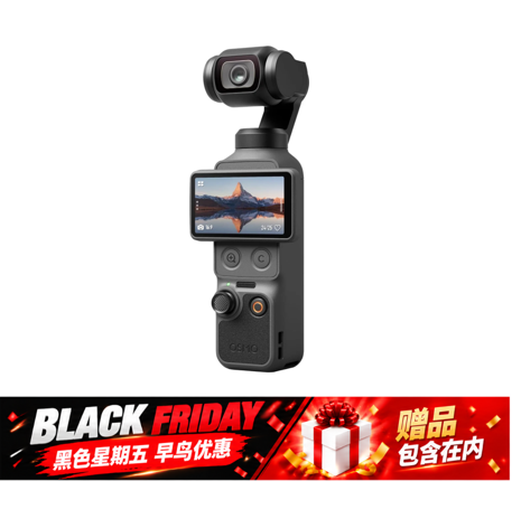 No image available
The product title mentions photography; check whether this pocket gimbal camera suits the shooting and print size you have in mind.
The title lists a 1″ CMOS sensor, 2× lossless zoom and a 2-inch rotating screen.
 No image available
The product title mentions photography; see whether this pocket camera’s features suit your plans for the windmill photo and exhibition.
The title lists a 1″ CMOS sensor and a 2-inch rotating touchscreen. The product description lists a weight of 179 g.
 No image available
If you’re considering a pocket camera, compare the image files with the size of your planned print; the stated pixel count alone won’t determine this.
The product name lists 44 MP and 4K; the product description mentions 16× digital zoom.
 No image available
This APS-C mirrorless camera with a supplied zoom lens is worth considering if you want to try different framings from your viewpoint.
The product description lists a 24,2 MP APS-C sensor and a supplied 16–50 mm lens.
 No image available
This APS-C mirrorless camera with a zoom lens could suit anyone who wants to compare different framings from one viewpoint; assess the complete kit for your print plans.
The product description lists a 24,2 MP APS-C sensor and an electronic viewfinder. The stated body weight is 396 g.
First, ask your printer about the desired print size and file requirements. Then check the pixel dimensions after your planned crop and, if possible, make a test print. The resolutions stated by Profotonet apply to the print sizes described and aren’t universal minimum requirements.
Not necessarily. From the viewpoint you’ll actually be using, decide how much of the surroundings you want to show alongside the windmill. Then check whether the angle of view of a fixed lens or a lens for your camera will work for you.
Change lenses in as clean a place as possible, following the Consumentenbond’s care tips, and leave the camera open for as little time as possible. Store the lens and body with their caps on.
Don’t assume that you can. The Autoriteit Persoonsgegevens points out that identifiable people in images are personal data; private use and wider sharing may be treated differently. Portrait rights also depend on the circumstances. Consider identifiability and the intended use separately, or choose a photo without identifiable people.
Not always. Auteursrecht.nl describes an exception for images of buildings intended to remain permanently in a public place, when they are shown as they appear there. This doesn’t automatically answer questions about access to the place where you take the photo or about identifiable people in the image.