
Walker with a small bag
You want to photograph a windmill while you’re out and about, without carrying separate lenses. So compare a fixed field of view with a compact camera that has built-in zoom.


First, choose the field of view you need from where you’ll be standing, then compare the size of the complete camera set-up, including the lens. A compact camera with a fixed wide-angle lens doesn’t need a separate lens, but it won’t offer optical zoom. Built-in zoom gives you more ways to frame your shot from one spot. A mirrorless camera with a suitable wide-angle lens lets you change lenses, but you’ll need room to carry the lens too.
You want to photograph a windmill while you’re out and about, without carrying separate lenses. So compare a fixed field of view with a compact camera that has built-in zoom.
You also want to include the sky, water or foreground, and can’t always take a step back. The field of view of the camera and lens you’re carrying determines which compositions will fit.
Sometimes you photograph from across the water and want the windmill to appear larger in the frame without moving. In that case, compare the zoom range with the size of the complete camera.
Choose this option if: you want to carry as little separate equipment as possible and usually photograph the windmill with its surroundings.
The trade-off: a fixed field of view doesn’t offer optical zoom. Check whether around 28 mm equivalent will suit your viewpoint.
Choose this option if: you want to frame both a sweeping landscape and a more distant windmill during the same walk.
The trade-off: the lens isn’t interchangeable, and the maximum aperture may vary depending on the zoom setting.
Choose this option if: you want to capture a wide scene from a limited distance and have room to carry a lens.
The trade-off: compare the complete set-up and check that the offer includes the wide-angle lens you want.
| What to consider | What to look for when buying | Who is this important for? |
|---|---|---|
| Carrying the complete set-up | Compare the size and weight of the ready-to-use combination. Check whether the offer includes a body, a kit or a camera with a built-in lens. | If I want to head out with as few separate items as possible, I consider what will fit in my bag. Around 36% of consumers make carrying space their top priority. |
| Framing the windmill and its surroundings | Compare the equivalent field of view of the exact camera-and-lens combination, and assess it from a realistic shooting distance. | If you want to capture the windmill and its surroundings from a path or riverbank, a sufficiently wide field of view is useful. Around 29% of consumers prioritise wide landscape framing. |
| Framing a distant windmill so it appears larger | Compare the optical, equivalent zoom range, and don’t confuse digital zoom with optical zoom. | If I can’t get closer, I want to be able to frame different shots from the same spot. Around 21% of consumers make reach at a distance their top priority. |
| Taking photos in low light | Check the maximum aperture at the zoom setting you’ll use, and look at the stabilisation and adjustment options available. | If you mainly take photos in low light, consider the aperture and whether you can adjust the settings. Around 14% of consumers prioritise low-light photography. |
A mirrorless camera’s wide-angle capabilities also depend on the lens. So a lightweight body doesn’t tell you how much room the complete set-up will take.
Compare the complete camera-and-lens combination, and check exactly which items are included in the kit before you buy.
A separate lens is also an extra item to carry, and takes up room in your bag.
The telephoto end helps you frame a distant windmill so it appears larger, but it doesn’t tell you how much of the surroundings you can capture. That depends on the field of view at the wide-angle end.
First compare the equivalent focal length at the wide end, then look at the telephoto range.
In the Netherlands, there is no fixed statutory warranty period. A commercial manufacturer’s warranty is separate from your statutory rights. If a product is faulty, the retailer is your point of contact.
Check what any additional warranty covers, and contact the retailer if the product is faulty. The Dutch government explains that what you can reasonably expect from the product, and how it has been used, are taken into account.
The Ricoh GR IV is a compact camera with a fixed wide-angle lens, aimed at those who want to frame landscapes without carrying a separate lens.
The RX100 VII is a compact camera with built-in zoom for a range of different compositions.
The EOS R50 is a mirrorless camera, and Canon lists the RF-S 10-18mm as a compatible wide-angle lens.
Nikon offers a Z 30 kit with the NIKKOR Z DX 12-28mm f/3.5-5.6 PZ VR lens.
The products below are suited to changing your framing as you walk, from zoom cameras to a mirrorless camera with a 16–50mm kit lens. Check which specifications apply to the version on offer for each model.
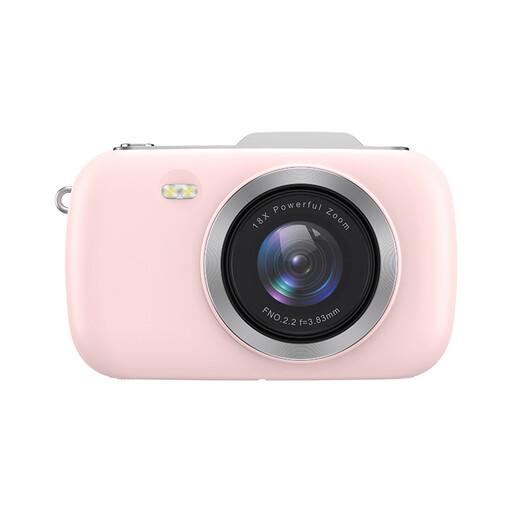 Image unavailable
The product title describes a portable camera with zoom for taking on the go.
The title lists 18X zoom, 80MP and 4K. These are product claims, not independent test results. It doesn’t specify that the zoom is optical.
 Image unavailable
The product title mentions optical zoom for taking different shots from one spot.
The title lists 12X optical zoom, 4K, 64MP and WiFi. These are product claims, not independent test results.
 Image unavailable
The product title mentions optical zoom, which lets you take different shots from the same spot.
The title lists 8X optical zoom, 5K, 64MP and a dual lens. These are product claims, not independent test results.
 Image unavailable
The product title mentions optical zoom and a front and rear camera.
The title lists 10X optical zoom, 5K and 56MP. These are product claims, not independent test results.
 Image unavailable
The 16–50mm kit lens included in the listing gives you different framing options for photography on the go.
The product description lists an APS-C sensor and describes the camera as compact and lightweight. It also says that an SD card and an adapter or charger aren’t included.
No. First check whether the field of view of the complete camera-and-lens combination covers the scene you want from your viewpoint. The Consumers’ Association also highlights the lens and sensor as factors in photo quality, and stresses the importance of sensor size as well as the number of megapixels.
Not always; check exactly what’s included in the kit. Nikon explicitly lists a Z 30 kit with a 12-28mm lens, while Canon names the RF-S 10-18mm as compatible with the EOS R50. That doesn’t mean the lens is included with every EOS R50 offer.
Before you set off, check that you have your battery and memory card, and keep the lens clean. The Consumers’ Association treats an extra battery and SD card as separate things to consider. Don’t assume a camera is weather-sealed without checking for your chosen model.
Any manufacturer’s warranty is separate from your statutory rights; there’s no fixed statutory warranty period in the Netherlands. The Dutch government says the retailer is your point of contact if a product is faulty. What you could reasonably expect from the product and how it has been used may also be taken into account.
Not necessarily. According to the Dutch Data Protection Authority, identifiable people count as personal data. The exception for personal use applies if you keep images private or share them only within a very limited circle; it doesn’t automatically apply to public or commercial sharing. The legal basis you need depends on the circumstances.