Who is this choice relevant to?

Watching TV behind thick walls

Does the internet work by your modem, but is the TV on the other side of thick internal walls? A stable connection where you watch is then the main priority. Ziggo describes a wired connection as an option when Wi-Fi doesn’t work well in certain rooms.

Watching TV without a cable route

Can’t run an Ethernet cable to the TV or an extra Wi-Fi point? You can compare wireless mesh and powerline, and check whether the connection works well enough in your home. Devolo points out that powerline performance depends in part on interference and the quality of your electrical wiring.

Investigating 4K problems

Want to find out whether buffering is caused by your internet connection, the Wi-Fi by the TV or your streaming service’s requirements? Test both connections before choosing your equipment. Consumentenbond explains how to test using an Ethernet cable, while Netflix gives separate speed recommendations for its own streams.

What should you look for when choosing?

Wired access point

Suitable when: you can run an Ethernet cable to a spot beyond the wall. Ziggo describes a wired connection as a way to bring Wi-Fi into another room.

Trade-off: running the cable takes effort; also check how the access point connects to your existing modem or router.

Wireless mesh

Suitable when: you can’t run a cable, but can place an extra point somewhere it can still receive a usable signal. TP-Link also describes optional Ethernet backhaul for the Deco X50.

Trade-off: the connection between mesh points must also get past obstacles; the best placement and number of points depend on your home.

Powerline with Wi-Fi

Suitable when: running an Ethernet cable isn’t an option and you want to try using your existing electrical wiring to connect the adapters.

Trade-off: devolo cites interference and the quality of your electrical wiring as factors, so test the adapters in the sockets you plan to use.

Standalone router

Suitable when: a more central location already reaches your viewing area, or you want to configure router features. Consumentenbond recommends testing your internet connection using a cable.

Trade-off: a single router doesn’t guarantee a usable signal through thick walls; also check whether the device will be used as a router or an access point.

Point to consider What to look for when buying Who should pay extra attention?
Stable coverage beyond thick walls Check whether you can run a cable, whether there’s a suitable Ethernet port and where you can place the Wi-Fi point. If I mainly need a stable connection by the TV, I’ll first check whether I can run a cable beyond the wall. Around 36% of consumers say coverage via a cable route is their main concern when buying.
Coverage without an Ethernet cable Check whether a mesh point can receive a signal in an intermediate location; test powerline in the sockets you plan to use. If I can’t run a cable, I want to know whether an intermediate mesh point or my home’s electrical wiring will work. Around 29% of consumers prioritise coverage without a new Ethernet cable.
Connection for your preferred streaming quality Test your connection using an Ethernet cable, then check it at the playback device. Netflix recommends a stable connection of at least 15 Mbps for its own 4K UHD streams; other services may have different requirements. If I want to fix buffering before buying new equipment, I first need to know where the connection is falling short. Around 21% of consumers prioritise finding the cause of streaming problems.
Compatibility and running costs Check the router or access point mode, how many points you need, and the terms for features and updates. If I want to keep using my existing equipment and understand the ongoing costs, I’ll check how a new device will fit in. Around 14% of consumers prioritise compatibility with their existing network and costs.

Buying pitfalls

  • Assuming a high Wi-Fi speed guarantees smooth streaming through a wall

    A quoted wireless speed doesn’t tell you how well the connection will work where you watch. Your internet connection could also be the cause of buffering.

    Test your connection using an Ethernet cable, then check it where the TV is. Next, consider how an extra point will connect to the router.

    Running a cable takes effort; you may also need an extra Wi-Fi point.

  • Placing a wireless mesh point where there’s barely any signal

    The extra point still needs a usable connection to the router. Putting it where coverage is worst won’t automatically solve the problem.

    Try an intermediate location and check whether the model you’re considering supports Ethernet backhaul if running a cable is an option.

    You may need an extra point, but that won’t automatically improve the connection between the points.

  • Expecting powerline to work like an Ethernet cable with guaranteed speeds

    Data transfer over electrical wiring can vary, depending on factors including interference and the quality of the electrical installation.

    Test the adapters in the sockets you plan to use and check the seller’s terms before choosing this option.

Relevant brands to consider

TP-Link

The Deco X50 range includes packs with one, two or three points, making it worth considering if you’re looking at mesh or Ethernet backhaul.

  • TP-Link lists three gigabit ports per point and optional Ethernet backhaul for the Deco X50.
  • The stated coverage and wireless speed don’t show how it will perform through your walls; check which pack you’re looking at.

ASUS

The RT-AX58U is a standalone Wi-Fi 6 router that can also be used as an access point or AiMesh point.

  • ASUS specifies four gigabit LAN ports and several operating modes for this model.
  • A single RT-AX58U doesn’t guarantee coverage through thick walls; also check whether you’re looking at version V1 or V2.

FRITZ!

The FRITZ!Mesh Set 1700 is described as a two-piece set that can be connected behind an existing router.

  • FRITZ! lists a LAN connection, automatic updates and a five-year warranty for the set described.
  • Check the terms for the exact model; Wi-Fi 7 or a warranty period doesn’t prove the signal will get through your walls.

devolo

The Magic 2 WiFi 6 next Starter Kit combines powerline networking over your electrical wiring with Wi-Fi from a second adapter.

  • devolo specifies two adapters and two gigabit ports on the Wi-Fi adapter.
  • devolo states that actual powerline performance depends in part on interference and the quality of your electrical installation.

Joybuy products for this situation

This selection includes powerline with Wi-Fi, standalone routers and mesh systems. For the exact model, check that the device supplied carries the required CE marking; the Dutch Authority for Digital Infrastructure describes this requirement for radio equipment sold in Europe.

TP-Link Deco PX10 dual-band Wi-Fi 6

TP-Link Deco PX10 Dual-band Wi-Fi 6

Suitable if you want to bring network access to your viewing area without running a new Ethernet cable; the description also mentions using your existing electrical wiring.

The description lists three gigabit ports per unit. Powerline performance can depend on interference and the quality of your electrical installation.

View at Joybuy

ASUS RT-AX52 AX1800 AiMesh dual-band router

ASUS RT-AX52 AX1800 AiMesh dual-band router

Suitable if you’re looking for a standalone router and want to consider the option of extending it with AiMesh; placement remains key to coverage.

The description lists Wi-Fi 6 and three Ethernet ports.

View at Joybuy

TP-Link Deco X50 dual-band Wi-Fi 6, 3-pack

TP-Link Deco X50 dual-band Wi-Fi 6, 3-pack

Suitable if you want to place several Wi-Fi points; check whether they’ll connect wirelessly or via Ethernet backhaul.

The description lists optional Ethernet backhaul and three gigabit ports per unit.

View at Joybuy

Huawei eKit OptiX FG736 BE3600 dual-band Wi-Fi 7 mesh router

Huawei eKit OptiX FG736 BE3600 dual-band Wi-Fi 7 mesh router

Suitable if you’re considering a mesh setup with several units; the description says the units can form a single network.

Check where the extra units can go and how they’ll connect to the router.

View at Joybuy
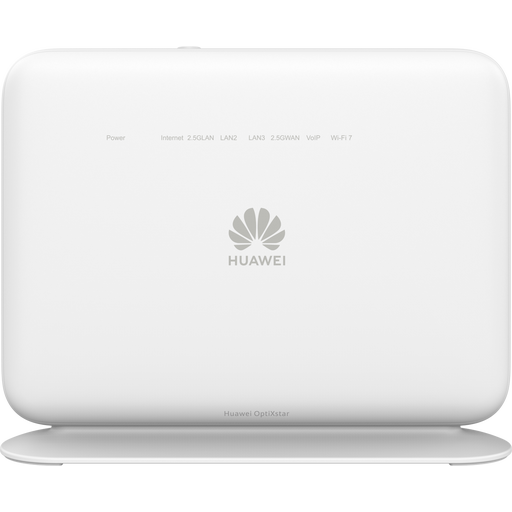
Huawei eKit OptiX LG8245B7N BE3600 dual-band Wi-Fi 7 4G dongle router

Huawei eKit OptiX LG8245B7N BE3600 dual-band Wi-Fi 7 4G dongle router

Suitable if you’re considering a router with a stated 4G feature for situations where your primary connection may fail.

The product description lists an integrated 4G dongle function and a switch to 4G if the primary connection fails.

View at Joybuy

Frequently asked questions

Should I buy a faster router if a 4K nature documentary keeps buffering?

Not until you’ve checked what’s causing it. First test your internet connection using an Ethernet cable, then check the connection where you watch. Netflix recommends at least 15 Mbps for its own 4K UHD streams, with a stable connection; other services may have different requirements.

Where should I place an extra mesh point?

Place it somewhere it can still get a usable connection to the router, rather than simply where the TV has poor coverage. If you can run a cable, check whether the model you’ve chosen supports a wired connection; the right spot varies from home to home.

Can I use my own router in the Netherlands alongside or instead of my provider’s router?

Yes. According to ACM ConsuWijzer, you’re free to choose your own router. Ask for the connection settings if necessary, and make sure the device meets the applicable requirements. Using an access point behind your existing modem is different from replacing the modem.

What should I look for in terms of costs and support after purchase?

Check how many points you need, the terms for any extra features and which updates are available for the exact model. Also check the current warranty and service terms for the model and seller.

What product marking must a Wi-Fi router sold in the Netherlands carry?

The Dutch Authority for Digital Infrastructure states that radio equipment sold in Europe must meet the applicable requirements and carry the correct CE marking. Check the marking on the device you actually receive; a general product listing doesn’t confirm it for every model.
