
Vandaag of morgen in huis

Kwaliteit gegarandeerd

Welkomstaanbiedingen ontgrendelen: GRATIS bezorging | Tot 80% korting | Gratis 30 dagen JoyPlus-proefperiode
Download de app
A Wi-Fi security camera can be useful for keeping an eye on your home, baby, pets, office or business premises. However, many models look similar, even though there can be significant differences in how they work in practice. For example, a camera with a high resolution won’t necessarily perform well in the dark. An outdoor camera may also be unsuitable if it isn’t sufficiently water-resistant.
So, watch out for these common pitfalls:
For general monitoring, 1080p Full HD is often enough. If you want to see faces, delivery drivers or details at a greater distance, consider 2K or 3MP. Higher resolution uses more storage and may require a more stable Wi-Fi connection.
A Wi-Fi camera with night vision usually uses infrared images in black and white. Some models also offer colour night vision, using a wide aperture or built-in lighting. Check the stated range: 6, 9 or 30 metres gives you an idea of what to expect, but how clearly you can make things out will vary depending on the lighting.
A security camera for indoor or outdoor use needs to be suitable for the place where you install it. An IP55, IP65 or IP66 rating tells you how well it is protected against dust and water. IP66 doesn’t mean the camera can be submerged: cables, plugs and connections must also be kept dry and properly sealed.
An indoor camera, such as a baby monitor camera, shouldn’t be installed outside. Also check the operating temperature range if you’re mounting the camera on an exterior wall, in a shed or on a balcony.
A security camera with motion detection can send alerts to your phone. There’s a difference between general motion detection, person detection, vehicle detection and automatic tracking. Trees, shadows and pets can otherwise trigger unnecessary alerts.
Also check:
A PTZ security camera can pan horizontally and tilt vertically. A 360-degree camera can therefore provide a wide view, but a rotating lens won’t always replace several fixed cameras. Position the camera so that important areas aren’t hidden behind furniture, walls or foliage.
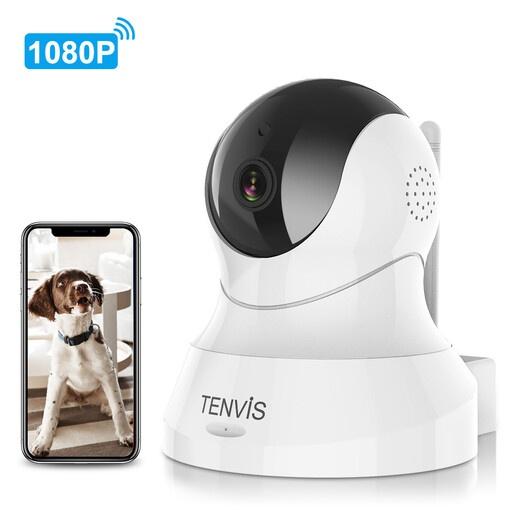
Why it suits this user: This model is designed for straightforward indoor monitoring, for example in a living room, hallway, shop or around pets. It has a plug-and-play setup and can rotate 355° horizontally and 120° vertically.
The specifications include not just motion detection, but also two-way audio and night vision. That means you don’t need to buy several features separately right away.
1080p resolution, 355° horizontal rotation, two-way communication and alerts sent to your phone.
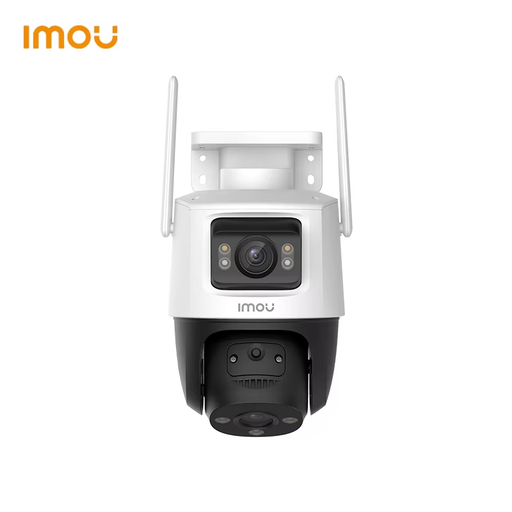
Why it suits this user: The combination of a fixed lens and a rotating lens is well suited to a driveway, garden or larger outdoor area. The model supports person and vehicle detection, two-way audio and several night vision modes.
The IP66 rating and stated 30-metre infrared range make it easier to check whether it’s suitable for outdoor use. Still, make sure the cables are properly sealed during installation.
6MP total, dual-lens design, four night vision modes, IP66 and microSD storage up to 256GB.
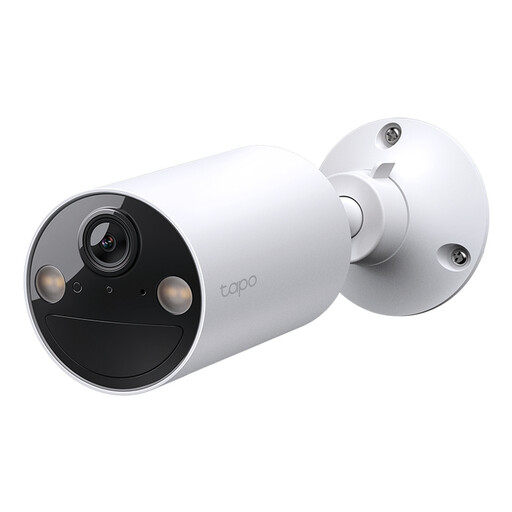
Why it suits this user: This model is suitable for places without a nearby socket, such as a shed, garden gate or rear wall. It has a rechargeable battery, optionally supports a solar panel and is suitable for indoor and outdoor use.
The power options are clearly listed as a battery, direct current and an optional solar panel. Bear in mind that battery life depends on alerts, temperature and usage.
2K/3MP images, IP65, person detection, colour night vision, two-way audio and microSD storage up to 512GB.
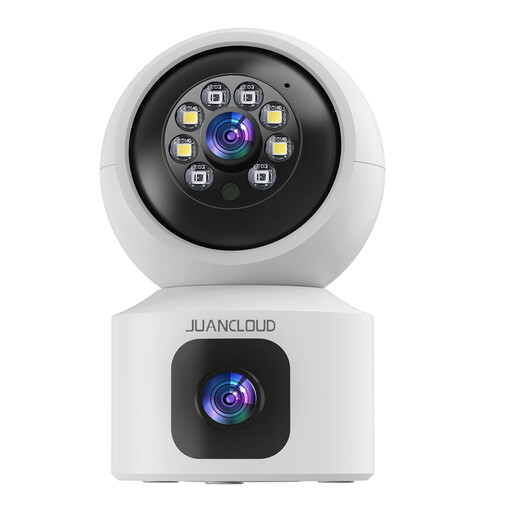
Why it suits this user: The fixed lens and PT lens are designed for keeping an eye on children, pets or an entire room. The camera supports 2K/3MP images, alerts and two-way audio via the app.
The product information mentions both local SD storage and cloud backup. This lets you decide in advance how you want to store footage and what recurring costs you’re happy to pay.
Dual-lens design, 2K/3MP video, 8x digital zoom, dual-band Wi-Fi and two-way communication.
We’ve put together a complete, up-to-date list of products that meet these strict selection criteria and the applicable European safety regulations.
Mount the camera securely and point it towards your own property as much as possible. Avoid bedrooms, bathrooms and areas of the home where people can reasonably expect privacy. If you’re monitoring shared spaces or staff, you may have to provide additional information. Use a privacy filter or activity zone if you don’t need part of the image.
After installation, change the default password, enable two-step verification if the app supports it, and install firmware updates. A strong Wi-Fi connection matters more than a high theoretical resolution if the camera frequently goes offline.
You’ll usually need an internet connection to view live footage and receive alerts remotely. Some models can record locally to a microSD card. Check whether local storage continues to work if the internet connection drops.
Lifespan depends on the power supply, outdoor conditions, updates and usage. An outdoor camera with an IP rating can withstand rain and dust better than an indoor camera, but correct installation is still essential. For a battery- or solar-powered camera, cold weather, sunlight and the number of alerts all affect how long it can operate.
A camera can work without monthly fees if you only use local microSD storage. Cloud storage, longer retention periods or extra smart features may come at a cost. So, compare not only the purchase price, but also storage costs and any replacement costs for an SD card or battery.
