What should you look for when buying?
First, work out which floors you study on and what kind of connection is possible between the router and those areas. Then choose the number of points and the technology. A quoted range or speed alone won’t tell you what to expect in your home.
| What to consider |
What should you check? |
Who is it for? |
| Reliable coverage across multiple floors |
Map out your study areas and possible positions in between. Use the number of floors as a guide, not a guarantee of coverage. |
If I study on different floors, I want a reliable connection in each area. Consumers who prioritise coverage across multiple floors make up around 36% of this group. |
| Connection to another floor |
Check whether Ethernet reaches the floor where you study, and whether your chosen device supports access point mode or a wired connection between mesh points. |
If I already have an Ethernet cable to my study area, I want to use it to connect the Wi-Fi point. Consumers who prioritise a wired connection make up around 29% of this group. |
| Expanding your existing network |
Check your router, the mesh features it supports and whether there’s a socket in a spot where the router signal is still usable. |
If I mainly want to add one more point to my current network, it’s important that it works with my router. Consumers who prioritise easily expanding their existing network make up around 21% of this group. |
| An alternative to a cable or wireless link between floors |
Check which adapters are included in the starter kit, whether they’re compatible with your existing equipment and whether the connection works from the sockets you plan to use. |
If I can’t run a cable and there’s no suitable spot for a wireless point in between, I want to know whether my home’s electrical wiring can provide a reliable connection. Consumers who prioritise this powerline option make up around 14% of this group. |
Joybuy products for Wi-Fi across multiple floors
This selection includes mesh systems with two or three points and a powerline Wi-Fi kit. Before choosing, check which connection option suits your home and how your existing router can connect to your study area.
 No image available
TP-Link Deco BE68 2-Pack
An option to compare if you need coverage in several study areas and are looking for a set with two devices.
2-pack.
View at Joybuy
 No image available
TP-Link Deco E4 (3-pack)
The three-unit set is an option to compare if you want to extend Wi-Fi coverage to several study areas.
Dual-band (2.4 GHz/5 GHz); Wi-Fi 5 (802.11ac).
View at Joybuy
 No image available
TP-Link AX1800 Whole Home Mesh Wi-Fi 6 System, 2-Pack
A mesh system to compare if you want to extend Wi-Fi coverage across more than one floor.
AX1800; Wi-Fi 6; 2-pack.
View at Joybuy
 No image available
TP-Link Deco X50 (3-pack)
The three-unit set is an option to compare if you want to reach several study areas.
Dual-band (2.4 GHz/5 GHz); Wi-Fi 6 (802.11ax).
View at Joybuy
 No image available
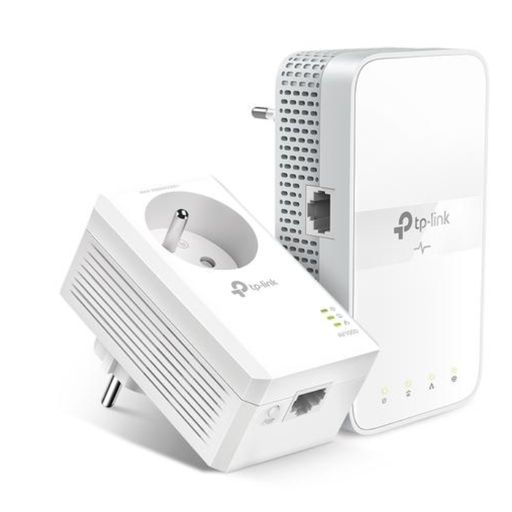
TP-Link TL-WPA7617 KIT
An option to compare if running a cable isn’t practical and a wireless connection between floors doesn’t work well. Powerline performance depends on your home’s electrical wiring.
The product name specifies 1200 Mbit/s, Ethernet LAN, Wi-Fi and 2 units.
View at Joybuy
Frequently asked questions
How many Wi-Fi points do I need for multiple floors?
Use the number of floors as a starting point, not as a guarantee of coverage. In its buying guide, Consumentenbond suggests two points for two floors and three for three floors. Then check whether you can place the points in suitable positions in between.
Where should I put a wireless repeater?
Place the repeater somewhere it still receives a good signal from the existing Wi-Fi point, rather than right in the middle of the dead spot. Consumentenbond recommends keeping obstructions to a minimum and suggests no more than two rooms between Wi-Fi points as a guide.
Will a Wi-Fi extender fix a problem with the study portal?
No. A Wi-Fi extender is designed to extend your local wireless coverage; it won’t fix a problem with your internet connection or the study portal itself. Before choosing coverage equipment, check that your internet and the portal work when you’re near the router.
What should I consider when it comes to energy use and the guarantee?
Extra Wi-Fi points use electricity, so include their quoted energy consumption in your comparison. According to the Dutch Government, there’s no fixed statutory guarantee period in the Netherlands. Your statutory rights if a product is faulty are separate from any additional manufacturer’s guarantee.
Do I need a licence to use Wi-Fi at home in the Netherlands?
According to the Dutch Authority for Digital Infrastructure, you don’t need a licence to use Wi-Fi at home if you use the designated frequencies and comply with the conditions of use. Wireless equipment placed on the market in the Netherlands must meet European product requirements. Since 1 August 2025, according to the RDI, only devices demonstrably meeting the stricter requirements may be placed on the European market. This does not confirm that a specific version complies.


