
If you make sandwiches every day
If you want sliced bread as a base for toppings and vegetables, look for wholemeal or brown bread. The Voedingscentrum recommends these types of bread as part of a lunch.


If you want to make a sandwich with plenty of toppings and vegetables every day, sliced wholemeal bread is the most natural fit for that kind of lunch. The Voedingscentrum also recommends wholemeal or brown bread as a lunch staple. Melba toast and crackers are a good choice when you want a thin, crisp base, but they are different types of product. For all three, check the wholemeal claim, nutritional information and allergen details. Don’t assume that ‘medium sliced’ refers to a standard slice thickness in the Netherlands.
If you want sliced bread as a base for toppings and vegetables, look for wholemeal or brown bread. The Voedingscentrum recommends these types of bread as part of a lunch.
Melba toast and crackers provide a thin, crisp base for smaller portions with toppings. Choose them if that format suits you better, rather than expecting them to be the same as a slice of bread.
If you have a food allergy or want to compare salt and ingredients, always check the current packaging. The Netherlands Food and Consumer Product Safety Authority highlights the allergen information on prepacked products. The Voedingscentrum also advises checking the label for baker’s salt.
First decide whether you want sliced bread or a crisp base for your toppings. Then compare the wholemeal claim, nutritional information per 100 g and any details on the label that matter to you.
Choose this if: you want a bread-like slice with room for toppings and vegetables for your everyday lunch.
Bear in mind: ‘medium sliced’ doesn’t guarantee a particular slice thickness, so check the slices themselves and the packaging.
Choose this if: you want thin, crisp pieces of toast for smaller portions with toppings.
Bear in mind: it comes in smaller pieces, and you should check the salt content separately from the fibre.
Choose these if: a thin, crisp base matters more to you than soft bread.
Bear in mind: a cracker isn’t the same as sliced bread, so consider how many you’ll need and how much topping you’ll use for lunch.
| What to consider | What to check when buying | Who it matters to |
|---|---|---|
| Wholemeal and fibre | Look for the wholemeal claim and compare fibre per 100 g between products in the same category. | If I choose bread as my regular lunch base, I want to know it’s genuinely wholemeal, not just dark or crisp. For around 40% of consumers, wholemeal is the top priority. |
| Sliced bread format | Check that it’s sliced bread and that the slices are the right size for the amount of topping you want to use. | For my everyday lunch, I want room for vegetables and other toppings on a slice of bread, not on little pieces of toast. Around 30% of consumers give this bread format top priority. |
| Crispness and storage | Check the product format and storage instructions; seal toast and crackers properly after opening. | I prefer something crisp from the cupboard and don’t mind smaller portions with toppings. For around 20% of consumers, this convenience is the most important factor. |
| Ingredients and salt | Check the current label for allergens and salt per 100 g; if you wish, check whether baker’s salt is listed. | I need to know which ingredients and allergens a product contains before buying, and want to be able to check its salt or baker’s salt content. For around 10% of consumers, checking the label is the main priority. |
The colour of a product or a mention of several types of grain doesn’t, by itself, mean it’s wholemeal. You could end up choosing a different grain base from the one you had in mind.
Look for the wholemeal claim on the packaging and compare the ingredients and nutritional information of similar products.
According to Jumbo’s product information, Van der Meulen Melba Wholemeal Toast contains 9.7 g of fibre and 1.9 g of salt per 100 g. So the fibre content doesn’t tell you how much salt the product contains.
Compare fibre and salt separately per 100 g, and take your toppings into account too.
Bread or toast is just one part of lunch. For bread, the Voedingscentrum also suggests combinations with vegetables and other suitable toppings, for example.
Choose a product format that works with the toppings you want to take with you or prepare for lunch.
Toast can lose its crunch or develop a stale smell and taste if it isn’t stored properly.
Seal the pack tightly and follow the storage advice on the packaging. The Voedingscentrum advises keeping toast in a cool, dry, dark place after opening.
A pack that goes soft or stale is less enjoyable to use and may be thrown away unnecessarily.
Compare specific products, not just brand names: sliced toastie bread, Melba toast and crackers each have a different role at lunchtime.
Jumbo Tostibrood Volkoren - Half is a sliced bread product for anyone looking for a sandwich-style lunch base.
Wholemeal Melba toast is for anyone who wants thin, crisp pieces of toast rather than sliced bread for lunch.
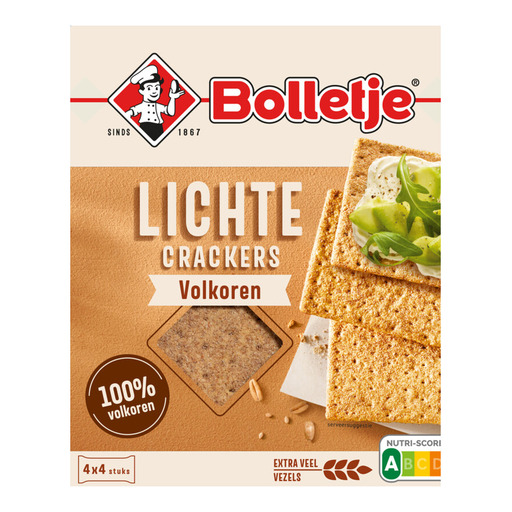
Bolletje Light Crackers Wholemeal are a good fit for lunches where you want a thin cracker as a base.
AH Melba toast Original is an original version of Melba toast, not the same product variant as wholemeal Melba toast.
ALDI stocks various types of toast as well as fresh wholemeal bread; these are different lunch options.
These Joybuy products are crackers and crispbreads for anyone looking for a crisp lunch base. If you’d prefer a slice of sliced bread with plenty of room for toppings, consider sliced wholemeal bread as a separate product type.
 No image available
For anyone who wants rye crackers with toppings instead of sliced bread for lunch.
235 g pack. Compare the portion you use and, if you have allergies, check the current label.
 No image available
For anyone looking for a cracker as a crisp base for lunch toppings.
300 g pack. The product name isn’t a substitute for comparing nutritional information per 100 g.
 No image available
For anyone who wants to add toppings to crispbread instead of a soft slice of bread.
375 g pack. Check the nutritional information per 100 g and consider your actual portion size.
 No image available
For anyone who wants to add toppings to thin wholemeal crackers instead of sliced bread.
190 g pack. Joybuy lists 15 g of fibre and 0.98 g of salt per 100 g for this version; check the current ingredients too before buying.
No, they’re different types of product. If you want a sliced base with plenty of room for toppings, wholemeal bread is the more natural choice. Choose Melba toast if you’d prefer small, crisp pieces, and compare the salt content per 100 g too.
No. According to the Voedingscentrum, bakers aren’t required to use baker’s salt. Check the label to see whether it’s listed for the bread you’re buying, and ask about the ingredients used if you’re buying unpackaged bread.
Read the allergen information on the current packaging of the specific product. The Netherlands Food and Consumer Product Safety Authority states that allergen information must appear on the label of prepacked products. Don’t rely solely on the product name or a product page you viewed earlier.
Keep opened toast tightly sealed in a cool, dry, dark place. For toast, the Voedingscentrum recommends storing it in a kitchen cupboard for around one month after opening. Follow the instructions on the packaging too, and look out for loss of crispness or a stale smell.