
Fibre-conscious coffee drinkers
For older people and households looking for a wholemeal option to enjoy with an afternoon coffee, and who want to compare ingredients and fibre rather than judging by colour.


For an afternoon coffee break, start by choosing something the person can chew and swallow comfortably. If a crunchy texture is suitable, you can compare wholemeal rusks, Melba toast and crackers by checking the wholemeal label, fibre per 100 g, salt and allergens. If someone has difficulty swallowing, medical advice matters more than choosing between these products.
For older people and households looking for a wholemeal option to enjoy with an afternoon coffee, and who want to compare ingredients and fibre rather than judging by colour.
For people who are mindful of chewing, crumbs or a dry mouth. If someone has difficulty swallowing, Thuisarts advises contacting their GP. In that case, choosing a brittle snack is not simply a matter of taste.
For shoppers who want to check the salt content and listed allergens for each product, for example when household members have different dietary needs.
First, decide whether a dry, crunchy texture is suitable. Then compare the type of product you want to top and its nutritional information on the same basis.
Suitable if: you’d like an individual, round base for toppings with your coffee.
Consider: rusks are brittle and break easily.
Suitable if: you’re looking for small, thin pieces of toast to top.
Consider: even thin toast is still crunchy; its shape doesn’t indicate whether it’s suitable for someone with swallowing difficulties.
Suitable if: you’d rather have a flat base for toppings.
Consider: ingredients and nutritional values vary between products, even within this category.
| What to consider | What to check when buying | Who it matters to |
|---|---|---|
| Wholemeal and fibre | Look for the wholemeal label and compare fibre per 100 g; then consider the portion you’ll serve. | If I want a wholemeal option with my coffee, a brown colour alone isn’t enough. Around 25% of consumers prioritise wholemeal ingredients and fibre. |
| Chewing and swallowing | Bear the brittle texture in mind. If you have difficulty swallowing, contact your GP, as Thuisarts advises. | If chewing or swallowing is difficult, I don’t want to guess whether something will be comfortable to eat based on how thick a piece of toast is. Eating comfort matters most to around 25% of consumers. |
| Making the most of your coffee break | Think about whether it’s a small snack and what you’d like to put on it; consider the whole snack, not just the dry base. | If afternoon coffee is an important eating occasion, I also consider the toppings and the rest of the day’s meals. Nutritional value at this eating occasion is a top priority for around 19% of consumers. |
| Salt and allergens | Compare salt per 100 g and read the current ingredients and allergen information for the product you’ve chosen. | If someone at home needs to avoid a particular ingredient or is watching their salt intake, I want to know what’s in this specific product. Around 19% of consumers give checking the label their highest priority. |
| Portion and storage | Check the number of pieces, type of packaging and storage instructions after opening. | If we only have a small coffee break now and then, I want to choose a pack that’s easy for us to use and store. A practical portion is the main concern for around 12% of consumers. |
A stated fibre content doesn’t, by itself, tell you whether a product is wholemeal. According to the Voedingscentrum, the wholemeal label on products such as crackers and toast is linked to the type of wholemeal flour used.
Check the product description and ingredients first, then compare fibre per 100 g.
Thin Melba toast is still crunchy. Thuisarts says that when someone has difficulty swallowing, food can get stuck or they can choke.
If you have difficulty swallowing, seek medical advice before choosing a dry, brittle product.
Albert Heijn lists 0.47 g of salt per 100 g for Bolletje Wholemeal rusks and 1.9 g per 100 g for Van der Meulen Wholemeal Melba toast. However, one rusk and one small piece of toast aren’t equivalent portions.
Compare the products per 100 g first, then consider how much you’ll serve, including the toppings.
The fact that iodine can be added through baker’s salt doesn’t tell you which salt was used in a particular product.
For details about a specific product, check the current ingredients list on the packaging.
Offers products including wholemeal rusks and crispbread for anyone looking for a crunchy base to enjoy with coffee.
Makes wholemeal Melba toast for anyone looking for small, thin pieces of toast to top.
These products offer rusks, crackers and crispbread as bases for toppings at coffee time. Compare the packaging and nutritional information for each variety. A crunchy product isn’t automatically suitable for someone with chewing or swallowing difficulties.
 No image available
A flat, crunchy base to top if you fancy something with your coffee.
If grains or sesame are a concern for you, check the ingredients and allergens on the packaging.
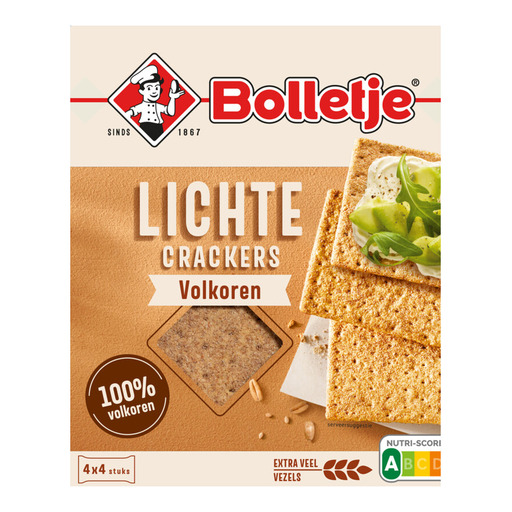 No image available
For anyone looking for a thin cracker to top and enjoy with coffee.
Thin doesn’t automatically mean comfortable or safe to eat if you have swallowing difficulties; check the allergens on the packaging too.
 No image available
For anyone who prefers an individual rusk to top and enjoy with coffee.
Albert Heijn lists 11 g of fibre and 0.47 g of salt per 100 g for these rusks. If you have allergies, check the current packaging; rusks are still a brittle choice.
 No image available
A crunchy, flat base for anyone who’d like to top crispbread and enjoy it with coffee.
If you’re choosing this product specifically for its wholemeal flour or fibre content, check the ingredients and fibre per 100 g on the packaging.
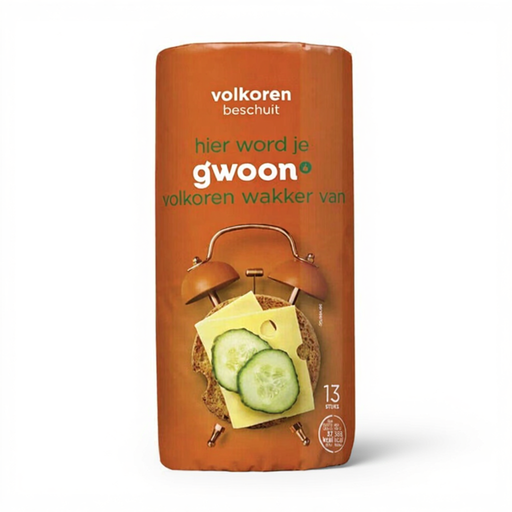 No image available
A small pack of crispbreads for anyone looking for a base to top and enjoy with coffee.
Before comparing these with other products, check the ingredients, allergens and the basis used for the nutritional values on the packaging.
Look for the wholemeal label and read the ingredients list; a brown colour or the words ‘multigrain’ aren’t the same thing. According to the Voedingscentrum, toast or crackers can only be called wholemeal if the flour used is entirely wholemeal.
You can’t tell from the shape of the product alone. Thuisarts advises contacting your GP if you have difficulty swallowing. Don’t choose a dry product on your own just because it looks thin or light.
No. Consider the toppings and what else someone eats during the day too. The Voedingscentrum points out that energy needs decrease after the age of 70, while getting enough nutrients remains important. If someone has a reduced appetite or is losing weight unintentionally, they need individual advice.
You can’t assume that for every product. Check the current ingredients list to find out what type of salt is used in the toast, crackers or rusks you’ve chosen.
The packaging helps you check the ingredients, allergens and nutritional values of the product you’re actually using. Make sure you’re comparing like with like, such as per 100 g, before comparing rusks with small pieces of toast.