
Vandaag of morgen in huis

Kwaliteit gegarandeerd

Welkomstaanbiedingen ontgrendelen: GRATIS bezorging | Tot 80% korting | Gratis 30 dagen JoyPlus-proefperiode
Download de app
Opting for whole wheat spaghetti from the pasta aisle is a conscious choice. You're looking for a more nutritious meal, likely with a higher fibre content. But then, doubts arise: will 100% whole wheat be too intense in flavour for the family? And what exactly is the difference compared to semi-whole wheat spaghetti? Making the wrong purchase is a waste of both food and money.
This article provides a factual overview of the criteria to consider when buying whole wheat spaghetti. We will examine the product specifications to help you make an informed decision that aligns with your taste preferences and nutritional goals.
To choose the right fibre-rich pasta, it's helpful to understand three specific product characteristics: the whole wheat percentage, the type of wheat used, and the nutritional values.
The most decisive factor for flavour, texture, and fibre content is the proportion of whole wheat flour.
For high-quality Italian pasta, the use of durum wheat (grano duro) is a key indicator. This hard wheat variety has a high protein and gluten content. This ensures the spaghetti holds its shape during cooking and achieves a good 'al dente' bite. For both 100% and 50% whole wheat varieties, durum wheat spaghetti is the standard for an authentic pasta experience.
The primary reason for choosing whole wheat is its dietary fibre content. This is always listed on the packaging under 'Nutritional value per 100 g'.
By comparing these values, you can objectively determine which product best meets your desire for a healthy pasta.
Based on the criteria above, we have highlighted two products that cater to different needs. These recommendations are based on an analysis of their product specifications.
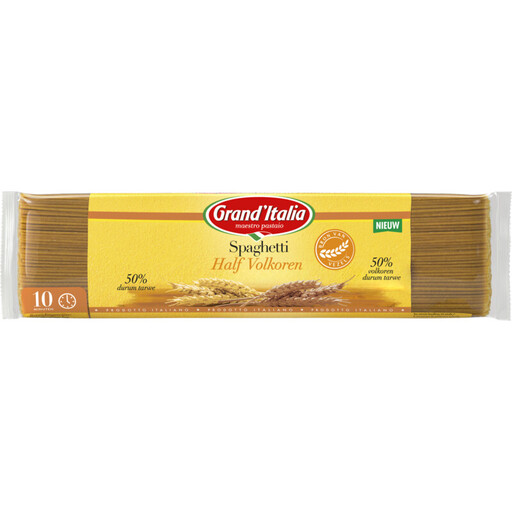
Why this product This is a balanced product that introduces the benefits of whole wheat without completely abandoning the flavour and texture of traditional pasta. The blend of 50% whole wheat and 50% durum wheat semolina makes it an approachable choice.
Advantages (Pros)
Who is this for This product is particularly suitable for families with children or for individuals making the switch to fibre-rich pasta for the first time. It's an excellent way to gradually add more fibre to the diet.
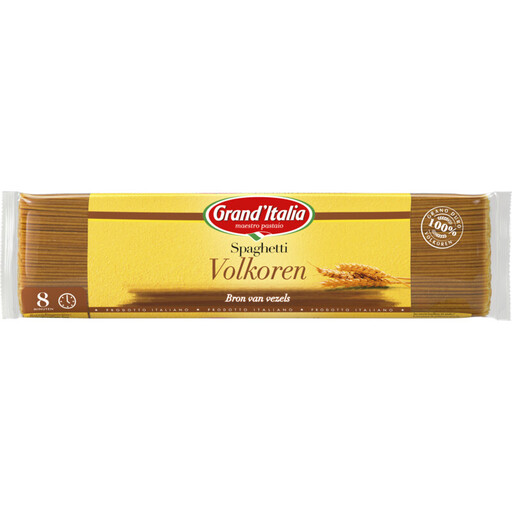
Why this product This spaghetti is for the consumer who fully embraces the nutritional benefits of whole wheat. Made with 100% whole wheat flour, this product offers the maximum fibre content within the Grand'Italia spaghetti range.
Advantages (Pros)
Who is this for This product is ideal for health-conscious consumers who are accustomed to the taste of whole wheat products and are looking for a pasta with the highest possible fibre content.
Besides whole wheat pasta, there are other ways to incorporate fibre-rich ingredients into your dishes. For example, a pasta sauce can be enriched with plant-based sources of fibre and protein, such as lentils, chickpeas, or beans. These ingredients add not only nutritional value but also texture and flavour.
For those looking for these types of plant-based additions, our vegan legumes category offers a wide range of options.
1. Is whole wheat spaghetti healthier than regular spaghetti? Based on nutritional values, whole wheat spaghetti contains significantly more dietary fibre than white spaghetti. Fibre contributes to normal digestion and a feeling of fullness after a meal. Additionally, the whole grain kernel naturally contains more vitamins and minerals than the 'white' version, from which the bran and germ have been removed.
2. What is the difference in taste and texture? 100% whole wheat spaghetti has a darker colour, a firmer, sometimes slightly coarser texture, and a more pronounced, nutty flavour. Semi-whole wheat spaghetti falls in between: it is lighter in colour and flavour than the 100% version and more closely resembles the texture of white pasta, but it has a subtle whole wheat aroma.
3. How do I prepare whole wheat spaghetti? The preparation method is identical to that of white spaghetti: cook in a large pot of salted water. The cooking time for whole wheat spaghetti is often slightly longer than for white spaghetti. Always consult the packaging for the recommended cooking time to achieve an 'al dente' result.
Written by the Joybuy Product Recommendation Officer
Our recommendations are based on an analysis of product parameters and specifications, not marketing claims.
