
Households comparing fibre content
If you serve rye bread to older people and fibre is important to you, check for wholegrain rye on the ingredients list and compare the fibre per 100 g across products.


For afternoon coffee, start by choosing rye bread whose ingredients list includes wholegrain rye, then compare the fibre and salt per 100 g. Sliced bread is a good choice when you want a base that can be topped; crispbread is an alternative if the person eating it prefers a crisp, drier bite. Rye contains gluten and is not suitable for people with coeliac disease.
If you serve rye bread to older people and fibre is important to you, check for wholegrain rye on the ingredients list and compare the fibre per 100 g across products.
If you prefer to serve sliced rye bread rather than a hard cracker with afternoon coffee, consider the product format, the texture you want and the storage instructions.
If you have coeliac disease, allergies or need to manage your salt intake, pay close attention to the ingredients, allergens and nutritional information on the current packaging.
First decide whether a slice of rye bread or a crisp base would suit your coffee break. Then check the ingredients and compare the nutritional values per 100 g, so different portion sizes don’t skew the comparison.
| What to consider | What to check when buying | Who is this important for? |
|---|---|---|
| Wholegrain rye and fibre | Look for wholegrain rye or wholemeal rye flour in the ingredients list and compare the fibre per 100 g. | If fibre is my main priority, I want to see what’s in the bread and how much fibre it contains. This combination is a priority for around 50% of consumers. |
| Product format and texture | Check whether it’s sliced rye bread or crispbread, and whether the texture suits the person eating it. | With my coffee, I want to be able to top a slice without the hard, dry texture of a cracker getting in the way. Around 33% of consumers say they prioritise this type of product. |
| Salt and allergens | Compare the salt per 100 g and read the current ingredients and allergen information. | If I need to take a dietary restriction into account, I need to know which grains and allergens the product contains before serving it. For around 17% of consumers, checking the label is the most important consideration. |
A dark colour or the words ‘multigrain’ don’t, by themselves, tell you which wholegrain ingredients have been used.
Read the ingredients list, then compare the fibre and salt per 100 g.
The nutritional values listed by Jumbo for Brood van Soma Limburgs Volkoren Roggebrood and Bolletje Licht Volkoren Roggebrood differ in both fibre and salt. Choosing based on just one of these values won’t tell you the whole story.
Compare both values per 100 g for products of the same type.
According to the Voedingscentrum, rye contains gluten. Rye products are therefore unsuitable for people with coeliac disease. If you have other allergies, it’s also important to check the other ingredients and allergen information.
Read the label on the product you’re actually buying before serving it.
A product description is no substitute for the information on the packaging you take home.
When buying, check the ingredients, nutritional information, best-before date and storage instructions.
These examples show the product differences you can compare on the label; the values shown apply to the specific varieties mentioned.
Jumbo lists products under this brand including Limburgs Volkoren Roggebrood and Volkoren Rogge-Tarwebrood.
The Licht Volkoren Roggebrood variety reviewed is a sliced loaf made with wholegrain rye and wheat.
The Roggebrood 100% Volkoren variety is described as a product cut into thin slices.
Below are rye bread and crispbread products you could consider for afternoon coffee. Decide whether you want a slice or a cracker before buying, and always check the current label if you have dietary restrictions.
 No image available
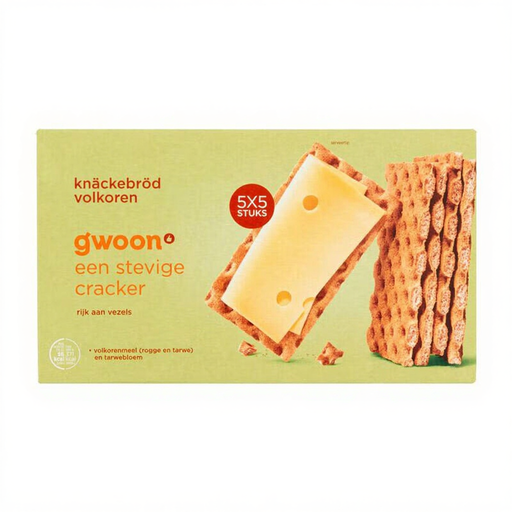
An option if you’d like to serve rye bread with coffee. Check the packaging for wholegrain rye in the ingredients, compare fibre and salt per 100 g, and consider whether the texture suits the person eating it.
 No image available
A crisp option if the person eating it would rather have crispbread than a slice of rye bread. Check which grains and allergens are listed on the packaging, and compare the nutritional values per 100 g.
 No image available
Consider this product only if its actual format suits your coffee break: the product title suggests a bread roll, while the description refers to sliced rye bread. Also check the packaging for ingredients and allergens.
 No image available
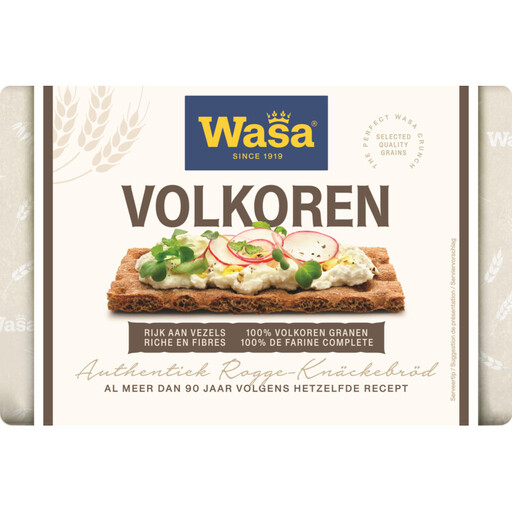
An alternative to a slice you can top if you’d prefer a crisp bite. Check the current packaging to see which grains it contains, and compare fibre, salt and allergens with other crispbreads.
 No image available
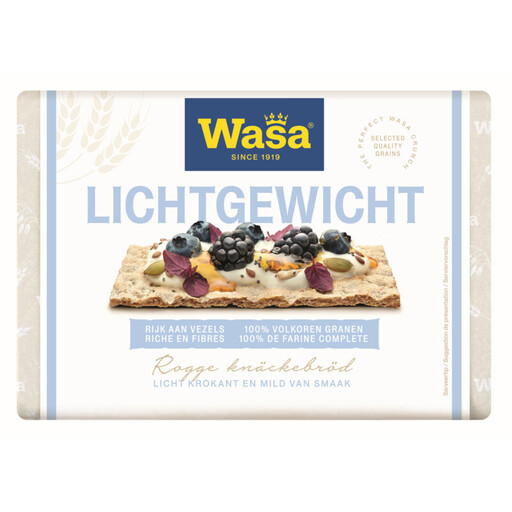
These crackers are an option if you’re looking for a crisp base, rather than a slice of rye bread to serve. Check which grains are used and read the nutritional values and allergen information on the packaging.
Read the ingredients list and look for wholegrain rye, wholemeal rye flour or wholegrain cracked rye. Then compare the fibre per 100 g; a dark colour or the words ‘multigrain’ don’t, by themselves, confirm that it’s wholemeal.
No. According to the Voedingscentrum, rye contains gluten, so rye bread is not suitable for people with coeliac disease. If you choose an alternative, check that it is currently labelled gluten-free.
Compare the salt per 100 g, as recommended by the Voedingscentrum when comparing labels. Comparing per slice can be misleading if the portions aren’t the same size.
Check the ingredients list for the product you’ve chosen for a mention such as ‘iodised salt’. Jumbo lists this ingredient for the Brood van Soma varieties reviewed; don’t assume every pack has the same ingredients.
Yes. When planning a coffee break for older people, remember to include a drink. The Voedingscentrum highlights the importance of getting enough fluids as we get older; any individual guidance on fluid intake should take priority.