For a simple base for your toppings, you can choose plain wholemeal rusks. If you’d prefer a more distinctive texture, consider a darker variety or one with seeds. For St Nicholas’ Eve, compare the fibre per 100 g and per rusk, the number of rusks in the pack, and the current ingredients and allergens too. A darker colour or seeds don’t automatically make a rusk suitable for every guest.
Who might find this choice useful?
Households keeping an eye on fibre
If you want to serve wholemeal rusks and know how much fibre each one provides, check the serving size on the pack. According to the Netherlands Nutrition Centre, its food database lists 0.8 g of fibre for a 10 g wholemeal rusk. This is a general reference, not a figure for every individual product.
Hosts serving rusks with toppings
For sweet or savoury toppings, you can choose between plain wholemeal rusks and varieties with a more distinctive texture. Product descriptions from Bolletje and PLUS include robust rusks and rusks with seeds. Choose the type you want to serve based on your planned toppings and your guests’ preferences.
Households that need to check labels
If you’re buying for someone with a food allergy or dietary restriction, read the ingredients and allergen information on the pack you’re actually buying. The Netherlands Food and Consumer Product Safety Authority stresses the importance of clear allergen labelling on prepacked foods.
What should you look for in wholemeal rusks?
First decide which rusks you want to serve with your toppings and how many you’ll need. Then compare the nutritional information and, for guests with dietary restrictions, check the current label.
| What to consider |
What to check when buying |
Who it matters to |
| Wholemeal and fibre |
Check the product description and compare fibre per 100 g and per rusk. |
If fibre is my priority, I want to know how much the rusks I serve provide per piece. Around 33% of consumers prioritise this fibre contribution. |
| Texture and size |
Check whether the rusks are described as light, robust or made with seeds, and check their size. |
With generous toppings, I look for a size and texture I’m happy to serve, even if the flavour is less neutral. For around 20% of consumers, this combination matters most. |
| Ingredients and allergens |
Read the current ingredients list, highlighted allergens and any warnings on the pack. |
When buying for a guest with a dietary restriction, I need to be able to check the listed ingredients and allergens before serving. Around 20% of consumers give these label checks top priority. |
| Number of rusks and range |
Compare the number of rusks and the pack weight with the amount you want to serve. |
For a small gathering, I want to buy enough rusks without having too many left over. For around 27% of consumers, planning their shopping this way comes first. |
What’s easy to overlook?
-
Taking a dark colour as a complete nutritional comparison
The colour or a robust-sounding product name won’t tell you how much fibre or salt a particular rusk contains. The 0.8 g of fibre per 10 g rusk quoted by the Netherlands Nutrition Centre is a general database figure for wholemeal rusks.
Compare the nutritional information for the products you’re considering, paying attention to the amounts per 100 g and per rusk.
-
Relying only on online allergen information
Albert Heijn points out that product ingredients, nutritional values and allergen information can change. This is especially important when you’re buying rusks for a guest with an allergy.
Before serving, check the ingredients and allergens on the current pack, including any warnings.
-
Assuming every rusk contains iodine from baker’s salt
According to the Netherlands Nutrition Centre, bakers aren’t required to use baker’s salt. So the name ‘wholemeal rusk’ doesn’t confirm whether baker’s salt was used in that product.
If you want to know about a specific rusk, check the product information or ask the manufacturer.
-
Forgetting to check the number of rusks when planning
The wholemeal products listed vary in number and size. For example, Bolletje, Jumbo and ALDI list packs of 13, while Bolletje also lists a dark variety containing 10.
Decide how many rusks you want to serve, then compare the pack sizes.
A pack that doesn’t suit the number of guests could leave you with leftover rusks or mean you need to buy an extra pack.
Brands with relevant wholemeal rusks
Bolletje
Bolletje offers plain wholemeal rusks, a dark variety and individually wrapped Volkoren Beschuit Mono.
- Product information from Bolletje and Jumbo lists ingredients including oat flakes and seeds for the dark variety.
- Bolletje says the Mono variety isn’t available in supermarkets. Compare the nutritional information and ingredients for each variety separately.
Albert Heijn
Albert Heijn lists AH wholemeal rusks alongside wholemeal varieties from Bolletje.
- You can compare the product information for a supermarket own-brand and a branded variety.
- Albert Heijn says ingredients, nutritional values and allergen information can change, so check the pack when you buy.
Jumbo
Jumbo lists its own-brand wholemeal rusks, including an organic variety, as well as rusks from Bolletje.
- The organic wholemeal variety gives you a separate option if that’s the specific label you’re looking for.
- The organic label alone won’t tell you how much fibre a rusk contains or which allergens it includes.
PLUS
PLUS lists plain wholemeal rusks and a larger wholemeal variety with seeds.
- PLUS lists the plain variety in a 125 g roll and describes the other as a large, crisp rusk with over 25% seeds and kernels.
- Compare the ingredients and nutritional information for the two varieties separately; seeds change the product’s composition.
Lidl
Lidl lists wholemeal rusks as part of its range.
- This is an option to consider if you shop at Lidl.
- Check the pack for the nutritional information, ingredients and allergens of the product you buy.
ALDI
ALDI lists Goud Gebakken wholemeal rusks in a pack of 13.
- The stated number of rusks helps you plan how much to buy for your gathering.
- If you’re buying for guests with dietary restrictions, check the ingredients and allergens on the current pack.
Rusks and products with seeds on Joybuy
These products reflect three things to consider for St Nicholas’ Eve: dark wholemeal rusks, a plain wholemeal roll and a product with seeds. For the product with seeds, check that its type and texture match the kind of rusk you want to serve.
 No image available
Bolletje dark wholemeal rusks, 10 pieces
A dark wholemeal variety to consider if you’re looking for a rusk with a more distinctive character to serve with your toppings. The pack contains 10 pieces; compare the nutritional information and check the current ingredients and allergens before serving.
View on Joybuy
 No image available
Bolletje wholemeal rusks, 13 pieces
A plain wholemeal roll if you want to serve rusks as a base for toppings. The pack contains 13 pieces; check the current pack for the fibre per rusk and allergen information.
View on Joybuy
 No image available
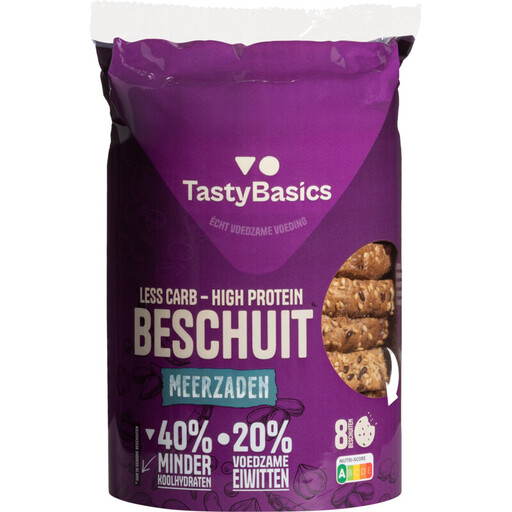
TastyBasics Multiseed Rusks, 184 g
A product with seeds to consider if you’re looking for a different base for your toppings. The pack is labelled 184 g; check that the product type and texture suit what you want to serve as Dutch-style rusks, and read the current ingredients and allergen information.
View on Joybuy
Frequently asked questions
Are wholemeal rusks automatically high in fibre?
The wholemeal label won’t tell you how much fibre each rusk you buy contains. According to the Netherlands Nutrition Centre, wholegrain cereal products contain more fibre than white cereal products. Its food database lists 0.8 g of fibre for one 10 g wholemeal rusk. For a specific product, compare the nutritional information on the pack.
Where can I check allergens when buying rusks for guests?
Before serving rusks to a guest with a food allergy or dietary restriction, read the allergen information on the current pack. Check the full ingredients list and any warnings too. The Netherlands Food and Consumer Product Safety Authority stresses that allergens must be clearly shown on the labels of prepacked foods.
Does every wholemeal rusk contain iodine from baker’s salt?
No, you can’t assume that from the product name. According to the Netherlands Nutrition Centre, bakers aren’t required to use baker’s salt. To be sure about a particular rusk, ask the manufacturer for product information.
How do I work out how many rusks I need for St Nicholas’ Eve?
Work out how many people will be eating and how many rusks with toppings you want to serve, then compare that number with the pack size. The wholemeal products listed include rolls of 10 and 13 pieces, while other varieties also differ in size and weight.


