Who is this choice relevant for?

Families who prioritise a wholemeal base

Children can decorate their own rusks with chocolate sprinkles while you choose a wholemeal grain base. According to the Netherlands Nutrition Centre, wholegrain cereal products contain more fibre than white cereal products. Check the nutritional information on the packaging to compare individual rusks.

Parents and carers who check allergens

If a child has a relevant allergy or intolerance, you should assess the rusk and topping separately. Albert Heijn’s product information lists allergens including wheat, egg, milk, soya and sesame for various rusks and chocolate sprinkles. Which ingredients are relevant will vary by product.

Carers organising a decorating activity for several children

You may want to portion out the chocolate sprinkles for each child and limit the sharing of toppings. A pack with individual portions can help, but check the ingredients of each variety in the pack.

What should you look for when choosing?

Choose the rusk base first, then check both products for allergens and decide how to portion out the chocolate sprinkles.

What to consider What should you check? Who is this important for?
Wholemeal base Look for a wholemeal label and compare fibre per 100 g. Also check whether the rusk is easy for the child to handle. If children are topping their own rusks, I want to choose a clearly labelled wholemeal base rather than judge by its colour. This is the main priority for around 42% of consumers.
Allergens Read the current allergen information for both the rusk and the chocolate sprinkles; use separate utensils if needed. If a child has a relevant allergy, I want to be able to check both products in advance and avoid contact between ingredients. This is the main concern for around 33% of consumers.
Portioning the topping Check the amount per portion and the ingredients of any different toppings. With several children, I want to portion out the chocolate sprinkles for each child and keep the decorating activity organised. Portion sizes are the main consideration for around 25% of consumers.

Common mistakes

  • Assuming a dark rusk is wholemeal

    The colour does not tell you whether the grain base is entirely wholemeal. If this matters to you, look for a clear wholemeal label.

    Read the product name and ingredients list rather than judging by appearance alone.

  • Checking only the rusk for allergens

    Rusks and chocolate sprinkles can contain different allergens. Albert Heijn lists ingredients including oats, barley and sesame for Bolletje Vezelrijk boeren beschuit volkoren, and milk and soya for De Ruijter Specials Intens Puur.

    Check the current labels on both products and, where necessary, use separate spoons, plates and work surfaces.

  • Assuming individual portions are a nutritional improvement

    Individually wrapped portions make it easier to share out the topping, but the ingredients can vary between toppings. According to Albert Heijn, De Ruijter Kleintjes contains eight individual portions.

    Choose individual portions if portioning matters during the decorating activity; check the nutritional information and ingredients for each topping separately.

  • Assuming every rusk contains baker’s salt

    The product category does not tell you which salt was used in a particular rusk.

    If baker’s salt is important to your choice, check the ingredients list or ask the manufacturer.

Brands to compare

Bolletje

A useful option if you want to compare the nutritional information and ingredients of wholemeal rusk varieties.

  • Albert Heijn lists 11 g of fibre per 100 g for Bolletje Volkoren beschuit and 10 g per 100 g for Bolletje Vezelrijk boeren beschuit volkoren.
  • The boeren variety also lists oats, barley and sesame. Check the ingredients for each variety.

Albert Heijn

The own-brand range includes a wholemeal rusk you can consider as a base for chocolate sprinkles.

  • AH Beschuit volkoren lists 9 g of fibre per 100 g and comes in a pack containing 13 portions of 11 g.
  • The product information lists wheat and egg as allergens. Check the current label when you buy it.

De Ruijter

A useful option for comparing chocolate sprinkles and individually wrapped toppings to go with a rusk base of your choice.

  • According to Albert Heijn, De Ruijter Specials Intens Puur lists at least 52% cocoa solids, while De Ruijter Kleintjes contains eight individual portions.
  • The Intens Puur variety lists milk and soya. Ingredients may vary between toppings in a multipack.

Venz

A useful option if you want to compare the nutritional information for a dark chocolate sprinkle variety with other toppings.

  • According to Albert Heijn, Venz Hagelslag puur 30% minder suiker is compared with Venz Chocoladehagelslag melk; the claim applies to these specific products.
  • Albert Heijn marks the dark variety mentioned as discontinued. Check availability and the current product information before relying on it.

Products for the rusk base and topping

These products include two wholemeal rusks as possible bases, a crispbread as a different type of base, and chocolate sprinkles as a separate topping. Check that the shape of the base you choose is suitable for the children’s decorating activity.

Bolletje Dark Whole Wheat Rusk, 10 pieces

Bolletje Dark Whole Wheat Rusk, 10 pieces

A rusk to consider as a base when children are adding their own toppings; check that its shape and texture are suitable for the activity.

Pack size: 10 pieces. If there are allergies, check the current label for both the base and the topping.

View at Joybuy

Bolletje Wholegrain Rusk, 13 pieces

Bolletje Wholegrain Rusk, 13 pieces

A rusk base if you want to portion out the chocolate sprinkles yourself; check whether the children can handle its shape easily.

Pack size: 13 pieces. Compare fibre only when it is given on a clearly stated basis, such as per 100 g.

View at Joybuy
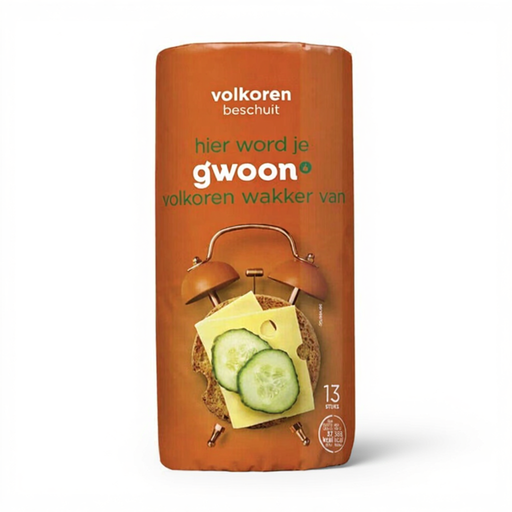
g'woon Wholegrain Crispbreads, 125 g

g'woon Wholegrain Crispbreads, 125 g

This crispbread is a different type of base from a rusk; choose it only if its shape works for the decorating activity.

Pack size: 125 g. Check the current label if the wholegrain content, fibre value or allergens are important to your choice.

View at Joybuy
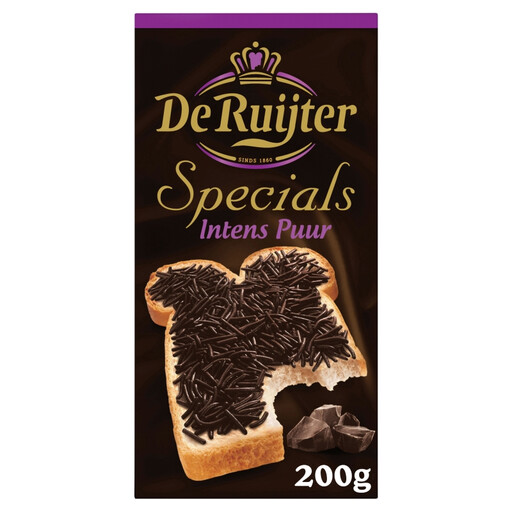
De Ruijter Intense Pure chocolate sprinkles, 200 g

De Ruijter Intense Pure chocolate sprinkles, 200 g

These chocolate sprinkles are a topping for a base chosen separately; decide how much each child should have.

Pack size: 200 g. Check the current ingredients and allergen information before decorating.

View at Joybuy

Frequently asked questions

Is a dark rusk always wholemeal?

No, don’t judge by colour alone. Check whether the packaging describes the rusk as wholemeal, and read the ingredients list if this matters to your choice.

Does a wholemeal rusk change the nutritional value of chocolate sprinkles?

No, choosing a rusk base does not change the composition of the chocolate sprinkles. Check the nutritional information for both products separately and decide how much topping to use.

Which allergens should I check in rusks with chocolate sprinkles?

Check the current labels for both the rusk and the chocolate sprinkles. Product examples listed by Albert Heijn include wheat, egg, milk, soya and sesame; ingredients vary by product and variety.

Does every rusk contain baker’s salt?

You can’t tell from the product category. Check the ingredients list for your chosen rusk or ask the manufacturer which salt was used if this matters to your choice.

How should I store rusks and chocolate sprinkles during the decorating activity?

Follow the storage instructions on both packs and reseal opened products after decorating. Use clean hands and clean utensils, as recommended by the Netherlands Nutrition Centre.
