
Families looking to compare fibre content
You’re looking for a wholemeal rusk as a base and want to compare the fibre per 100 g. Assess the chocolate sprinkles separately: adding them to a wholemeal rusk doesn’t make them wholemeal.


For a fussy eater, start by choosing a rusk labelled ‘wholemeal’ with a texture they like. Then compare the fibre per 100 g on the label. Add chocolate sprinkles as a separate topping, and keep an eye on the amount used, sugars, saturated fat and allergens. According to the Netherlands Nutrition Centre, chocolate sprinkles are not part of the Wheel of Five.
You’re looking for a wholemeal rusk as a base and want to compare the fibre per 100 g. Assess the chocolate sprinkles separately: adding them to a wholemeal rusk doesn’t make them wholemeal.
A plain, crisp rusk may be a better starting point than a darker variety with oats and seeds. Whether a child accepts either texture is a personal matter.
You want to control the amount of topping and check the nutritional information and allergens for both the rusks and the chocolate sprinkles, without confusing the nutritional values of the two products.
First, choose a wholemeal rusk with a texture that’s right for you. Then compare the chocolate sprinkles as a separate topping.
| What to consider | What to check | Who it matters to |
|---|---|---|
| Taste and texture | Compare a plain, crisp rusk with the ingredients and texture of varieties containing oats or seeds. | If seeds or a different bite might be off-putting, I’d first choose a texture the eater is happy to try. For around 42% of consumers, taste and texture come first. |
| Wholemeal and fibre | Check that it’s labelled ‘wholemeal’ and compare fibre on the same basis, such as per 100 g. | I want to know whether the rusk base is genuinely wholemeal and how its fibre content compares. For around 33% of consumers, this is the top priority. |
| Topping and allergens | Check how much chocolate sprinkles you use, along with sugars and saturated fat; read the allergen information on both packs. | If chocolate sprinkles are part of the choice, I want to control the amount used and check the ingredients in both products. For around 25% of consumers, this matters most. |
A dark rusk with oats and seeds has a different composition and texture from a plain wholemeal rusk. That difference can be particularly important for a fussy eater.
Check that it’s labelled ‘wholemeal’ and read the ingredients list. Choose the seeded variety only if that’s the texture you’re looking for.
A wholemeal base doesn’t change the composition of the topping. The Netherlands Nutrition Centre excludes chocolate sprinkles from the Wheel of Five, partly because of their sugar and saturated fat content.
Compare the nutritional information for the rusks and chocolate sprinkles separately, and decide how much of the topping to use.
Rusks and chocolate sprinkles may contain different allergens, and product recipes can change.
If you have a food allergy, check the latest allergen information on both packs before using the products.
The Dutch rules on iodine in baker’s salt don’t mean that every rusk contains iodised baker’s salt or provides a set amount of iodine.
Don’t treat rusks as a guaranteed source of iodine. Check product-specific information if iodine is important to your choice.
A plain wholemeal rusk and a dark variety with oats and seeds offer different textures.
AH Wholemeal Rusks are a wholemeal option without the seed coating found on the dark Bolletje variety reviewed.
Jumbo Wholemeal Rusks are another option to compare for their nutritional values and ingredients.
The Intens Puur chocolate sprinkles reviewed are a separate option for anyone looking for a pronounced dark chocolate flavour.
The Venz Dark Chocolate Sprinkles reviewed are a dark chocolate topping, not a wholemeal base.
ALDI describes Goud Gebakken wholemeal rusks as light and crisp.
These products let you consider the wholemeal rusk base and the chocolate sprinkles as two separate choices. The rusks vary in composition and texture; for the chocolate sprinkles, taste and the amount used are worth considering.
 Image unavailable
A crisp wholemeal base to top separately with chocolate sprinkles.
Jumbo lists 11 g of fibre per 100 g for this variety. Check the current pack to see the fibre content per 100 g and per serving. If you have allergies, also check the information about wheat and egg.
 Image unavailable
A wholemeal base to consider if oats and seeds are welcome in terms of texture.
The product information lists oat flakes and seeds. This may not suit someone who prefers a plain, crisp rusk; check the allergens on the pack.
 Image unavailable
A separate topping for anyone who wants to use dark chocolate sprinkles and is already familiar with the flavour.
Albert Heijn lists at least 52% cocoa solids, 43 g of sugars and 12 g of saturated fat per 100 g for the Intense Dark variety reviewed. Decide how much to use and check the allergens on the pack.
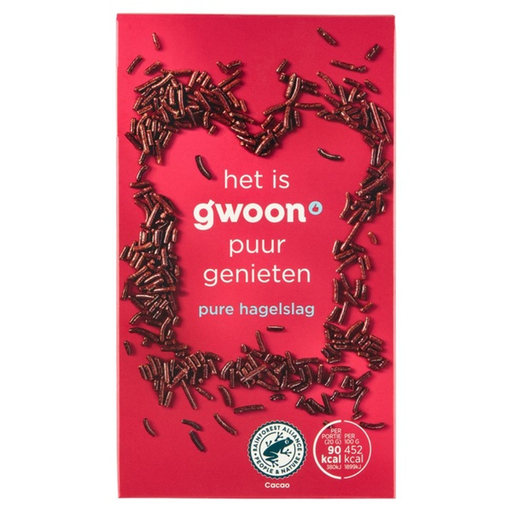 Image unavailable
Dark chocolate sprinkles to use as a separate topping on your chosen wholemeal rusk.
The pack contains 400 g. Use the nutritional information on the pack to assess the sugars and saturated fat in the amount you sprinkle on, and read the allergen information.
No. ‘Wholemeal’ describes the rusk base, not the topping. Assess the ingredients and nutritional information for the chocolate sprinkles separately.
The Netherlands Nutrition Centre excludes chocolate sprinkles from the Wheel of Five and advises not eating too much of them, or eating them too often, partly because of their sugar and saturated fat content. Decide how much topping to use separately from your choice of wholemeal rusks.
Read the latest allergen information on both packs. The rusks reviewed include wheat and egg; the dark variety with oats and seeds also requires you to check for barley and sesame. Milk and soya are relevant allergens in the dark chocolate sprinkles reviewed.
No. The Netherlands Food and Consumer Product Safety Authority describes a limited route for adding iodine to bakery products through baker’s salt: a maximum of 65 mg of iodine per kg of salt. This doesn’t mean that every pack of rusks contains iodised baker’s salt or provides a set amount of iodine.
Store rusks in a dry, sealed container to keep them crisp. Albert Heijn and Bolletje product information recommends an airtight tin or a cool, dry place.