What should you look for when choosing?
First, decide when you’ll be cycling and how much you want to eat. Then compare the rusks and chocolate sprinkles separately: a wholemeal base tells you nothing about the sugars or fats in the topping.
| What to consider |
What to check when buying |
Who should pay particular attention? |
| Time before setting off and portion size |
Work out how much time there is between breakfast and your ride, and choose a portion you know you can tolerate. |
If I’m setting off soon after breakfast, I don’t want to start an intense ride with a large portion. For around 36% of consumers, the time before setting off and how well they tolerate the food are the deciding factors. |
| Fibre in the rusks |
Compare fibre per 100 g and check whether wholemeal flour is listed in the ingredients. |
If you also eat wholemeal rusks on other days, you’ll want to know how much fibre the rusk base contains. For around 29% of consumers, this everyday fibre choice comes first. |
| Chocolate sprinkles and serving size |
Compare sugars and fats per 100 g, and work out how much chocolate sprinkles you actually use. |
When I add chocolate sprinkles to my rusks, I want to know what my serving size means for breakfast. The amount of topping is the main concern for around 21% of consumers. |
| Ingredients and allergens |
Read both ingredient lists; also check for baker’s salt or iodised salt if iodine is relevant to you. |
If I have an allergy or a question about iodine, I want to be able to assess the rusk and chocolate sprinkle packets separately. For around 14% of consumers, checking the label is the first step in choosing. |
Brands and product ranges compared
For rusks, compare the fibre in the specific variety; for chocolate sprinkles, compare the sugars, fats and serving size. The brand name alone won’t tell you how they differ.
Bolletje
Bolletje Wholemeal Rusks are a useful base to compare if you want to check the fibre in your breakfast.
- Albert Heijn lists Bolletje Wholemeal Rusks as containing 11 g of fibre and 64 g of carbohydrates per 100 g.
- That fibre content doesn’t automatically make a large portion suitable just before an intense ride. If you have allergies, also check the label on the packet you choose.
Albert Heijn
AH Wholemeal Rusks offer another wholemeal base to compare using the nutritional information.
- Albert Heijn lists AH Wholemeal Rusks as containing 9 g of fibre and 64 g of carbohydrates per 100 g.
- Assess any chocolate sprinkle variety separately: the nutritional value of the rusks doesn’t describe the complete combination.
De Ruijter
De Ruijter has several dark chocolate sprinkle varieties, including a standard and an intense dark version.
- Albert Heijn lists De Ruijter Dark Chocolate Sprinkles as containing 64 g of sugars and 15 g of fat per 100 g. De Ruijter Specials Intens Puur contains at least 52% cocoa solids and 43 g of sugars per 100 g.
- Also compare the fat content and how much you sprinkle on. A higher cocoa percentage alone doesn’t tell you which variety is better suited to your pre-ride breakfast.
Venz
Venz Dark Chocolate Sprinkles are another dark topping to assess alongside your rusk base.
- Albert Heijn lists Venz Dark Chocolate Sprinkles as containing 65 g of sugars per 100 g.
- For your own breakfast, also check the fats, the amount you use and the allergens listed on the current packet.
Individual rusk and chocolate sprinkle products
These products are individual components for a breakfast of wholemeal rusks and chocolate sprinkles: one rusk base and two dark chocolate sprinkle varieties. Choose each component separately and check the nutritional information for the portions you plan to use.
 Image unavailable
Bolletje Wholemeal Rusks, 13 pieces
A wholemeal rusk base for a breakfast that leaves time between eating and cycling.
Pack size: 13 pieces. Check the packet for fibre per 100 g and the amount in each rusk if you want to assess your own portion.
These are rusks without chocolate sprinkles; if you have allergies, check the current ingredients for both products you choose.
View at Joybuy
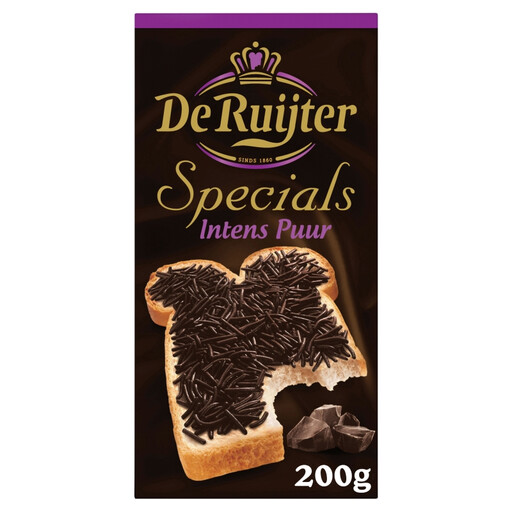 Image unavailable
De Ruijter Intense Dark Chocolate Sprinkles, 200 g
An intense dark topping for anyone who wants to control how much they put on their rusks.
Pack size: 200 g. Compare sugars and fats per 100 g and decide on your serving size, especially if you’ll be cycling hard soon after breakfast.
This product doesn’t include rusks; check the ingredients and nutritional information for your chosen rusk base separately.
View at Joybuy
 Image unavailable
De Ruijter Dark Chocolate Sprinkles, 390 g
Dark chocolate sprinkles to use as a separate topping on rusks for a planned breakfast.
Pack size: 390 g. Albert Heijn lists De Ruijter Dark Chocolate Sprinkles as containing 64 g of sugars and 15 g of fat per 100 g; the amount you sprinkle determines your portion.
Only combine this product with rusks after checking the ingredients on both packets if allergens are relevant to your choice.
View at Joybuy
Frequently asked questions
Can I eat wholemeal rusks with chocolate sprinkles just before cycling?
A small portion may be different from a full breakfast just before setting off, but wholemeal rusks with chocolate sprinkles aren’t automatically comfortable to eat before an intense ride. The Netherlands Nutrition Centre recommends leaving around 2 to 3 hours between a meal and exercise. If you have less time, consider your portion size and what you personally tolerate.
Which nutritional values should I compare for rusks with chocolate sprinkles?
Compare the fibre in the wholemeal rusks with the sugars and fats in the chocolate sprinkles separately, ideally per 100 g and for the amount you use. This helps you avoid mistaking the nutritional value of one component for that of the whole breakfast.
Do rusks always contain iodised baker’s salt?
No, you can’t tell from the word ‘rusks’. According to the Netherlands Nutrition Centre, bakers don’t always use baker’s salt, so check the ingredients list for the specific product if this is relevant to your choice.
Which allergens should I check in this combination?
Check the current packaging for the rusks and chocolate sprinkles separately. The wholemeal rusks described in this comparison list wheat or gluten and egg; for the dark chocolate sprinkle varieties described, milk and soya are allergens to look out for. Always refer to the labels on the specific varieties you choose.


