
Shoppers comparing fibre content
You want rusks with chocolate sprinkles for a festive breakfast and are looking for a wholemeal base. Compare the ingredients and fibre per 100 g rather than judging by the colour of the rusks alone.


For a festive breakfast with chocolate sprinkles, start by choosing wholemeal rusks: check the ingredients and compare the fibre per 100 g. A larger rusk with seeds has a different texture and calls for extra attention to allergens. Choose the chocolate sprinkles separately as a topping or decoration for your bakes.
You want rusks with chocolate sprinkles for a festive breakfast and are looking for a wholemeal base. Compare the ingredients and fibre per 100 g rather than judging by the colour of the rusks alone.
You want to finish your Christmas bakes with chocolate sprinkles. Choose the topping separately from the rusks, and check the ingredients of the chocolate sprinkles you select.
If ingredients such as wheat, egg, sesame, milk or soya matter to you, read the labels on both the rusks and the chocolate sprinkles. A suitable choice for one doesn’t tell you anything about the other.
For a Christmas breakfast, choose your rusk base and chocolate sprinkles separately: their ingredients, nutritional information and roles at the table are different.
| What to consider | What to check when buying | Who it matters to |
|---|---|---|
| Wholemeal and fibre | Check the wholemeal description and ingredients; compare the fibre per 100 g on the pack. | For my Christmas breakfast, I want to know first whether my rusks are genuinely wholemeal and how much fibre the base contains. Around 40% of consumers prioritise this choice. |
| Size and texture | Compare the size of the rusks and check whether the variety contains oat flakes or seeds. | I’d prefer rusks with a texture that suits how I plan to serve them under the chocolate sprinkles. For around 30% of consumers, this combination of taste and texture matters most. |
| Ingredients and allergens | Check both labels. Look out for any seeds in the rusks and the listed allergens in the chocolate sprinkles. | When putting together the breakfast, I need to know what’s in both the base and the topping. Checking the ingredients is the top priority for around 20% of consumers. |
| Availability | Before planning your Christmas shopping, check that the variety you want is available. | I want to be able to buy my chosen rusks in good time, before deciding on the topping and decoration. Around 10% of consumers prioritise availability. |
The Netherlands Food and Consumer Product Safety Authority explains that the wholemeal description depends on the grain flour used, not the colour. In 2024, the authority also reported incorrect wholemeal claims on the products it examined.
Check the wholemeal description and ingredients on the pack you’re buying.
Here, chocolate sprinkles are a topping or decoration; you choose wholemeal rusks separately. The product pages for Albert Heijn and Jumbo list 64 g and 65 g of sugars per 100 g respectively for the De Ruijter and Venz dark chocolate sprinkles examined.
Choose your rusks first, then check the nutritional information and ingredients of the chocolate sprinkles you want to use.
The rusk varieties described and the dark chocolate sprinkles contain different listed allergens. Sesame is also listed for the dark rusks with seeds.
Read both packs before buying, even if you’re only replacing one of the products.
According to the Netherlands Nutrition Centre, bakers aren’t required to use baker’s salt. So the wholemeal description doesn’t tell you which salt was used in a particular rusk.
If the type of salt matters to your choice, check the ingredients on the pack.
Two types of rusks to compare if you want a regular or larger, dark wholemeal option under your chocolate sprinkles.
A supermarket own-brand option if you’re looking for wholemeal rusks as a base for separately chosen chocolate sprinkles.
A supermarket own-brand option to include when comparing wholemeal rusk varieties.
Dark chocolate sprinkles to consider as a topping or to finish your bakes, separately from your wholemeal base.
Another dark chocolate sprinkle option to compare if you want to top rusks or finish your bakes.
These products include wholemeal rusks for a festive breakfast and dark chocolate sprinkles to use separately as a topping or to finish your bakes. Choose your rusk base and topping according to their ingredients and how you plan to use them.
 Image unavailable
For anyone who wants a larger, dark rusk with oat flakes and seeds under their chocolate sprinkles.
Jumbo lists 10 g of fibre per 100 g for this variety. Check the wholemeal description and ingredients on the current pack, including the listed wheat, oats, barley and sesame.
 Image unavailable
A wholemeal rusk base for chocolate sprinkles if you’re not looking for a dark variety with seeds.
Albert Heijn lists 11 g of fibre per 100 g for Bolletje Wholemeal Rusks. Check the ingredients on the current pack, especially if wheat, egg or sesame matters to your choice.
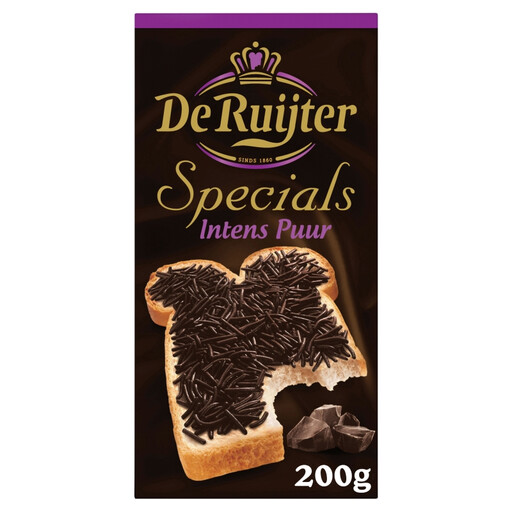 Image unavailable
Dark chocolate sprinkles for decorating cupcakes or scattering over rusks. Choose your rusk base separately.
Check the label for milk and soya. If you want to add the sprinkles while baking, follow a recipe that tells you when to add them.
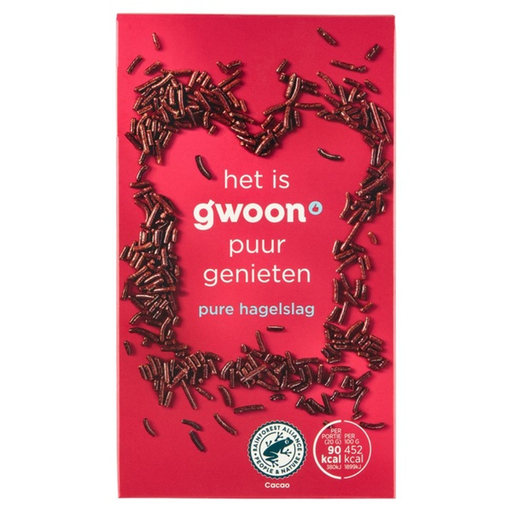 Image unavailable
Chocolate sprinkles to use as a topping for cakes or as a topping on rusks.
Read the ingredients if milk or wheat matters to your choice. If you’re using them in baking, follow a recipe that tells you when to add them.
 Image unavailable
Dark chocolate sprinkles for rusks or to finish cupcakes.
Check the label for milk and soya. If you’re adding them while baking, follow a recipe that specifies when to do so.
Check the wholemeal description and ingredients of the rusks you’re buying. According to the Netherlands Food and Consumer Product Safety Authority, a product can only be called wholemeal if all its grain ingredients are wholemeal flour. Also compare the fibre per 100 g in the nutrition table.
Yes. The product pages for the De Ruijter and Venz varieties examined mention using chocolate sprinkles to finish bakes. If you’re adding them during baking, follow a recipe that tells you when to add them, and check the label for allergens too.
Before serving, read the labels on both the rusks and the chocolate sprinkles. The wholemeal rusks described here list wheat/gluten and egg; the dark variety also lists ingredients including oats, barley and sesame. The dark chocolate sprinkles examined list different allergens, including milk and soya.
No. The wholemeal description doesn’t tell you what type of salt was used. The Netherlands Nutrition Centre says that bakers aren’t required to use baker’s salt. Check the ingredients list if the type of salt matters to your choice.