For a school-holiday lunch, compare the fibre, salt and allergens in the exact variety before choosing wholemeal toast or plain melba toast. Wholemeal toast may suit you if you’re looking for a wholegrain base; plain melba toast is an alternative if you’d prefer a thin, neutral-tasting option. Neither automatically makes a complete lunch: Voedingscentrum recommends choosing wholemeal for school lunches and adding vegetables or fruit.
Who is this comparison for?
Parents putting together a wholemeal lunch
You’re looking for a crisp base, but want to know how it compares with wholemeal bread. Voedingscentrum recommends choosing wholemeal for school lunches and adding vegetables or fruit. So compare not just the toast, but what you serve with it, too.
Lunchbox planners looking for thin toast
You want toast that you can top and take with you. Van der Meulen describes its plain melba toast as extra thin and crisp. Check whether that texture works with your toppings and how you plan to transport it.
Shoppers who need to check allergens
Check each specific variety to see which gluten-containing cereals, sesame or soya it contains, and whether any possible traces are listed. The Netherlands Food and Consumer Product Safety Authority says relevant allergens must be clearly listed on the labels of pre-packed foods.
What should you look for when choosing?
First compare the type of cereal product and its nutritional information. Then check whether the texture and packaging suit the lunch you want to put together. With melba toast, the description ‘medium sliced’ doesn’t necessarily tell you how thick or firm the product is.
| What to consider |
What to check when buying |
Who is this most important for? |
| Wholemeal and fibre |
Read the ingredients and compare fibre and salt per 100 g. Van der Meulen lists 9,7 g of fibre and 1,9 g of salt per 100 g for its wholemeal melba toast; the plain variety contains 3,9 g of fibre and 1,3 g of salt. |
If I want a wholemeal base for lunch, I look beyond the colour or name of the toast. Around 42% of consumers put this nutritional information first. |
| Texture and size |
Check the thickness, size and number of pieces. Consider whether the toast will fit in your lunchbox with your chosen toppings. |
For a lunch I’m taking with me, I want toast that’s easy to top and enjoyable to eat. This practical consideration comes first for around 33% of consumers. |
| Packaging and availability |
Compare the net weight, best-before date and storage instructions. Check where you can buy the variety you want. |
When I’m buying for several lunches, I want a pack I can use in time. This is the most important factor for around 25% of consumers. |
Common mistakes
-
Assuming brown or multigrain means wholemeal
The name and colour don’t tell you how much fibre a toast contains. Van der Meulen’s product information lists 9,7 g of fibre per 100 g for its wholemeal melba toast and 3,9 g for the plain variety.
If you’re looking for wholemeal, read the ingredients list and compare the fibre content on the same basis, for example per 100 g.
-
Assuming which allergens are present based on the type of toast
Varieties differ in the cereals they use and in whether sesame, soya or possible traces are listed. A wholemeal name doesn’t tell you whether a product is suitable for someone with an allergy.
If you have an allergy, check the allergen information on the current packaging of the exact variety. If you need a gluten-free option, rely only on an explicit statement for that product.
-
Choosing a larger pack without planning how you’ll use it
A 240 g pack contains more toast than a 120 g pack, but the pack size should suit the number of lunches you’re buying for.
Check the net weight, best-before date and storage instructions before choosing a pack.
You’ll also need somewhere to store an opened large pack according to the instructions on the packaging.
-
Assuming all toast contains iodised baker’s salt
Voedingscentrum describes baker’s salt as a source of iodine in bread. This doesn’t mean that every variety of toast contains it.
If this matters to you, check the ingredients of the specific product or ask the manufacturer.
Brands compared
Van der Meulen
Offers plain, wholemeal and other varieties of melba toast. This lets you compare ingredients and nutritional information within one product range.
- Van der Meulen says its wholemeal variety is made from 100% wholemeal bread. Jumbo lists 9,7 g of fibre per 100 g for this product.
- The wholemeal variety lists wheat, barley, rye, sesame and soya, among other ingredients. Check the exact packaging if you need to avoid an allergen.
Sun Snacks
ALDI lists a 240 g pack of Melba Toast Naturel.
- The listed pack size gives you a clear point of comparison if you’re buying for several lunches.
- Check the packaging you buy for ingredients, allergens and nutritional information.
Sansepolcro
The wholemeal toast reviewed here has a different recipe to compare with melba toast.
- Albert Heijn listed 8 g of fibre and 1,25 g of salt per 100 g for this variety.
- The listed ingredients include wheat, barley and sesame; possible traces of soya are also mentioned. Check current availability, too.
Jos Poell
The wholemeal toast reviewed here is an alternative to consider if you’re not looking for melba toast.
- Albert Heijn listed 10 g of fibre and 1,64 g of salt per 100 g for this variety.
- The product information lists wheat and possible traces of egg, milk, soya and sesame. Check the current packaging and availability.
Bolletje
Ontbijtcrackers Meerzaden are a different cereal product to consider if you’d like a cracker as well as toast for lunch.
- The listed recipe contains 49% wholemeal wheat flour, as well as seeds and kernels.
- A breakfast cracker isn’t melba toast. This variety lists gluten-containing cereals and sesame, as well as possible traces of other allergens.
Melba toast on Joybuy
This melba toast is an option if you’re looking for a crisp base for toppings. Check the nutritional information and allergens on the packaging separately if they’re important to your lunch choice.
 No image available
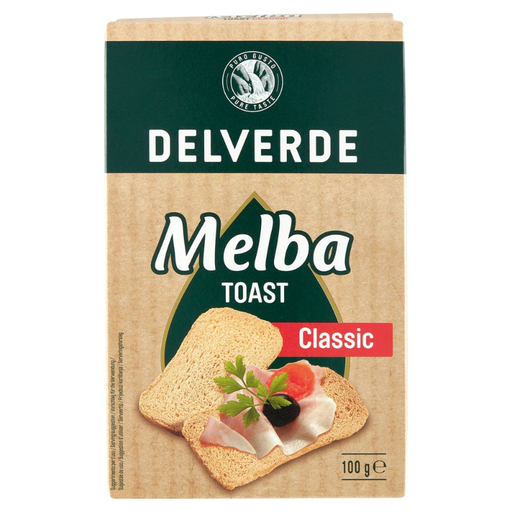
Delverde Classic Melba Toast 100 g
Melba toast to consider if you’re looking for a crisp base for toppings.
100 g pack. The product information lists gluten from wheat and barley, and possible traces of sesame, soya and mustard.
View on Joybuy
Frequently asked questions
Can melba toast replace wholemeal bread in a child’s lunch?
Not automatically: consider the whole lunch and compare the ingredients and nutritional information of the toast you choose. Voedingscentrum recommends choosing wholemeal for school lunches and adding vegetables or fruit; consider the toppings and portion size, too.
Does toast always contain iodised baker’s salt?
No, don’t assume this is the case for all toast. Voedingscentrum explains that baker’s salt can add iodine to bread, but you’ll need to check the ingredients or contact the manufacturer for a specific variety of toast.
Which allergens should I check in toast for a lunchbox?
Check the ingredients and allergen information on the exact packaging. Depending on the variety, gluten-containing cereals, sesame and soya may be present or listed as possible traces; the Netherlands Food and Consumer Product Safety Authority explains how relevant allergens must be indicated on pre-packed foods.
How should I store toast for several lunches?
Follow the storage instructions and best-before date on the packaging of the toast you buy. Reseal an opened pack as directed, and take only the amount you plan to use for lunch.


