What should you look for when choosing?
For the parade, first decide whether you want regular wholemeal breakfast cake or a version with no added sugars. Then compare the fibre, portions and ingredients in the specific packs.
| What to consider |
What to check when buying |
Who it matters to |
| Wholemeal rye and fibre |
Check the proportion of wholemeal rye flour in the ingredients list, and compare fibre per 100 g and per portion. |
If fibre is my top priority, I want to be able to compare the values for individual packs. For around 36% of consumers, fibre is the most important factor. |
| Sugars and sweeteners |
Compare ‘of which sugars’ per 100 g and per portion. For a version with no added sugars, check the ingredients and warnings too. |
If you’re looking for less sugar, don’t assume that every wholemeal version has the same sugar content. Around 29% of consumers prioritise sugar when choosing. |
| How much you need for your group |
Check the pack weight and how many slices or portions you can share out. |
If I’m sharing with a group, I want to take enough cake without overestimating the number of portions. Quantity is the main consideration for around 21% of consumers. |
| Portions and ingredients |
Check whether the cake is pre-sliced, and read the current allergen information and any warnings about sweeteners. |
If it needs to be easy to share or someone in the group needs to check the ingredients, I want to be able to assess the pack in advance. For around 14% of consumers, ease of use or checking the ingredients comes first. |
Wholemeal breakfast cake on Joybuy
This sliced wholemeal breakfast cake is a good choice if you want to take slices with you or share them at the parade. If fibre or sugars will influence your choice, compare the nutritional information on the packaging.
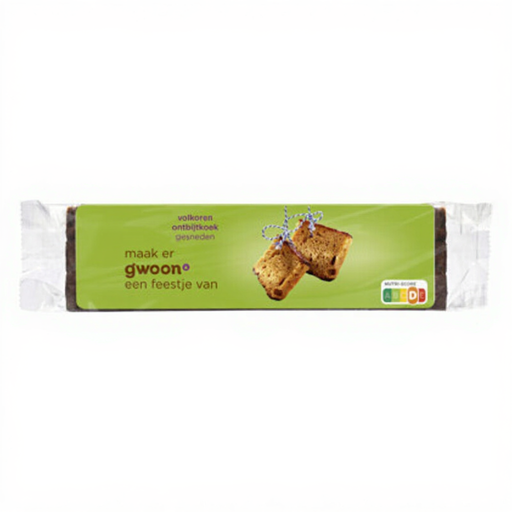 Image unavailable
g'woon wholemeal breakfast cake, sliced, 485 g
The pre-sliced format can be handy if you want to share out slices at the parade.
Compare the fibre and sugars on the current label per 100 g and per portion. The product description mentions rye, but this conflicts with the allergen information, so check the packaging before buying.
View on Joybuy
Frequently asked questions
Is wholemeal breakfast cake automatically low in sugar?
No. Albert Heijn states that its wholemeal version contains 34 g of added sugars per 100 g, while Peijnenburg’s version with no added sugars lists 4,9 g of sugars per 100 g. Check the nutritional information for the specific pack; ‘added sugars’ and ‘of which sugars’ are different declarations.
What should I look for in breakfast cake with no added sugars if I have pets?
Check which sweetener the version contains. Peijnenburg’s wholemeal version with no added sugars contains xylitol, which the product information says is not suitable for animals. Keep the pack and any loose slices out of their reach.
Which allergens should I check in wholemeal breakfast cake?
Read the allergen information on the pack you’re buying. The wholemeal versions described from Albert Heijn and PLUS contain rye and gluten; PLUS also lists the possible presence of wheat, barley and oats. Don’t assume the information is the same for every brand or version.
How should I store breakfast cake until the parade?
Follow the storage advice and best-before date on the packaging. The product information from Albert Heijn, Jumbo and PLUS recommends storing the cake in a dry place. Seal an opened pack tightly to help prevent it from drying out.
Does breakfast cake contain iodine because baker’s salt is used?
You can’t assume this is the case for every product. The Netherlands Food and Consumer Product Safety Authority sets out conditions for the use of baker’s salt as a source of iodine in bakery products, but these don’t tell you the iodine content of an individual breakfast cake. Check the current label and ask the manufacturer for product-specific information if you need it to make your choice.


