
Party planners looking for more fibre
You’re looking for a breakfast cake made with a wholegrain ingredient and comparing fibre per 100 g. You also want to assess sugars separately.


Choose wholemeal breakfast cake for a children’s party only after comparing the ingredients and nutritional information. Wholemeal does not automatically mean low in sugars or suitable for every child. Pre-sliced cake is easy to share, but ask about allergies and any school or after-school club rules in advance. Choose small portions, and if you’re considering a no-added-sugar variety, check the information about sweeteners and usage warnings too.
You’re looking for a breakfast cake made with a wholegrain ingredient and comparing fibre per 100 g. You also want to assess sugars separately.
You’re organising a treat for a group and looking for a pre-sliced cake that you can divide into small portions in advance.
Before buying, you want to know about any allergies and dietary preferences, and whether the school or after-school club has rules about treats.
First, check that food treats are allowed under the relevant rules. Then compare the nutritional information per 100 g and work out how many small portions you’ll need.
| What to consider | What to check when buying | Who it matters to |
|---|---|---|
| Wholemeal and fibre | Check which wholegrain ingredient is listed and compare fibre per 100 g. | I’m looking for a wholemeal cake and want to compare its fibre content without losing sight of the sugars. This is the main priority for around 33% of consumers. |
| Sugars and sweeteners | Compare sugars per 100 g. For no-added-sugar varieties, check the ingredients and warnings. | When I’m handing out cake to children, I want to know which sugars and any sweeteners it contains. For around 27% of consumers, this choice of ingredients is the top priority. |
| Portions and sharing | Check whether the cake is pre-sliced and how many slices or portions the pack contains. | I want to be able to divide the cake in advance so I can hand out small portions to the group. This practical convenience matters most to around 20% of consumers. |
| Allergens and rules | Ask about allergies and dietary preferences, read the current label and, if necessary, check the school or after-school club’s policy. | Before I buy anything, I need to know whether the children can eat the treat and whether sharing it is allowed. These questions are the main consideration for around 20% of consumers. |
The standard wholemeal breakfast cakes listed by Albert Heijn, Jumbo and PLUS contain between 34 and 35.5 g of sugars per 100 g, depending on the product.
Compare fibre and sugars on the same per-100 g basis, then decide what portion size you want to hand out.
According to the product information, the sliced Peijnenburg no-added-sugar variety examined contains xylitol and 24 g of polyols per 100 g. The product information warns that excessive consumption may have a laxative effect.
Even with this variety, read the full ingredients list and usage warning.
The wholemeal breakfast cakes examined list rye and cereals containing gluten. The Netherlands Nutrition Centre recommends asking about allergies and dietary preferences in advance. Schools and after-school clubs may also have rules about treats.
Find out this information before choosing a product and how much you’ll need.
According to the product information, the sliced wholemeal breakfast cake without added sugars examined contains 40% wholemeal rye flour and comes in a pack of 12 slices.
The sliced wholemeal breakfast cake from Albert Heijn examined weighs 485 g; the product page lists 16 portions of 30 g.
According to the product page, the 280 g Jumbo Wholemeal Breakfast Cake examined contains around 11 portions of 25.5 g.
The sliced wholemeal breakfast cake from PLUS examined comes in a 485 g pack.
ALDI lists a sliced wholemeal breakfast cake by Koek & Bakker in a 485 g pack.
This sliced wholemeal breakfast cake is an option if you want to divide the treat into small portions yourself. Before buying, check the nutritional information and allergens on the current packaging.
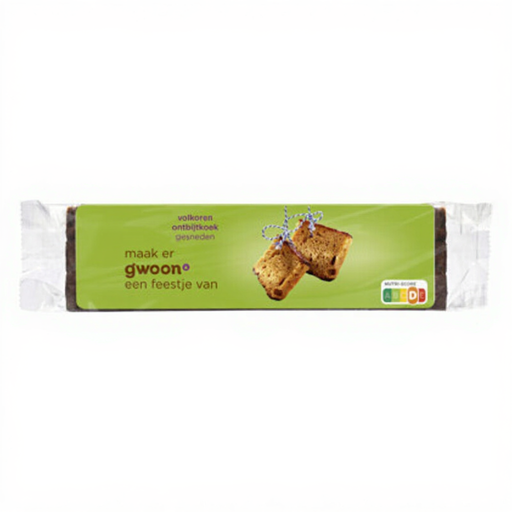 Image unavailable
A sliced cake you can divide into small portions for a treat. The product information lists 43% wholemeal rye flour. Check the current packaging for the number of slices and compare the nutritional values per 100 g.
The ingredients include rye. Ask about allergies before sharing the cake and read the allergen information on the current packaging.
Choose a small portion and work out how many children will be taking part before you buy. The Netherlands Nutrition Centre recommends small treats. You can divide a pre-sliced cake in advance, but the number of slices varies from pack to pack.
Yes. Ask about allergies before the party and read the current label of the cake you plan to share. The products examined list rye and cereals containing gluten; information about other cereals varies by product.
This claim doesn’t tell you which other ingredients or usage warnings are listed on the packaging. According to the product information, the Peijnenburg variety examined contains xylitol and polyols and carries a warning that excessive consumption may have a laxative effect.
First, check the school or after-school club’s rules about treats. The Netherlands Nutrition Centre also highlights allergies and other dietary preferences. If the rules don’t allow edible treats, breakfast cake won’t be suitable to share.
Don’t assume this is the case for a particular pack of breakfast cake. Check the ingredients on the packaging or ask the manufacturer whether baker’s salt has been used.