
If you want to compare fibre
You want to know how much fibre the breakfast cake contains per 100 g, as amounts vary between wholemeal options. Compare the nutritional information on the pack you’re actually buying.


For a dinner party, don’t choose based on the word ‘wholemeal’ alone. Compare the fibre and sugars per 100 g, ingredients and allergens for the exact breakfast cake you’re considering. A pre-sliced pack can make serving a group easier, but also check how many slices it contains and whether the cake is suitable for your guests’ allergies.
You want to know how much fibre the breakfast cake contains per 100 g, as amounts vary between wholemeal options. Compare the nutritional information on the pack you’re actually buying.
You’re looking for an option that suits your guests’ preferences. Check both ‘of which sugars’ and the ingredients list: ‘no added sugars’ doesn’t mean sugar-free.
You want to serve enough slices without having to cut the cake at the table. The stated number of portions can help you plan, but you’ll need to check the current allergen information separately.
When choosing wholemeal breakfast cake for a dinner party, decide what matters most to your guests: fibre content, sugar options or the number of suitable portions. Compare nutritional values on the same basis: per 100 g.
| What to consider | What to check when buying | Who it matters to |
|---|---|---|
| Fibre | Compare the fibre content per 100 g of the exact option. | If fibre is the deciding factor for me, I want to be able to tell wholemeal options apart without relying on the front of the pack. For around 40% of consumers, comparing fibre comes first. |
| Sugars and sweeteners | Check ‘of which sugars’ per 100 g and look for sweeteners in the ingredients. | If I’m choosing for guests with sugar preferences in mind, I want to know what ‘no added sugars’ means for the cake I’ve chosen. For around 30% of consumers, this is the top priority. |
| Portions and allergens | Count the stated slices or portions and read the ‘contains’ and ‘may contain’ information on the pack. | For my guests, I want to serve enough without overlooking a relevant allergy. This is the main concern for around 30% of consumers when making this choice. |
The published nutritional values for the Peijnenburg, Albert Heijn and Jumbo options discussed here differ in fibre and sugars. The word ‘wholemeal’ doesn’t tell you how much of either they contain.
Compare the nutritional values per 100 g for the exact packs and check the ingredients list too.
Peijnenburg states that its wholemeal option with no added sugars still contains 4,9 g sugars per 100 g and lists xylitol as a sweetener.
If guests have preferences around sugars or sweeteners, check both ‘of which sugars’ and the ingredients.
Rye and gluten are relevant for the products discussed here. Peijnenburg also states that its option with no added sugars may contain nuts and milk.
Ask about allergies in advance and check the allergen information on the pack before serving.
The term ‘breakfast cake’ doesn’t tell you which salt was used in a specific cake or how much iodine it contains.
If this matters to your choice, check the ingredients on the pack you’ve chosen and, if necessary, ask the manufacturer for product-specific information.
These examples show which product details you can compare. The values and allergen information apply to the options named, not every product from the brand.
Peijnenburg publishes nutritional information for both a standard sliced wholemeal breakfast cake and a sliced option the brand describes as having ‘no added sugars’.
The sliced AH Ontbijtkoek volkoren comes in a 485 g pack; Albert Heijn lists 16 portions of 30 g.
Jumbo lists around 11 portions for its 280 g wholemeal breakfast cake, so you can compare the pack size with the number of guests.
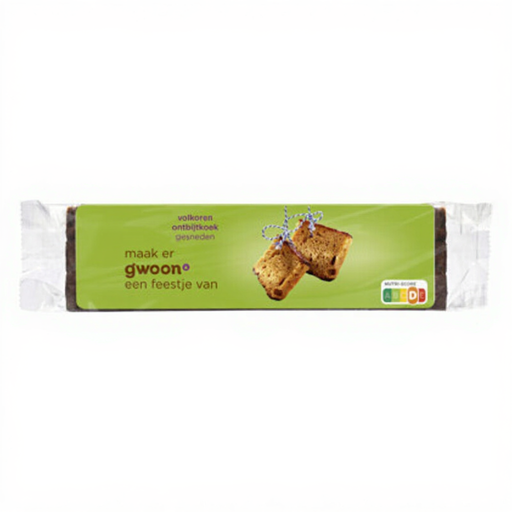
This sliced wholemeal breakfast cake is an option if you’re looking for a 485 g pack to serve a group. Before buying, compare the nutritional information and make sure the number of slices suits your guests.
 No image available
A sliced cake for anyone who wants to serve wholemeal breakfast cake at a dinner party.
The pack weighs 485 g. To compare fibre and sugars, check the values per 100 g on the label and see how many slices the pack contains.
If anyone has allergies, pay particular attention to rye and gluten: the allergen statement and the information about rye flour contradict each other. Check the current pack before serving.
No. To find out, compare the nutritional information per 100 g for the specific cake. Peijnenburg lists 5,1 g fibre per 100 g for its standard wholemeal option and 17 g per 100 g for its option with no added sugars; these values don’t tell you anything about other options.
No. Peijnenburg lists 4,9 g sugars per 100 g for its wholemeal breakfast cake with no added sugars and includes xylitol in the ingredients. Check both details if the sugar options are important to your guests.
Use the number of slices or portions on the pack as a starting point, then decide how much you want to serve each guest. Peijnenburg lists 12 slices for its sliced option with no added sugars, Albert Heijn lists 16 portions for the pack discussed here, and Jumbo lists around 11 portions for its 280 g option.
No. Don’t assume this from the product name or the word ‘wholemeal’. If the salt used in a particular breakfast cake matters to your choice, check the ingredients on the pack and ask the manufacturer for clarification if necessary.