
Cyclists keeping an eye on fibre
You eat breakfast cake as an everyday snack or after a ride, and compare how much fibre a wholemeal variety contains per 100 g and per slice.


For an everyday snack or something to eat well before cycling, you can compare wholemeal breakfast cakes by their fibre, carbohydrates and portion size. A large, high-fibre portion is less suitable just before an intense ride: the Netherlands Nutrition Centre advises against eating one just before exercise. If you choose a variety with no added sugar, check for polyols and any warning about excessive consumption.
You eat breakfast cake as an everyday snack or after a ride, and compare how much fibre a wholemeal variety contains per 100 g and per slice.
You want to avoid a large or high-fibre portion just before an intense ride. The Netherlands Nutrition Centre advises taking this into account when eating before exercise.
You check the portion size, added sugars and any polyols before comparing a variety with no added sugar with a regular breakfast cake.
First, decide when you want to eat the breakfast cake. Then compare the nutritional information for the exact variety, both per 100 g and per slice. The word ‘wholemeal’ alone doesn’t tell you how much fibre a portion contains.
| What to consider | What to check before buying | Who it matters to |
|---|---|---|
| Fibre for everyday use | Compare the wholemeal description and the fibre per 100 g and per slice. | If I mainly eat breakfast cake as an everyday snack, I want to know how much fibre is in my usual slice. Fibre is the top priority for around 36% of consumers. |
| Timing around your ride | Consider how soon you’ll be setting off and the size of a high-fibre portion; try foods during training. | If I’m setting off soon after eating, I want to consider what I can tolerate during exercise. Around 29% of consumers give this timing the highest priority. |
| Sugars and sweeteners | Check the added sugars, polyols and any warnings on the label for the portion you’ve chosen. | When choosing between a regular variety and one with no added sugar, I also want to know which sweeteners it contains. This is the top consideration for around 21% of consumers. |
| Packaging and availability | Compare the pack size, whether it’s pre-sliced, and where the exact variety is available. | For stocking up, what matters most is whether I can easily find the pack and divide it into slices. Around 14% of consumers put this practical convenience first. |
Wholemeal breakfast cake can be high in fibre. The Netherlands Nutrition Centre advises against eating a large portion or foods high in fibre just before exercise.
Choose your timing carefully and try out during training which portion you can tolerate, rather than eating it for the first time just before an intense ride.
According to the product information, Peijnenburg’s variety with no added sugar contains 24 g of polyols per 100 g. It also carries a warning that excessive consumption may have a laxative effect.
Check the information about sweeteners and portion sizes too, especially if you plan to eat the breakfast cake around a ride.
Wholemeal varieties differ in fibre, carbohydrates and ingredients. A value per slice is only meaningful to compare if you also know the weight of each slice.
Compare the nutritional information per 100 g, then check what a portion of the exact variety contains.
The term ‘wholemeal’ doesn’t tell you whether iodised baker’s salt has been used in a particular breakfast cake.
Check the product’s ingredients or ask the manufacturer.
Peijnenburg provides nutritional information for a regular pre-sliced wholemeal breakfast cake and a pre-sliced wholemeal variety with no added sugar.
Albert Heijn sells a 485 g pre-sliced wholemeal breakfast cake whose ingredients and nutritional values you can compare.
The Jumbo wholemeal breakfast cake in this comparison comes in a 280 g pack.
PLUS provides nutritional information for a 485 g pre-sliced wholemeal breakfast cake.
ALDI describes a 485 g pack of pre-sliced wholemeal breakfast cake from Koek & Bakker.
Lidl lists a 485 g pre-sliced wholemeal breakfast cake as a store product.
This pre-sliced wholemeal breakfast cake suits anyone who wants a slice as a snack or well before a bike ride. Compare the nutritional information on the exact pack before choosing.
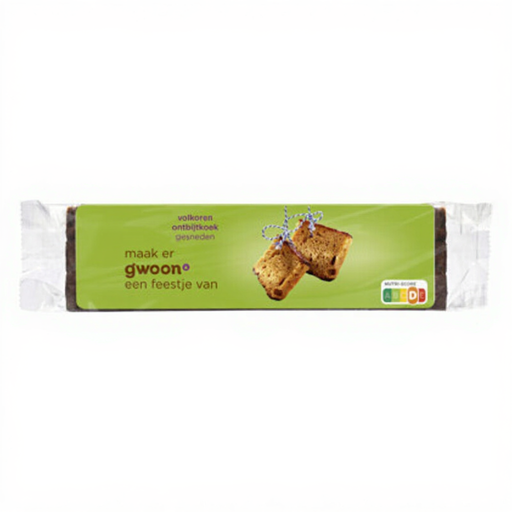 Image unavailable
For anyone who wants a slice as a snack or well before setting off; portion size is still worth considering just before an intense ride.
Pre-sliced 485 g pack. If you’re comparing varieties, check the fibre, carbohydrates and sugars per 100 g and per slice on the packaging.
A large or high-fibre portion is less suitable just before an intense ride. The Netherlands Nutrition Centre advises against eating a large portion or foods high in fibre just before exercise. Take the timing of your meal and what you can tolerate into account when choosing.
That description doesn’t automatically make a breakfast cake suitable during a ride. Peijnenburg states that its wholemeal variety with no added sugar contains 17 g of fibre and 51 g of carbohydrates per 100 g. The product information also lists polyols and warns that excessive consumption may have a laxative effect.
‘Wholemeal’ doesn’t tell you how much fibre a slice contains. According to the Netherlands Food and Consumer Product Safety Authority, the term refers to the grain ingredient, which must consist entirely of wholemeal flour. To compare fibre content, check the nutritional information per 100 g and per portion.
No. The term ‘wholemeal breakfast cake’ doesn’t tell you whether that particular product was made with iodised baker’s salt. Check the ingredients or ask the manufacturer if you want to know.