Before choosing a class treat, check the school’s rules and ask about allergies in the class. The wholemeal breakfast cakes reviewed list cereals containing gluten or rye. Then choose between slices you can portion yourself and a bar you can hand out straight away. Compare the portion size, fibre and sugars in the exact product. The Peijnenburg version reviewed, labelled ‘no added sugars’, contains xylitol and carries a warning that excessive consumption may have a laxative effect.
Who is this choice for?
Parents who need to consider allergies in the class
If a child needs to avoid certain ingredients, the school’s rules and the ingredients on the chosen pack should take priority over the format. The Netherlands Nutrition Centre recommends asking in advance whether any children have allergies or other dietary requirements.
Parents comparing fibre and sugars
The word ‘wholemeal’ doesn’t tell you how much fibre or sugar a portion contains. Compare the nutritional information per 100 g as well as the amount you actually plan to hand out.
Organisers who want to hand out portions quickly
A bar gives each child an individual portion straight away. With a pack of sliced cake, you can decide how much each child gets, but you’ll need to check how the slices should be handed out under the school’s rules.
What should you look for in wholemeal breakfast cake?
First, check that the treat fits the class rules. Then compare the nutritional information and choose a portion format that works for handing out.
| What to consider | What to check before buying | Who it matters to |
|---|
| Allergens and school rules |
Ask which treats are allowed and check the allergens on the current packaging. |
If a child in the class needs to avoid gluten or other ingredients, I want to know that everyone will get a suitable treat. Around 29% of consumers put this first. |
| Fibre, sugars and sweeteners |
Compare fibre and sugars per 100 g and per portion. If you’re considering a version with sweeteners, read the warnings too. |
When I choose wholemeal breakfast cake, I want to know what’s in each slice or bar. Fibre and sugars are the most important factors for around 29% of consumers. |
| Portion size and format |
Check the weight per portion and whether you’ll need to portion the slices yourself or can hand out an individual bar. |
I want to be able to give each child a portion without having to prepare it on the spot, but the portion also needs to be right for the occasion. Ease of handing out is the top priority for around 24% of consumers. |
| Quantity for the class |
Check the pack weight and the number of portions you can get from it for the number of children. |
For a whole class, I want to make enough portions without having lots left over. The amount needed is the first thing around 18% of consumers consider. |
Common mistakes when choosing class treats
-
Assuming ‘wholemeal’ tells you everything about the nutrition
The products reviewed vary in their fibre and sugar content. Albert Heijn lists 5.7 g of fibre per 100 g for its sliced wholemeal breakfast cake; the Peijnenburg version reviewed, labelled ‘no added sugars’, lists 17 g of fibre per 100 g.
Read the nutritional information for the exact product and compare it with the portion you plan to hand out.
-
Buying a pack before checking the class rules
The wholemeal breakfast cakes reviewed list cereals containing gluten or rye. So one type of breakfast cake won’t necessarily be suitable for every child.
Ask about the school rules and individual dietary requirements in advance. Then check the allergens on the pack you’re actually buying.
-
Assuming an individual bar is automatically a small portion
According to Jumbo, the wholemeal breakfast cake bar reviewed weighs 58 g and contains 20.5 g of sugars per bar. So a ready-to-hand-out format doesn’t tell you whether the portion size is right.
Check the weight of each bar before deciding whether a whole one is suitable for the treat.
Brands with relevant wholemeal breakfast cakes
Peijnenburg
Peijnenburg offers sliced wholemeal breakfast cake, including a version labelled ‘no added sugars’.
- For this version, Peijnenburg lists 17 g of fibre and 4.9 g of sugars per 100 g.
- The version contains rye and xylitol. The product information warns that excessive consumption may have a laxative effect and says that it may contain milk and nuts.
Albert Heijn
Albert Heijn offers sliced wholemeal breakfast cake in a 485 g pack.
- The product information lists 41% wholemeal rye flour and 5.7 g of fibre per 100 g.
- This version also lists cereals containing gluten and rye. Check the current allergen information for your class.
Jumbo
Jumbo offers both a 475 g sliced wholemeal breakfast cake and a pack of six wholemeal breakfast cake bars.
- The bars let you give each child an individual portion straight away.
- For the bar reviewed, Jumbo lists a weight of 58 g and 20.5 g of sugars per portion. The versions reviewed contain gluten, rye and wheat.
Koek & Bakker (ALDI)
ALDI describes its 485 g Koek & Bakker wholemeal breakfast cake as pre-sliced.
- The sliced format could work if you want to portion slices yourself for a group.
- If there are allergies in the class, read the ingredients and allergens on the current packaging before choosing this version.
PLUS
PLUS offers a 485 g sliced wholemeal breakfast cake as its own-brand option.
- For this version, PLUS lists 41% wholemeal rye flour and 5.7 g of fibre per 100 g.
- The version contains rye and cereals containing gluten. According to PLUS, it may also contain wheat, barley and oats.
Sliced wholemeal breakfast cake on Joybuy
This sliced wholemeal breakfast cake is a good fit if you want to portion slices at home for a class treat. Before handing it out, check the allergens on the current packaging and work out how many portions you need.
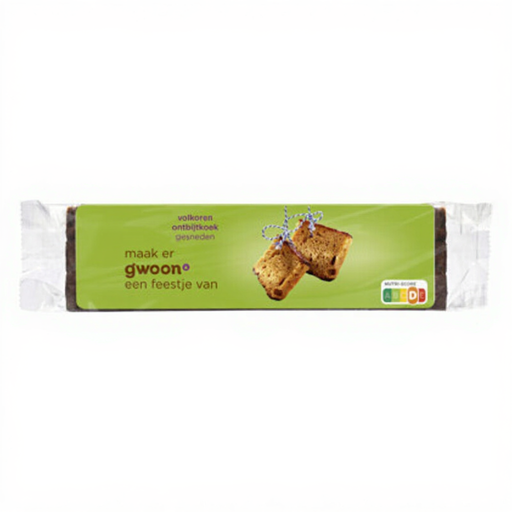 Image unavailable
g'woon wholemeal breakfast cake, sliced, 485 g
An option if you want to portion slices at home for the class. The pack contains 485 g. Check how many portions you’d like to get from it and read the allergen information on the current packaging.
View on Joybuy
Frequently asked questions
Should I check the school’s rules on treats before buying?
Yes. First ask which treats are allowed and whether any children need to avoid certain ingredients. The Netherlands Nutrition Centre recommends asking whether there are any allergies or dietary requirements in the group. Then check the packaging of the breakfast cake you plan to hand out.
Are the wholemeal breakfast cakes reviewed suitable if gluten needs to be avoided?
The wholemeal versions reviewed from Albert Heijn, Jumbo, PLUS and Peijnenburg list cereals containing gluten or rye, so they’re not suitable for a child who needs to avoid gluten. Check the current packaging and the class rules for each child.
Can I hand out a large portion of a version labelled ‘no added sugars’?
That label isn’t a reason to overlook portion size. The Peijnenburg version reviewed contains xylitol and carries a warning that excessive consumption may have a laxative effect. Check the school rules too.
Does the rule on iodine in baker’s salt mean that all breakfast cakes contain iodine?
No. The Dutch rule doesn’t mean that every breakfast cake contains baker’s salt with iodine. The Netherlands Food and Consumer Product Safety Authority explains the conditions under which iodine compounds may be present in bakery products through baker’s salt. If this matters to your choice, check the ingredients on the specific pack.


