
Fibre-conscious top-up shoppers
Households that focus mainly on fibre when doing a quick top-up shop, comparing the nutritional information per 100 g with the proportion of wholemeal rye flour and the sugar content.


When choosing wholemeal breakfast cake for a quick top-up shop, don’t rely on the word ‘wholemeal’ alone. Compare fibre and sugars per 100 g, check the slice size and read the allergen information. Peijnenburg’s wholemeal variety with no added sugars lists 17 g of fibre and 4.9 g of sugars per 100 g, but contains xylitol. For regular wholemeal breakfast cake, a small or pre-sliced pack may be a better fit for what you need, but the sugar content deserves separate attention.
Households that focus mainly on fibre when doing a quick top-up shop, comparing the nutritional information per 100 g with the proportion of wholemeal rye flour and the sugar content.
Shoppers who want to know how much sugar regular wholemeal breakfast cake contains and which ingredients are used in a variety with no added sugars.
Shoppers looking for breakfast cake for a lunchbox, to eat on the go or as a snack, who are mainly concerned with finding a suitable pack and pre-sliced portions, without overlooking the ingredients and allergens.
First, check that the ingredients suit you. Then compare the nutritional values on the same basis and choose a pack that fits the occasions you’re stocking up for.
| What to consider | What should you check? | Who is this most important for? |
|---|---|---|
| Fibre | Compare the fibre per 100 g and check which wholemeal flour is listed in the ingredients. | When I’m doing a quick top-up shop, I mainly want to compare the fibre content of different wholemeal breakfast cakes without relying on the front of the pack. Fibre is the top priority for around 36% of shoppers. |
| Sugars | Check the sugars per 100 g and per slice. For varieties with no added sugars, read the ingredients too. | If I’m keeping an eye on sugar, I want to know how much is in my usual slice and whether the cake contains another sweetener. Sugar is the main consideration for around 29% of shoppers. |
| Packaging | Compare the net weight and check whether the breakfast cake is pre-sliced. | If I’m buying for just a few occasions, I don’t want to take home a pack that doesn’t suit my plans. Pre-sliced portions can also be practical. Around 21% of shoppers prioritise this packaging convenience. |
| Ingredients and allergens | Read the current allergen information and check for sweeteners if they’re relevant to your choice. | If I need to avoid rye, gluten or a particular sweetener, I need to know before weighing up the nutritional values or pack size. For around 14% of shoppers, checking the ingredients comes first. |
Wholemeal on its own doesn’t tell you how much sugar a breakfast cake contains. According to product information from Peijnenburg, Jumbo and PLUS, their regular wholemeal varieties contain 39 g, 35.5 g and 34.1 g of sugars per 100 g, respectively.
Compare the nutritional information per 100 g, then check how much sugar is in the slice you actually plan to eat. For a variety with no added sugars, also check which sweeteners it contains.
Slices can vary in weight. So comparing them by the slice doesn’t necessarily show which product contains more fibre for the same weight.
Compare products using fibre per 100 g, then check the nutritional values per serving for your own eating occasion.
Rye or other gluten-containing cereals are relevant ingredients in the wholemeal breakfast cakes reviewed. So a choice based on fibre or packaging may not be suitable for anyone who needs to avoid these ingredients.
Before buying, read the allergen information on the current packaging, including any warnings about the possible presence of other ingredients.
Information about baker’s salt doesn’t tell you which salt is used in an individual breakfast cake.
If iodine is relevant to your choice, check the ingredients of the specific product or ask the manufacturer.
These brands offer examples of different pack sizes and recipes. The nutritional values listed apply to the individual products, not the brand’s entire range.
Offers both regular wholemeal breakfast cake and a wholemeal variety with no added sugars. The difference matters if you want to consider fibre, sugars and sweeteners together.
The 280 g wholemeal pack is an option if you’re looking for a smaller pack for a quick top-up shop.
The 275 g pack of sliced wholemeal breakfast cake suits anyone looking for a smaller pack that’s ready to eat.
The 485 g pack of sliced wholemeal breakfast cake is a larger option if you want enough for several occasions.
ALDI’s own brand offers a 485 g pack of pre-sliced wholemeal breakfast cake for anyone who prioritises pack size and convenience.
This sliced wholemeal breakfast cake is an option if you’re looking for a pack to enjoy over several occasions when doing a quick top-up shop. Check the packaging to compare nutritional values and allergens.
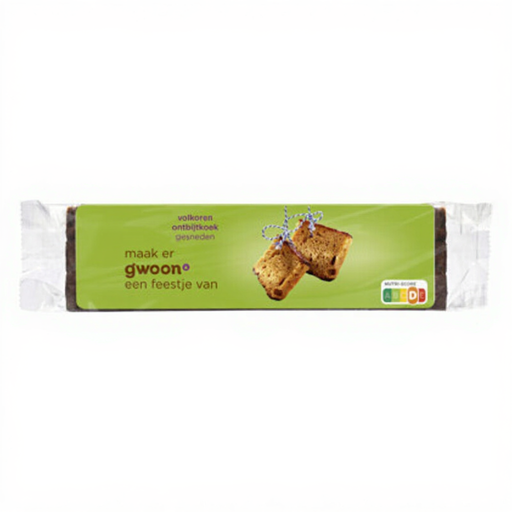 Image unavailable
For anyone looking to pick up pre-sliced wholemeal breakfast cake during a quick top-up shop. The pack contains 485 g. Check the nutritional information on the packaging before comparing fibre and sugars per 100 g. Also read the allergen information if rye or gluten is relevant to your choice.
No. The Netherlands Nutrition Centre lists 11.1 g of sugars for a 30 g slice of wholemeal breakfast cake. The regular wholemeal varieties reviewed from Peijnenburg, Jumbo and PLUS list 39 g, 35.5 g and 34.1 g of sugars per 100 g, respectively. Compare products on the same basis, then check the size of your slice.
It doesn’t mean the breakfast cake contains no sugars or sweeteners. Peijnenburg lists 4.9 g of sugars per 100 g for its wholemeal variety with no added sugars and uses xylitol. According to the product information, excessive consumption may have a laxative effect.
If you need to avoid gluten, don’t rely on the word ‘wholemeal’. Rye or other gluten-containing cereals are relevant ingredients in the products reviewed. Check the current ingredients and allergen information for the specific pack.
Not without confirmation for the specific product. The Netherlands Nutrition Centre describes the use of iodised baker’s salt in bread, but that doesn’t tell you whether your breakfast cake contains it. Check the ingredients or ask the manufacturer.
Follow the storage instructions on the packaging. For its sliced wholemeal variety, Albert Heijn recommends storing it in a sealed container once opened; Jumbo advises keeping its wholemeal variety in a cool, dry place.