Choose a bread shape to suit what you’re serving: sliced wholemeal bread for topped bites, a wholemeal baguette to share, or individual wholemeal rolls. Then check the product description, compare fibre and salt per 100 g, and read the allergen information if you have dietary requirements. A dark colour or seeds alone don’t prove that bread is wholemeal.
Who does the choice of bread matter to?
Households looking to compare fibre
If wholemeal bread is the basis of your meal, you’ll want to know what it contains. The Netherlands Nutrition Centre gives 3.4 g of fibre for a 50 g slice of wholemeal bread cut at home. Before you buy, compare the nutritional information for the breads you’re considering.
People serving bread with dips and sharing dishes
With hummus, curry or small topped bites, the shape of the bread affects how you serve it. You can cut a baguette into pieces, while rolls make individual portions. For varieties containing seeds, check the allergen information too.
Households that need to check allergens
If you need to avoid wheat, gluten or another allergen, you can’t rely on the word ‘wholemeal’. Check the ingredients and allergen information for the specific bread. If you’re buying unpackaged bread, ask for this information too.
What should you look for?
First, decide how you want to serve the bread. Then compare the product descriptions and nutritional information for the shapes that suit your dishes.
| What to look for |
What to check when buying |
Who it matters to |
| Wholemeal and fibre |
Read the product description and compare fibre per 100 g. According to the Netherlands Food and Consumer Product Safety Authority, a product can only be called wholemeal if all the grain ingredient is wholemeal flour. |
If fibre is my main reason for choosing bread, I don’t want to judge it by colour alone. For around 33% of consumers, verifiably wholemeal bread with a comparable fibre content is the top priority. |
| Bread shape |
Choose sliced bread for topped bites, a baguette to cut and share, or rolls for individual portions. |
For dips and sharing dishes, I want bread that’s easy to pass around the table; for bites, I prefer to prepare the portions in advance. Around 27% of consumers give the most importance to choosing the right bread shape. |
| Salt and nutritional values |
Compare salt and other nutritional values on the same basis: per 100 g. Check what a product claim is based on. |
When I’m choosing between two wholemeal breads, I want to compare the labels without getting different portion sizes mixed up. For around 20% of consumers, this comparison comes first. |
| Allergens |
Read the full allergen information, including any warnings about traces. If you’re buying unpackaged bread, ask what information is available before you buy. |
If someone at the table needs to avoid an ingredient, I need to know what’s in each bread before serving it. Around 20% of consumers put allergen suitability first. |
Common mistakes when choosing
-
Assuming dark bread or bread with seeds is wholemeal
The colour and visible grains don’t tell you whether all the grain ingredient is wholemeal flour.
Check the product description and ingredients rather than judging by appearance.
-
Comparing nutritional values for different portion sizes
A slice or roll can weigh a different amount depending on the product. This means values per portion aren’t an equal basis for comparison.
Compare the nutritional information per 100 g, for example for fibre and salt.
-
Forgetting to check allergens in bread with seeds
Ingredients vary from one loaf to another. For example, PLUS lists sesame and several gluten-containing grains in its wholemeal roll.
Read the information for the product you choose. If you’re buying unpackaged bread, ask about allergens before you buy.
-
Buying more fresh bread than you’ll use that evening
If you only need bread for a shared meal, you could be left with unused portions.
Choose the number of loaves to suit your dishes and guests. The Netherlands Nutrition Centre recommends freezing bread in portions after buying it if you won’t be using it straight away.
Supermarket brands compared
These ranges offer different bread shapes to compare. Always check the ingredients, allergens and nutritional values for the bread you choose.
Albert Heijn
The range includes sliced wholemeal bread, hearth-baked loaves and round loaves.
- You can compare different shapes for topped bites or a shared table.
- Check whether the variety you want is available at the store where you shop.
Jumbo
Jumbo has a range of wholemeal breads, including fine and coarse varieties and loaves in different shapes.
- Ingredients, allergens and nutritional values per 100 g are listed for Jumbo Fine Wholemeal.
- Don’t use the information for Jumbo Fine Wholemeal to assess another Jumbo variety.
Lidl
Lidl also lists a bread made with extra-finely milled wholemeal flour among its wholemeal options.
- A finer texture is worth considering if the texture matters for your bites.
- For the variety you choose, check the ingredients, allergens and nutritional information on the packaging.
ALDI
ALDI lists freshly baked wholemeal bread and a separate variety called Extra High-Fibre Wholemeal Bread.
- The different varieties give you the opportunity to compare bread shapes and product-specific nutritional information.
- According to ALDI’s own product information, comparative claims about fibre and salt apply to the named Extra High-Fibre variety and the reference product used for comparison, not to all its breads.
PLUS
As well as a wholemeal loaf, PLUS lists a wholemeal baguette and individual wholemeal rolls.
- These shapes let you choose between slicing bread to share and serving individual portions.
- Check the current packaging for ingredients, allergens and nutritional values; these can vary or change from one product to another.
Dirk
Dirk’s bread range includes wholemeal loaves and rolls, including Bakker van der Akker Boeren wholemeal bread.
- Compare the bread shapes available with the way you plan to serve your meal.
- Read the packaging or ask in store for the nutritional values and allergens in the bread you choose.
Bread options at Joybuy for your table
These bread options suit different ways of serving: bread with dips and rye bread for topped portions. For both, check the current packaging to make sure the wholemeal status and allergen information suit your needs.
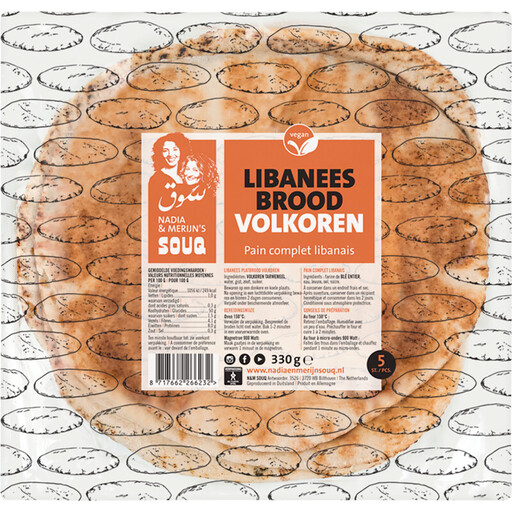 Image unavailable
Souq Lebanese Bread Whole Wheat 6 P
An option to serve with dips and sharing dishes. Check the product description, ingredients and allergens on the current packaging, especially if anyone needs to avoid wheat or possible traces of soya or milk.
View at Joybuy
 Image unavailable
TastyBasics Rye Bread - 9 pcs
Rye bread to consider for portions topped in advance. Check the current product description and ingredients to assess whether it’s wholemeal, and read the allergen information if rye, gluten, sesame, milk or nuts are a concern.
View at Joybuy
Frequently asked questions
How can I tell if bread is wholemeal?
Check the product description and ingredients. According to the Netherlands Food and Consumer Product Safety Authority, a product can only be called wholemeal if all the grain ingredient is wholemeal flour. If you want to compare the fibre in different breads, use the values per 100 g.
Is dark bread or multigrain bread automatically wholemeal?
No. A dark colour, seeds or the word ‘multigrain’ don’t prove that all the grain ingredient is wholemeal flour. Read the product description and ingredients of the bread you’re thinking of buying.
What if someone at the table needs to avoid gluten or wheat?
Don’t serve ordinary bread made with wheat, rye, barley or spelt without checking first. Choose a product that suits the dietary requirement and read the full ingredients and allergen information, including warnings about possible traces. If you’re buying unpackaged bread, ask for this information before you buy.
How can I keep leftover bread for another day?
Freeze bread in portions after buying it if you won’t be using it straight away. That way, you can take out just the amount you need later. This is also the storage advice from the Netherlands Nutrition Centre; follow the instructions on the packaging of the bread you choose as well.


