
If you look for wholemeal and fibre
You’re looking for bread for a late-night snack and comparing the ‘wholemeal’ label and fibre content on the packaging, rather than judging by colour alone.


If you want to use wholemeal bread as the basis for a late-night snack, choose bread labelled ‘wholemeal’: according to the Netherlands Nutrition Centre, it is made from 100% wholemeal flour. A whole sliced loaf is a good fit if you often reach for a slice; if you only eat bread occasionally, a smaller pack may suit you better. Compare the fibre per 100 g and check the current ingredients and allergen information for the product you choose.
You’re looking for bread for a late-night snack and comparing the ‘wholemeal’ label and fibre content on the packaging, rather than judging by colour alone.
You only have a slice late at night now and then, and want to buy an amount you can finish, or a product that you can portion and store according to the storage instructions.
You want to check the ingredients, allergens or salt content of a specific loaf before buying it. The ‘wholemeal’ label doesn’t answer those questions.
First, check whether the type of bread suits your preferences. Then work out how much you’ll actually use, and only then compare the nutritional information for the specific products.
| What to consider | What to check when buying | Who is this most important for? |
|---|---|---|
| Wholemeal and fibre | Look for the ‘wholemeal’ label and compare the fibre per 100 g on the packaging. | If I have bread as a late-night snack, I want to know that I’m choosing a genuinely wholemeal product and how its fibre content compares with another loaf. This would be the top priority for around 37% of consumers. |
| A quick portion | Check whether the bread is sliced and whether the packaging suits the portion you want. | Late in the evening, I want to be able to grab a suitable amount without much preparation. This would be the main consideration for around 27% of consumers. |
| Label information | Read the current ingredients and allergen information, and compare salt per 100 g if needed. | If an ingredient or allergen matters to me, I need to be able to assess the specific product; the name alone isn’t enough. This check would come first for around 18% of consumers. |
| Storage and waste | Compare pack sizes and follow the storage instructions if you want to use portions later. | If I only eat bread late at night now and then, I want to avoid leaving the rest unused. This would be the most important factor for an estimated 18% of consumers. |
A dark colour doesn’t prove that bread is made from 100% wholemeal flour. According to the Netherlands Nutrition Centre, brown bread can also contain white flour.
Look for the ‘wholemeal’ label if that’s what you’re looking for.
If you only use a few slices, you may have some left over. The Netherlands Nutrition Centre identifies bread as a food that is often wasted.
Consider buying half a loaf, or check whether you can freeze the bread in portions according to the product instructions.
A fibre claim doesn’t tell you which ingredients or allergens a loaf contains, and it doesn’t indicate its salt content.
Compare the nutritional information per 100 g and read the ingredients and allergen list for the exact product.
A loaf’s name doesn’t tell you how much iodine that particular product contains.
Ask the manufacturer about the product’s composition if you need this information; don’t assume that the presence of baker’s salt indicates a specific amount.
Albert Heijn has an online wholemeal bread category, featuring a range of different types of bread.
Jumbo lists wholemeal breads with product-specific nutritional and allergen information.
Lidl lists products including fine wholemeal bread and a half loaf of extra wholemeal bread.
ALDI lists products including fine wholemeal bread and one called Extra High-Fibre Wholemeal Bread.
PLUS lists wholemeal bread with product information on ingredients, nutritional values and storage.
Dirk lists products including wholemeal floor bread and wholemeal batard loaves for in-store purchase.
These products offer different options for a late-night snack: Lebanese bread, crispbread and a rye bread product. Crispbread is a crunchy bread alternative, not fresh sliced bread. Choose based on the type and amount you actually want to use.
 Image unavailable
This Lebanese bread may suit you if you want to use individual pieces for a late-night snack. The pack contains 6 pieces; check the label for any ingredients and allergens that matter to you.
 Image unavailable
Consider this crispbread if you’d prefer a crunchy bread alternative for a late-night snack. The pack contains 265 g; check the current packaging for ingredients and allergens.
 Image unavailable
This crispbread is an option if you’re looking for something crunchy and a 375 g pack suits your needs. Compare the nutritional information per 100 g if fibre or salt content matters to you.
 Image unavailable
Consider this rye bread product only if the preparation needed suits when you want to eat it. The pack contains 500 g. Check the product format before buying: the title says it is a bun, while the description refers to sliced rye bread.
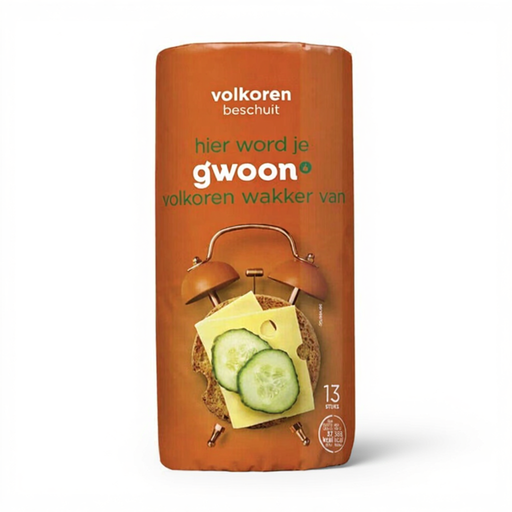 Image unavailable
The 125 g pack may suit you if you only have a crunchy bread alternative now and then. If you want to compare fibre, check whether the label gives the value per 100 g or per portion.
Check whether the bread is labelled ‘wholemeal’: according to the Netherlands Nutrition Centre, wholemeal bread is made from 100% wholemeal flour. Colour and the ‘multigrain’ label alone don’t prove that bread is wholemeal.
A smaller pack or half a loaf may suit occasional use better than a whole loaf. If you want to store portions, follow the instructions for the product you choose. For example, PLUS says that PLUS Boeren Volkoren can be frozen on the day of purchase.
No, ingredients and allergens vary from one product to another. Check the current packaging of the bread you choose, even if you’ve already looked at another wholemeal variety from the same brand.
No, neither label tells you the iodine content of a specific loaf. If you need this information, ask the manufacturer about the composition of the particular product.