
Families keeping an eye on wholegrains and fibre
For breakfast and school lunches, they want to know whether the bread is genuinely wholemeal and how much fibre the label lists per 100 g.


For a school lunch, start with bread labelled ‘wholemeal’; according to the Netherlands Nutrition Centre, wholemeal bread is made from 100% wholemeal flour. Then compare the fibre, ingredients and allergens listed on each pack. If a child prefers a finer texture, or a whole loaf takes a while to use up, texture and storage instructions matter too. If allergies are involved, check the school’s arrangements as well.
For breakfast and school lunches, they want to know whether the bread is genuinely wholemeal and how much fibre the label lists per 100 g.
Before packing bread, they check the ingredients, allergen warnings and any school arrangements. The standard supermarket breads discussed here contain cereals containing gluten.
A fine or soft slice can make a difference to what a child is happy to take to school. If a whole loaf takes a while to use up, being able to freeze portions is relevant too.
First check the product description, then compare the labels of breads that suit the lunch, the school’s arrangements and how you use bread at home.
| What to consider | What to check | Who it matters to |
|---|---|---|
| Wholemeal and fibre | Check that ‘wholemeal’ appears in the product description and compare the fibre per 100 g on the labels. | I want to know whether the bread is genuinely wholemeal and how much fibre it provides. This is the top priority for around 33% of consumers. |
| Allergens and school arrangements | Read the current ingredients and allergen warnings, and make sure the lunch complies with the school’s rules. | If allergens or school rules affect what my child can take in, I don’t want to rely on an old pack. This is the main concern for around 27% of consumers. |
| Texture | Check whether the product description mentions a fine or soft variety, then compare the label for that variety. | My child is more likely to take a sandwich if they like the texture. Around 20% of consumers give this the highest priority. |
| Storage and food waste | Consider how much bread you use and follow the product’s storage and freezing instructions. | If a whole loaf takes a while to use up, I want to be able to keep it for future school days. This matters most to around 20% of consumers. |
A dark colour or the word ‘multigrain’ does not tell you whether bread is made from 100% wholemeal flour. The Netherlands Nutrition Centre says that the ‘wholemeal’ description is what makes this clear for bread.
Check for this description before comparing the fibre and other nutritional information in different loaves.
The Albert Heijn, Jumbo and PLUS breads discussed here contain cereals containing gluten. Other warnings vary by product, and product information can change.
Read the current label every time you buy, and take the child’s dietary needs and the school’s arrangements into account.
The Netherlands Food and Consumer Product Safety Authority explains that iodine may be added to bread through baker’s salt. This does not mean every loaf contains this ingredient.
For packaged bread, check the ingredients for baker’s salt or iodised salt. For unpackaged bread, ask which ingredients have been used.
If you only need a few slices for each school day, the rest of an opened loaf could go stale before you finish it.
Freeze portions after buying the bread if you won’t use it within a few days, and take out what you need. The Netherlands Nutrition Centre recommends keeping opened wholemeal bread in a kitchen cupboard for 2–4 days, or in the freezer for 1–3 months.
AH Extra lang lekker Zaans volkoren heel is one option to consider if you’re looking for a soft slice.
Jumbo Fijn Volkoren is an example to consider if the texture of a school sandwich matters to you.
PLUS Boeren volkoren heel is an example where you can compare nutritional values and storage instructions side by side.
Bakker van der Akker Boeren Extra vezels volkoren heel is a bread that Dirk describes as suitable for breakfast or lunch.
These rye and wheat breads are options to consider for a school lunch. Before buying, check the Dutch product description, ingredients and allergens on the packaging; the product name alone may not make these details clear.
 Image unavailable
If you’re considering rye bread for school lunches, compare this pack with the number of portions you need.
Check the current label to see whether it is described as ‘wholemeal’ and which allergens are listed.
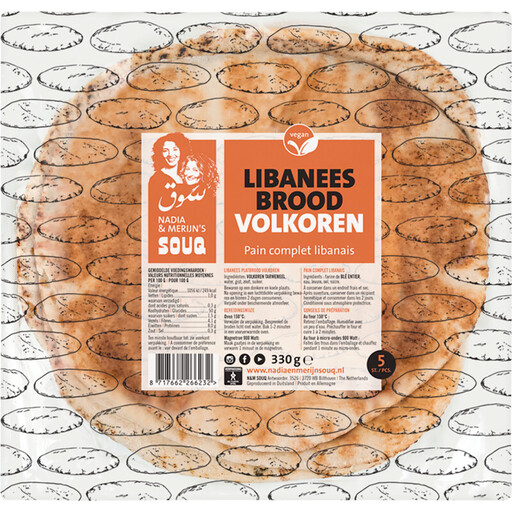 Image unavailable
If you’d like to compare flatbread with regular sandwiches for a school lunch, this six-piece pack is worth considering.
Check the Dutch product description, ingredients and allergens on the current packaging, and bear the school’s arrangements in mind.
 Image unavailable
If you’re considering a rye option for a school lunch, the product’s shape is particularly relevant.
Check the packaging to see whether it is a bun or sliced bread: the product title and description suggest different formats. Also check the ‘wholemeal’ description and the allergens.
Check that ‘wholemeal’ appears in the product description. According to the Netherlands Nutrition Centre, wholemeal bread is made from 100% wholemeal flour; a brown colour or the word ‘multigrain’ is not a substitute.
That depends on the bread, the child’s dietary needs and the school’s arrangements. The varieties discussed from Albert Heijn, Jumbo and PLUS contain cereals containing gluten. Before packing bread, check the current ingredients and allergen warnings every time you buy it.
No. Don’t assume every loaf has the same ingredients. The Netherlands Food and Consumer Product Safety Authority explains that iodine may be added to bread through baker’s salt. For packaged bread, check the ingredients list; for unpackaged bread, ask which ingredients have been used.
Freeze portions if you won’t finish an opened loaf within a few days. The Netherlands Nutrition Centre recommends keeping opened wholemeal bread in a kitchen cupboard for 2–4 days, or in the freezer for 1–3 months. Also follow the instructions on the packaging of the bread you choose.