
Fussy white-bread eaters
You’d like to try a less coarse slice at lunchtime, but don’t want to judge by colour alone. A loaf explicitly labelled ‘finely milled wholemeal’ is a good option to assess for taste and texture.


If you don’t want to give up the familiar bite of white bread all at once at lunchtime while working from home, start with a loaf labelled ‘finely milled wholemeal’ and see how you like the texture. If choosing wholemeal matters more to you than a mild bite, consider regular wholemeal bread too. The name alone doesn’t prove that brown or multigrain bread is wholemeal.
You’d like to try a less coarse slice at lunchtime, but don’t want to judge by colour alone. A loaf explicitly labelled ‘finely milled wholemeal’ is a good option to assess for taste and texture.
Above all, you want to be able to tell whether your lunch bread is wholemeal. According to the Netherlands Nutrition Centre, wholegrain cereal products contain more fibre than white cereal products made from flour. You can then compare the nutritional values of specific loaves on their packaging.
You want to find a suitable loaf for your usual lunch quickly. Check your store’s current range and read the packaging, especially if ingredients or allergens are important to your choice.
If you’re weighing up a familiar bite against a wholemeal option for lunch while working from home, it helps to decide on the type of bread first, then check the packaging of the specific product.
When: You want to try wholemeal bread specifically, but are looking for a finer texture as a step on from white bread.
The trade-off: A fine grind doesn’t tell you how you’ll find the taste and bite. Try the bread before making it a regular lunch choice.
When: Choosing wholemeal matters more to you than having a texture similar to white bread.
The trade-off: If you’re fussy about texture, it may be worth trying a smaller amount first.
When: You want to try a different taste or texture and assess the bread based on its own packaging.
The trade-off: ‘Multigrain’ doesn’t automatically mean ‘wholemeal’. Don’t judge by the name or dark colour alone.
When: The familiar taste is the deciding factor in what you’ll actually eat at lunchtime right now.
The trade-off: According to the Netherlands Nutrition Centre, wholegrain cereal products contain more fibre than white cereal products made from flour.
| What to consider | What to look for | Who it matters to |
|---|---|---|
| Familiar texture | Look for ‘finely milled wholemeal’ and, if in doubt, try a smaller amount first; the label doesn’t guarantee a bite like white bread. | If I usually eat white bread, I want to know whether I’ll enjoy a less coarse wholemeal slice at lunchtime. For around 42% of consumers, that familiar texture comes first. |
| Wholemeal and fibre | Check for a wholemeal label and compare the amount of fibre per 100 g on the packaging of the loaves you’re considering. | Anyone deliberately looking for wholemeal bread for lunch won’t want to rely on colour. Around 33% of consumers prioritise choosing wholemeal. |
| Convenience at your usual shop | Check your store’s current range and read the packaging when you buy, especially if you have allergies or dietary requirements. | At my usual supermarket, I want to find bread that fits my lunch routine without a long search. For around 25% of consumers, convenience matters most. |
Colour, seeds and the term ‘multigrain’ don’t prove on their own that a loaf is wholemeal. The Netherlands Nutrition Centre recommends looking beyond the front of the label.
Look for an explicit wholemeal label and read the ingredients and nutritional information for the bread you want to buy.
If the texture isn’t to their taste, the bread may go uneaten.
Try a finely milled wholemeal option or a smaller amount first, then decide whether you’d also like to try coarser wholemeal bread.
The amount of iodine depends on the salt used in the specific loaf. Don’t assume otherwise based on the type of bread alone.
If this matters to your choice, check the ingredients information for the product in question.
Albert Heijn and PLUS point out that product information, including ingredients and allergens, can change.
Check the current packaging when you buy if an allergen or dietary requirement is important to your choice.
These brands are a good starting point when looking for finely milled or regular wholemeal bread. Check the features of each individual product and its packaging.
A good option if you’d like to compare AH Rond fijn volkoren heel with other breads.
An option for comparing the nutritional value of a specific finely milled wholemeal loaf.
A good starting point if you want to try a more finely milled wholemeal loaf.
A good starting point if you’re looking for sliced, finely milled wholemeal bread.
A good starting point if you’d like to look at PLUS Rond fijn volkoren heel.
A good starting point for comparing wholemeal breads in its range.
These loaves are options to consider alongside finely milled wholemeal bread. The list includes one loaf with ‘Whole Wheat’ in its name and two rye breads; don’t automatically choose them as a replacement for a fine-textured slice like white bread.
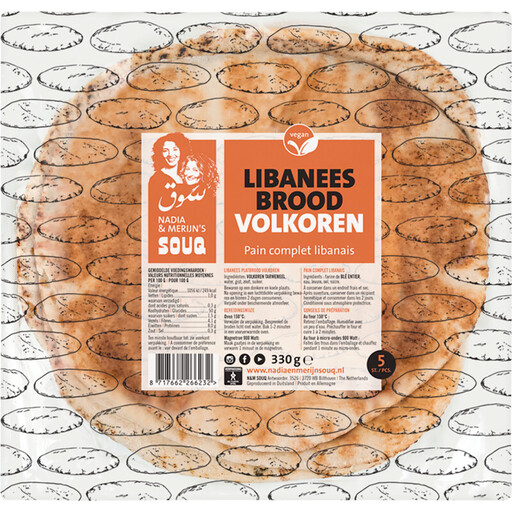 Image unavailable
For anyone looking for bread with an explicit wholemeal label at lunchtime. Try the texture for yourself if a soft bite is important to you.
 Image unavailable
For anyone considering rye bread for lunch. If you want to compare it with finely milled wholemeal bread, check the wholemeal label and the fibre per 100 g on the packaging.
 Image unavailable
For anyone wanting to try a rye bread product at lunchtime. Check the ingredients and nutritional information for this variety before choosing it as an alternative to finely milled wholemeal bread.
Finely milled wholemeal is a good step if you specifically want to try wholemeal bread and are looking for a less coarse bite. Taste and texture vary from loaf to loaf and from person to person. Check for a wholemeal label and, if needed, try a smaller amount first.
No, ‘multigrain’ doesn’t automatically mean that a loaf is wholemeal. Look for an explicit wholemeal label and read the ingredients on the packaging, rather than judging by the colour or seeds alone.
Check the ingredients information for the specific loaf if iodised baker’s salt matters to your choice. Don’t assume every loaf provides the same amount of iodine.
If you’re unsure, try a smaller amount first and follow the storage advice on the packaging. That way, you can decide whether you like the texture before buying the same bread again.