
Fibre-conscious hosts
Households looking for bread labelled ‘wholemeal’ for drinks with friends, rather than simply putting out standard white bread.


If you want bread made with wholemeal flour for Friday afternoon drinks, choose a loaf labelled ‘wholemeal’ rather than judging by its colour. White bread may suit guests who prefer a soft, neutral base for their toppings. For either option, check the ingredients and allergens, and compare fibre content on the same nutritional basis.
Households looking for bread labelled ‘wholemeal’ for drinks with friends, rather than simply putting out standard white bread.
If you’re serving bread with dips, spreads or other toppings, you’ll want to weigh up a soft, neutral texture against a preference for wholemeal bread.
If you’re buying bread for others, you’ll want to check the ingredients and allergens in your chosen product before sharing it.
First, decide whether a ‘wholemeal’ label or a soft bread texture matters more for your get-together. Then consider the toppings, packaging and information that may be important to your guests.
Choose this if: you want bread made with 100% wholemeal flour, as defined by the Netherlands Nutrition Centre.
The trade-off: a more distinctive texture may not suit everyone’s preferences or every topping.
Choose this if: a soft, mild base for your planned toppings is the priority.
The trade-off: white bread is made with refined flour, so it won’t meet the preference for bread made with wholemeal flour.
| What to consider | What to check when buying | Who it matters most to |
|---|---|---|
| Wholemeal and fibre | Look for the label ‘wholemeal’ and compare fibre per 100 g when weighing up different products. | If I want to serve wholemeal bread, a dark colour alone isn’t enough to guide my choice. Around 36% of consumers put their preference for wholemeal and fibre first. |
| Texture and toppings | Decide whether you want to serve soft rolls, slices or a loaf cut into pieces, and whether the texture will work with your toppings. | With dips or toppings already chosen, I mainly want bread that’s easy and enjoyable to share and eat. This combination with the toppings matters most to around 29% of consumers. |
| Availability and quantity | Check what’s currently available in store and whether a whole or half loaf will suit your group. | If I’m still shopping on Friday, the bread I’ve chosen needs to be available in time, without leaving me with more than I need. This practical consideration comes first for around 21% of consumers. |
| Label and leftovers | Check the ingredients, allergens and salt per 100 g. If you have questions about iodine, check whether baker’s salt is listed. | If I’m sharing bread with guests, I want to know what’s in it and have a plan for any leftovers. This check is the top priority for around 14% of consumers. |
The colour or the presence of several types of grain doesn’t mean bread is made with 100% wholemeal flour. The Netherlands Nutrition Centre advises looking for the label ‘wholemeal’ when choosing bread.
Check for that label first, then compare fibre per 100 g if you’re choosing between products.
Bread that goes well with your toppings won’t necessarily be suitable for everyone at the table. The Netherlands Food and Consumer Product Safety Authority explains how allergens are listed on labels.
Read the ingredients and allergen information for the product you’ve chosen. If you’re buying unpackaged bread, ask for this information before serving it.
A relative claim compares a product with a reference product. For example, ALDI says its Extra High-Fibre Wholemeal Bread, Whole Loaf has 30% more fibre and 30% less salt than ordinary wholemeal bread. That doesn’t necessarily mean it compares favourably with another loaf on your shopping list.
Compare the nutritional information per 100 g and check the ingredients and allergens too.
If you’re hosting a small gathering, you may not use the whole loaf straight away.
Choose a half loaf if it’s a better fit for your group, or freeze any leftover bread in portions.
Bread left unused can dry out or go mouldy.
Albert Heijn lists several types of wholemeal bread online, including loaves in different shapes.
Jumbo’s online category includes fine, coarse and round wholemeal bread.
Lidl describes wholemeal options in its in-store bread range.
ALDI lists wholemeal bread, including its Extra High-Fibre Wholemeal Bread, Whole Loaf.
PLUS’s wholemeal range includes farmhouse, round and hearth-baked loaves.
Alongside other types of bread, Dirk lists a wholemeal bâtard that you can serve in pieces.
These options are suited to serving on a sharing board: a flatbread, portioned rye bread and a round loaf. Check each product’s type of bread, preparation instructions and label information to see whether it suits your preference for a soft base or wholemeal bread.
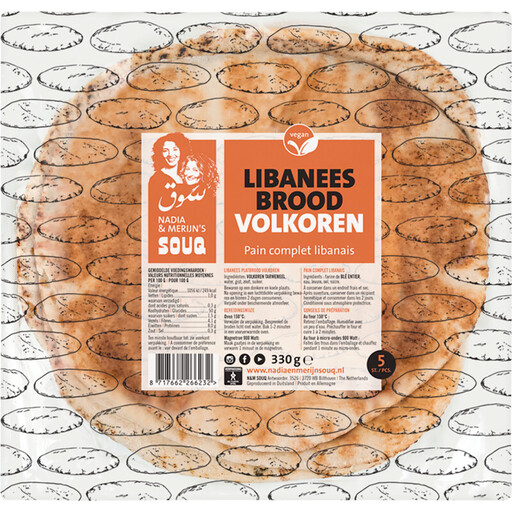 Image unavailable
Break this flatbread into pieces to serve with dips. If you’re serving it to guests, check the ingredients and allergens on the packaging, including information about wheat and the possible presence of soya or milk.
 Image unavailable
This pack of 9 pieces of rye bread is a handy option for sharing. If you’re specifically looking for bread labelled ‘wholemeal’, check the packaging. If you’re serving it to guests, check the allergen information too.
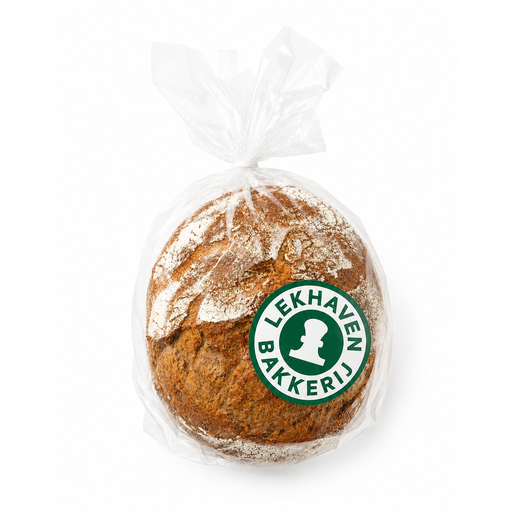 Image unavailable
Slice this 550 g round loaf to serve on a sharing board. It needs to be thawed before baking; follow the baking time on the packaging and check the allergen information before serving it to guests.
No. According to the Netherlands Nutrition Centre, wholemeal bread is made with 100% wholemeal flour; its colour or a ‘multigrain’ label doesn’t guarantee this. Look for the explicit label ‘wholemeal’ when choosing bread.
No, wholemeal wheat bread contains wheat. For any other bread, check the ingredients and whether the specific product is labelled gluten-free. The Netherlands Food and Consumer Product Safety Authority explains which allergens must be listed on the label.
No. Don’t assume this without checking the ingredients of the bread you’ve chosen. Look for baker’s salt on the label, or ask the seller about the ingredients if the bread is unpackaged.
Freeze any bread you won’t use soon in portions. For opened wholemeal bread, the Netherlands Nutrition Centre recommends keeping it in a kitchen cupboard for 2 to 4 days or in the freezer for 1 to 3 months.