
Fussy fakeaway eaters
If chunky bits in bread aren’t popular, you could consider a finer-textured loaf. If you specifically want wholemeal bread, check how the product is labelled.


Fine wholemeal bread can be a good middle ground for a fakeaway with fussy eaters, provided it is clearly labelled as wholemeal and its texture suits your guests. White bread is still an option if a familiar white slice or roll is the priority, but it isn’t wholemeal bread. If your group has different preferences, you can serve both and check the nutritional information and allergens for each product.
If chunky bits in bread aren’t popular, you could consider a finer-textured loaf. If you specifically want wholemeal bread, check how the product is labelled.
Whether you’re serving burgers, toasties or bread with a dip, you’ll want to compare the different types of bread. Check the wholemeal label and compare the fibre and salt per 100 g.
If not everyone wants the same bread, you can serve white and fine wholemeal bread side by side rather than choosing just one type for the whole group.
First, decide whether a familiar texture, wholemeal ingredients or a suitable size matters most. According to the Voedingscentrum, white bread is made from refined flour, brown bread from a mixture of refined and wholemeal flour, and wholemeal bread from 100% wholemeal flour. So neither the colour nor the label ‘multigrain’ is as clear an indicator as the word ‘wholemeal’ on the packaging.
| What to consider | What to check when buying | Who it matters to |
|---|---|---|
| Texture and taste | Check the type of bread and product description; look for the wholemeal label if you want a finer-textured wholemeal option. | If someone leaves coarse bread uneaten, I want to know whether a finer loaf would go better with the meal. This is the top priority for around 42% of consumers. |
| Wholemeal ingredients and fibre | Read the product label and compare the fibre and salt per 100 g in the loaves you’re considering. | I want to choose wholemeal bread, even if a white loaf looks more familiar. This wholemeal and fibre choice matters most to around 33% of consumers. |
| Size and leftovers | Check whether a whole loaf, half loaf or individual rolls will suit the number of people; read the storage instructions. | For a small group, I want to serve enough bread without having lots left over. Around 25% of consumers prioritise size and convenience above all else. |
The colour and number of grain types don’t tell you whether a loaf is made entirely from wholemeal flour. According to the Voedingscentrum, brown bread is made from a mixture of refined and wholemeal flour.
If wholemeal is the type of bread you want, look for the wholemeal label on the packaging.
The word ‘fine’ doesn’t tell you how much fibre or salt a loaf contains. The wholemeal label alone doesn’t tell you those amounts either.
Compare the nutritional information for the loaves you’re considering on the same basis: per 100 g.
Even if a type of bread seems suitable for the meal, its ingredients and allergens may determine whether someone can eat it.
Check the current ingredients list and allergen information on the packaging of every loaf you choose.
A whole loaf may be more than you need for a small fakeaway meal.
Choose a size to suit the number of people, and follow the storage instructions for the product you bought when keeping any leftover bread.
Albert Heijn offers different types of bread to compare if you’re weighing up white and wholemeal options.
Jumbo is worth considering if you want to compare fine wholemeal bread with white varieties.
Lidl is an option if you want to factor the fibre information on packaged bread into your choice.
ALDI lists white, brown and wholemeal loaves in its bread range.
PLUS is worth considering if you’re looking for half a loaf of fine wholemeal bread for a smaller group.
Dirk lists white, wholemeal and multigrain bread among its options.
These options include a white baguette and white rolls, Lebanese flatbread labelled whole wheat, and a round loaf with the same label. Choose according to your dish and preferred size; check the packaging if the Dutch wholemeal label is essential.
 Image unavailable
A flatbread option to serve with a dip. The pack contains six pieces. Check the ingredients and product description if you’re specifically looking for bread labelled as wholemeal in the Netherlands.
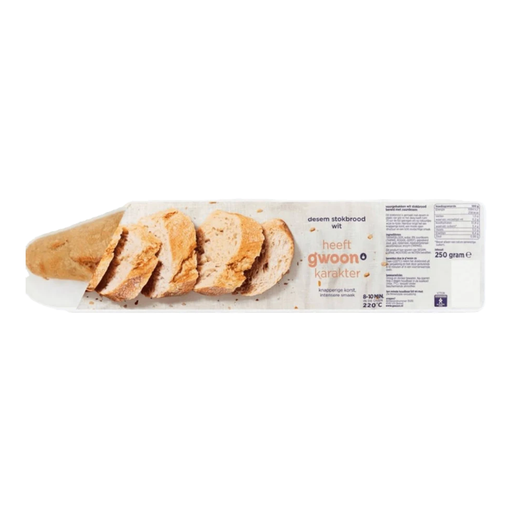 Image unavailable
A white baguette if you’d like to serve baguette-style bread with your fakeaway. The stated weight is 250 g; if nutritional value matters to you, compare the fibre and salt per 100 g on the current packaging.
 Image unavailable
Four white rolls if you’d like to serve individual portions. Check the current packaging for nutritional information per 100 g and allergen details.
 Image unavailable
A 550 g round loaf if you’re looking for a larger bread to serve with your meal. Before buying, check the ingredients, allergens and preparation instructions on the packaging; the label ‘whole wheat’ alone doesn’t confirm that the bread carries the Dutch wholemeal designation.
No. According to the Voedingscentrum, brown bread is made from a mixture of refined and wholemeal flour, while wholemeal bread is made from 100% wholemeal flour. Check the product description rather than relying on the colour alone.
Yes, if your guests like the texture and you choose a loaf that is clearly labelled as wholemeal. Jumbo and PLUS describe the fine wholemeal varieties mentioned as fully and half wholemeal wheat bread respectively; also check the nutritional information for the product you buy.
Read the ingredients list and allergen information on the current packaging of every loaf you plan to serve. The Netherlands Food and Consumer Product Safety Authority says that the required allergens must be listed on the label; don’t rely on the type of bread or the label on a different product.
Follow the storage instructions for the bread you bought. If you already know that a whole loaf will be too much, half a loaf or a suitable number of individual rolls may be more practical.