
Fussy eaters who prefer a finer crumb
If you’re not keen on the texture of coarse wholemeal bread, try fine wholemeal. Just check that the bread is actually labelled wholemeal; a fine crumb alone says nothing about its ingredients.


Choose bread labelled wholemeal if wholemeal flour and fibre are your priorities. Fine wholemeal is worth trying if fussy eaters are put off by a coarse texture. Brown bread can be a stepping stone, but its colour doesn’t guarantee that it’s wholemeal. So compare the product name, ingredients and fibre per 100 g of the bread you buy.
If you’re not keen on the texture of coarse wholemeal bread, try fine wholemeal. Just check that the bread is actually labelled wholemeal; a fine crumb alone says nothing about its ingredients.
If wholemeal flour and fibre matter to you, the product name and nutritional information per 100 g are more useful than the bread’s brown colour or visible seeds alone.
For an occasional coffee break, taste, quantity and storage instructions may matter more. If you have allergies, always check the information on the packaging of the bread you choose.
First decide whether wholemeal flour, a fine texture or the amount you need for a coffee break is the deciding factor. A loaf can meet more than one of your needs, but its name and nutritional information are still key to understanding what it’s made of.
| What to consider | What to check when buying | Who it matters to |
|---|---|---|
| Wholemeal flour and fibre | Look for the wholemeal label and compare fibre on a like-for-like basis, per 100 g. | If bread is a regular feature at home, I want to know whether it’s genuinely wholemeal rather than judging by its colour. This fibre-focused choice would be the top priority for around 45% of consumers. |
| Mild flavour and fine texture | Check whether the finer-textured option is labelled wholemeal; if needed, try a smaller quantity first. | A fussy eater would rather have bread without a coarse texture, but I don’t want to rule out wholemeal from the start. A fine crumb would be the first priority for around 36% of consumers. |
| Quantity and storage | Choose a suitable pack size and follow the product’s storage and freezing instructions. | If I’m only serving bread at a coffee break, I don’t want to buy more than I can use or store. For around 19% of consumers, getting a practical quantity would matter most. |
According to Albert Heijn, brown bread isn’t always wholemeal. A dark crust or visible grains won’t tell you whether the bread is made with wholemeal flour either.
If wholemeal is what you’re looking for, check for the wholemeal label and look at the ingredients too.
According to the Netherlands Nutrition Centre, using baker’s salt when baking isn’t compulsory. So you can’t tell whether it’s included just from the type of bread.
If baker’s salt matters to your choice, check the ingredients list for the specific bread.
PLUS points out that a product’s ingredients, nutritional values and allergen information can change.
Check the current packaging when you buy, especially if you need to take allergens into account.
If the pack size doesn’t suit how you’ll use it, you could end up with bread left over.
Choose a smaller quantity if one is available, or follow the freezing instructions for the bread you buy.
Its online bread range includes tiger wholemeal and other wholemeal varieties.
Jumbo describes a range that includes white, brown, fine wholemeal and wholemeal bread with seeds.
Lidl lists white, brown, multigrain and wholemeal bread in its range.
ALDI lists white, brown and fine wholemeal bread, available as whole or half loaves.
PLUS lists brown and wholemeal bread, as well as Korenlanders sourdough breads.
At Bakker van der Akker, Dirk lists white, brown and wholemeal bread, among other varieties.
These white rolls are a good fit if you’re choosing white bread for a coffee break. They aren’t a proven stepping stone to wholemeal; if fibre is your priority, compare the product name and nutritional information of other types of bread first.
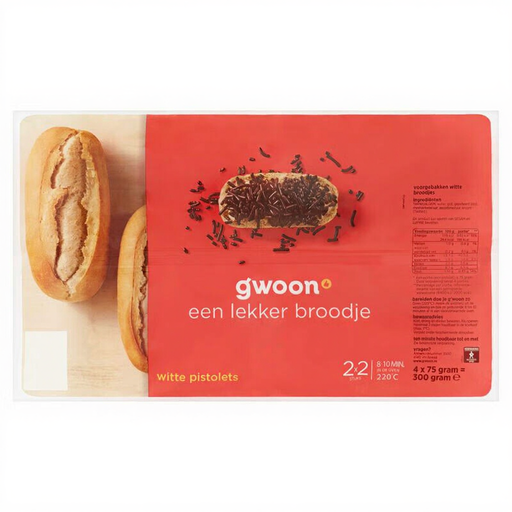 Image unavailable
For serving white rolls at a coffee break; this isn’t wholemeal bread.
Pack: 4 rolls, 300 g in total.
For a fibre-focused choice, compare the nutritional information per 100 g and check the current packaging if you have allergies.
No. According to Albert Heijn, brown bread isn’t always wholemeal. If you’re looking for wholemeal bread, check the product name rather than relying on its colour or visible grains alone.
No. According to the Netherlands Nutrition Centre, using baker’s salt when baking bread isn’t compulsory. Check the ingredients list for the specific bread if you want to know whether it’s been used.
Buy an amount that suits how you’ll use it and follow the storage instructions on the packaging. For a particular brown bread, PLUS recommends freezing it on the day of purchase; don’t automatically apply that advice to every other type of bread.
Read the allergen information on the current packaging of the exact bread you’re buying. PLUS points out that product information can change, so an older online description isn’t enough if you have allergies.