What should you look for when choosing?
Start by considering when you’ll eat the bread and what storage space you have. Then compare the wholemeal labelling and the product information for options that suit your trip.
Fresh wholemeal bread
Choose this if: you’ll eat the bread within a few days or can freeze portions in advance.
Bear in mind: the Netherlands Nutrition Centre recommends keeping opened wholemeal bread in a kitchen cupboard for 2–4 days. For an unopened pack, follow the storage instructions on the packaging.
Wholemeal crispbread
Choose this if: you want to take a dry bread option without needing a freezer.
Bear in mind: crispbread has a different texture from fresh bread. Follow the storage instructions on the pack you choose.
Wholemeal bake-at-home rolls
Choose these if: you have suitable cooking facilities at the campsite.
Bear in mind: baking takes time and requires suitable facilities. Before you set off, check the preparation method and use-by date on the packaging.
| What to consider | What to check when buying | Who is this important for? |
|---|
| Wholemeal and fibre |
Look for the term ‘wholemeal’ and, for packaged products, compare the fibre content per 100 g. According to the Netherlands Food and Consumer Product Safety Authority, the grain ingredient in a product labelled wholemeal must consist entirely of wholemeal flour. |
I want to make a conscious wholemeal choice for my camping meals, rather than judging by the colour of the bread alone. Around 42% of consumers put this first. |
| Storage and portions |
Check the storage instructions and work out whether you can freeze the bread or keep a dry store of it. |
Without a freezer, I don’t want to be left with an opened loaf I can’t finish in time. For around 33% of consumers, portion planning and storage matter most. |
| Ingredients and allergens |
Read the current ingredients and allergen information; if needed, check whether baker’s salt has been used. |
If I need to avoid certain ingredients or want to check for baker’s salt, the information for the exact product is decisive. Around 25% of consumers put this check first. |
Products for bread and dry stores
These Joybuy products are rye bread and crispbread for anyone who wants to take bread along or stock up on dry provisions for camping. Before deciding, compare the storage instructions, ingredients and allergens on each pack.
 No image available
TastyBasics Rye Bread, 9 pcs
A rye bread option if you want to take bread along for your camping meals. Check the shelf life and allergens on the packaging before planning portions for your trip.
 No image available
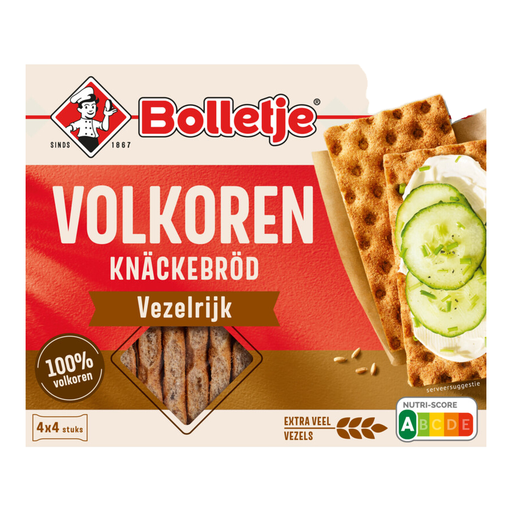
Bolletje wholemeal crispbread, 265 g
An option if you want to take a dry store of food without needing a freezer. Check the storage instructions after opening and the allergens listed on the pack.
 No image available
Bolletje rye bread, 500 g
A bread option if you’re planning several camping meals. Check the packaging for the shelf life, and only compare nutritional values when they use the same basis, such as per 100 g.
 No image available
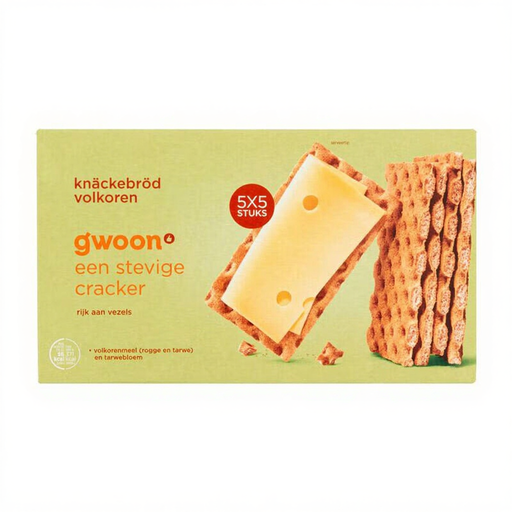
g'woon wholemeal crispbread, 375 g
A crispbread option for a dry store of food at the campsite. Check the allergen information on the pack you choose and how to store it after opening.
 No image available
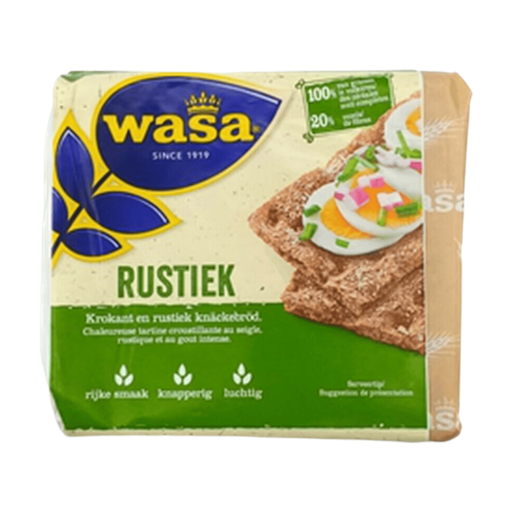
Wasa Rustic crispbread, 215 g
A crispbread option if you’re looking for dry provisions. Check the storage instructions and allergens on the packaging; to compare fibre, use the nutritional information per 100 g.
Frequently asked questions
How long can you keep opened wholemeal bread?
The Netherlands Nutrition Centre recommends keeping opened wholemeal bread in a kitchen cupboard for 2–4 days. If you can freeze portions in advance, you won’t need to open the whole loaf at once. For an unopened pack, follow its use-by date and storage instructions.
Is dark or multigrain bread wholemeal?
Not necessarily: colour and the term ‘multigrain’ don’t prove that on their own. According to the Netherlands Food and Consumer Product Safety Authority, the grain ingredient in a product labelled wholemeal must consist entirely of wholemeal flour. So check the precise product name and ingredients.
Does all bread in the Netherlands contain baker’s salt?
No. According to the Netherlands Nutrition Centre, bakers aren’t required to use baker’s salt. For packaged bread, check the ingredients list; for unpackaged bread, ask the baker.
Is wholemeal bread automatically gluten-free?
No, the term wholemeal doesn’t mean a product is gluten-free. Check the allergen information for the exact bread or crispbread, and if you need a gluten-free option, only choose products explicitly labelled as such.


