
Breakfast lovers comparing wholegrains and fibre
You’re looking for crunchy granola for the weekend and want to know which grains it’s made with. Check whether wholegrains are listed explicitly in the ingredients and compare the fibre per 100 g.


To choose granola for your weekend breakfast, first check which wholegrains are listed in the ingredients, then compare the fibre and sugars per 100 g. If you want to limit added sugars or need to avoid allergens, check the other ingredients and any warnings on the pack too. A nut mix or high-protein option won’t necessarily meet those requirements.
You’re looking for crunchy granola for the weekend and want to know which grains it’s made with. Check whether wholegrains are listed explicitly in the ingredients and compare the fibre per 100 g.
You want to tell the difference between granola made with added sugar, honey or syrup and varieties without these ingredients. Compare the total sugars per 100 g in the nutritional information too.
Before buying, you want to check whether the grains, nuts, peanuts or soya in a particular variety are suitable for your diet. Read both the ingredients and any warnings about possible traces on the current label.
Start with the grain base, then compare the nutritional information of similar products per 100 g. Always check allergens separately, even if the other features suit your needs.
| What to look for | What should you check? | Who is this most important for? |
|---|---|---|
| Wholegrain base and fibre | Look for wholegrains listed explicitly in the ingredients and compare the fibre per 100 g. | I want to know whether wholegrains make up the base and how much fibre the granola contains. This combination is a priority for around 33% of consumers. |
| Added sugars | Check the ingredients for added sugar, honey and syrup, and look at the total sugars per 100 g too. | I’m looking for crunch without taking the sugar claim on the front of the pack as the whole story. Around 27% of consumers prioritise limiting added sugars. |
| Allergens | Check the ingredients and any warnings about possible traces on the current pack. | If I need to avoid certain ingredients, I want to be able to check the variety before buying. For around 20% of consumers, this is the first priority. |
| Packaging and ease of shopping | Check the pack size, the variety you want and where you can buy it; assess the ingredients on the pack. | I want to choose a pack that suits my plans for the weekend shop. Another 20% or so of consumers prioritise packaging and ease of shopping. |
A crunchy appearance or a picture of nuts won’t tell you which grains the granola contains.
Look for wholegrains listed explicitly in the ingredients and compare the fibre per 100 g.
This claim doesn’t mean a product contains no naturally occurring sugars. Nor does it tell you about the rest of its nutritional profile.
Read the ingredients and compare the total sugars, fibre and other nutritional information per 100 g.
Ingredients and warnings can vary between granola varieties, even within the same product range.
Before buying, check the allergens and any warnings about possible traces on the pack of the variety you’ve chosen.
Quaker Cruesli includes Zero Sugar Added Granola Naturel, a variety made with wholegrain oat flakes.
The AH own-brand range includes Granola Noten and a granola with a high-protein focus in its product name.
According to the product information, Jumbo’s Granola Noten combines a range of wholegrain flakes with nuts.
Lidl offers granola varieties called Super Berry and Super Nutty.
Aldi offers Golden Bridge Granola in 500 g packs, including varieties with nuts and seeds or red fruits.
According to the manufacturer, Zonnatura Classic Crunchy contains wholegrain spelt and oat flakes, as well as puffed rice.
These products are relevant if you’re comparing wholegrain bases for weekend breakfasts. Bear in mind the difference between granola, Cruesli and crunchy muesli, and check the nutritional information for the variety you choose.
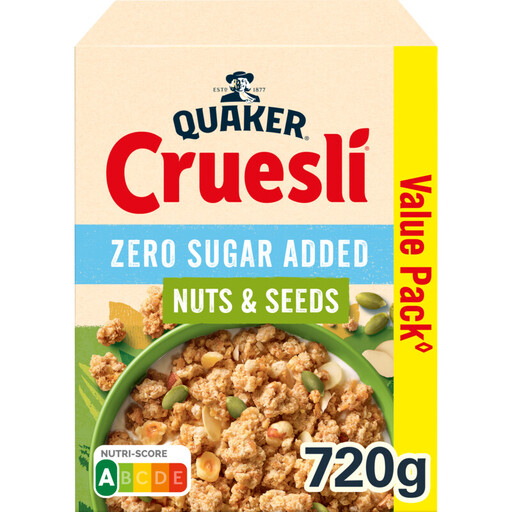 Image unavailable
An option if you’re looking for Cruesli with nuts and seeds. Compare the wholegrain ingredients, fibre and sugars per 100 g, and check the current label if you have allergies.
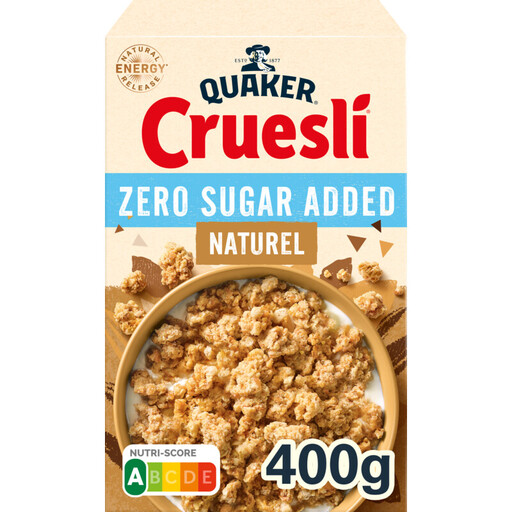 Image unavailable
A natural variety to compare with nutty Cruesli if you’re mainly interested in the grain base. Check the nutritional information per 100 g and, if you have allergies, read the ingredients and warnings.
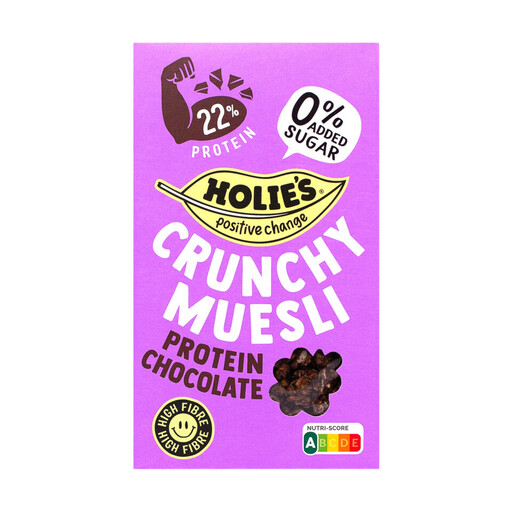 Image unavailable
This is crunchy muesli, not granola. Compare it separately if protein content is important to your breakfast. Check the wholegrain ingredients, other nutritional information and allergens too.
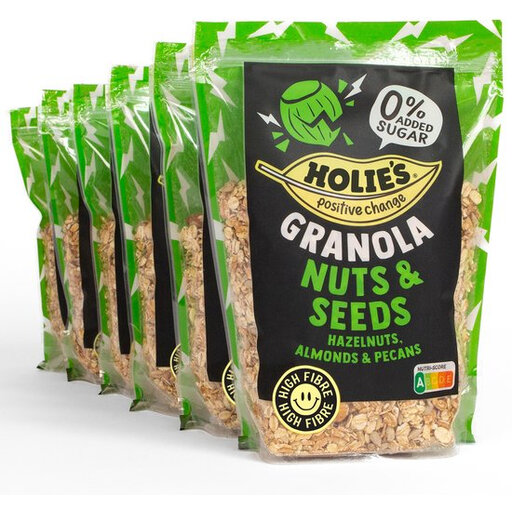 Image unavailable
This pack of six may suit you if you want several packs of granola with nuts and seeds. Compare the grain base and nutritional information per 100 g, and check the allergens before buying.
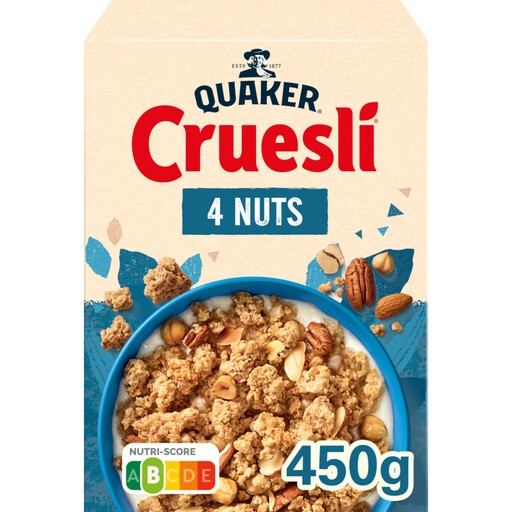 Image unavailable
A Cruesli variety to compare if you’re looking for a nut mix. This variety isn’t suitable if you want to avoid added sugars; check the current label for allergens too.
Look for wholegrains listed explicitly in the ingredients, such as wholegrain oat, barley or spelt flakes. Then compare the fibre per 100 g. The Netherlands Nutrition Centre describes wholegrain cereal products as products made from the entire grain.
No. Ingredients can contain naturally occurring sugars. Check the ‘of which sugars’ line in the nutritional information and read the ingredients list for the variety you’ve chosen.
Check the ingredients list for cereals, nuts, peanuts and soya, as relevant to you, and read any warnings about possible traces. Do this for the specific variety you’re buying, not just the product range.