When comparing wholegrain breakfast cereals, don’t just look for the word ‘wholegrain’. Check the carbohydrates per portion you eat, as well as fibre, sugars, salt and ingredients. A simple wholegrain cereal, bran flakes and flakes with sweeteners each involve different trade-offs. ‘No added sugars’ doesn’t mean a product is low in carbohydrates. Remember to include anything you add to your bowl when working out your portion.
Who is this comparison useful for?
Breakfast eaters counting carbohydrates per portion
If you keep track of how many carbohydrates you eat, what matters is the amount in your bowl: the cereal, plus any milk, yoghurt, fruit or toppings. Diabetes.nl highlights the importance of understanding how many carbohydrates you consume.
Shoppers comparing fibre and wholegrain options
You’re looking for a wholegrain base and want to compare the fibre content on the label, without assuming that sugars or carbohydrates are automatically low.
Shoppers looking to limit added sugar
You want to distinguish between sugars in the nutrition information, added sugar in the ingredients list and a claim such as ‘no added sugars’. Total carbohydrates still matter, too.
What should you look for when choosing?
First decide what kind of breakfast you’d like, then compare the labels on a like-for-like basis. Finally, work out the figures for the amount that actually goes into your bowl.
Simple wholegrain cereal
When to choose it: If you’re looking for a warm cereal with a short ingredients list, you could compare Jumbo Ontbijtpap Volkoren and Brinta Volkoren graanontbijt.
The trade-off: A low sugar figure on the label doesn’t change the carbohydrates per portion. Jumbo lists 25,2 g of carbohydrates per 40 g portion of its breakfast cereal; anything you add to the bowl comes on top.
Wholegrain bran flakes
When to choose them: If you’re looking for crunchy flakes, the fibre content of AH Bran flakes volkoren gives you a useful figure to compare.
The trade-off: Albert Heijn lists 15 g of fibre for this variety, but also 12 g of added sugars per 100 g.
Flakes with no added sugars
When to choose them: If this claim matters to you and you want to weigh up the sweeteners, you could check the label on Jumbo Special Flakes.
The trade-off: According to Jumbo, these flakes contain maltitol and 22,8 g of carbohydrates per 30 g portion. So the no-added-sugars claim doesn’t tell you how many carbohydrates are in a portion.
| What to consider |
What to check |
Who it matters to |
| Carbohydrates and portion size |
Check the carbohydrates per 100 g and calculate the amount for your weighed portion. Count any additions separately. |
If I’m keeping track of my carbohydrates, I want to know what’s in my whole bowl, rather than just what’s listed per 100 g on the box. Around 33% of consumers are said to prioritise carbohydrates per portion eaten. |
| Wholegrain and fibre |
Check the wholegrain ingredient and compare fibre on the same basis, for example per 100 g. |
For breakfast, I’m mainly looking for a wholegrain cereal whose fibre content I can compare. This is said to be a priority for around 33% of consumers. |
| Sugars and ingredients |
Compare ‘of which sugars’ and check the ingredients list for added sugar or sweeteners. |
I want to limit added sugar, but also understand what’s in the flakes instead. An estimated 27% of consumers are said to consider this the most important factor. |
| Salt, sweeteners and allergens |
Check the salt per 100 g and review the ingredients and allergen information for the variety you choose. |
If an ingredient or allergen is a deciding factor for me, I need to be able to check it before choosing a product. Around 7% of consumers are said to prioritise this check. |
Common mistakes
-
Choosing based on ‘wholegrain’ alone
Wholegrain doesn’t tell you how much sugar, salt or carbohydrate the finished product contains. For AH Bran flakes volkoren, Albert Heijn lists 15 g of fibre as well as 12 g of added sugars per 100 g.
First compare the nutrition information per 100 g, then calculate the figures for your own portion.
-
Assuming ‘no added sugars’ means ‘low in carbohydrates’
According to Jumbo, Special Flakes contain no added sugars, but do contain 76 g of carbohydrates per 100 g; the ingredients list includes maltitol.
Check the carbohydrates line alongside the ingredients list, and work out how much of the product you’ll use.
-
Counting only the dry cereal
The nutrition information for the flakes doesn’t automatically include the whole bowl with milk, yoghurt, fruit or other additions.
If necessary, weigh your cereal and calculate the carbohydrates in any additions separately.
-
Skipping the rest of the label
Wheat or gluten-containing cereals are relevant to the wheat products described here. Jumbo Special Flakes also contain maltitol and 1,15 g of salt per 100 g.
If you have a relevant allergy, check the allergen information on the current packaging. Take salt and sweeteners into account if they matter to your choice.
Brands and product ranges compared
Brinta
Brinta Volkoren graanontbijt is a wheat-based cereal for anyone looking for a warm breakfast bowl.
- The variety listed by Jumbo contains wholemeal wheat flour and salt. Per 100 g, it contains 64 g of carbohydrates, 4,6 g of sugars and 10 g of fibre.
- Calculate these figures for the portion you eat and include any additions.
Kellogg's
All-Bran Flakes are wheat flakes with wheat bran, for anyone looking to compare fibre content.
- According to Kellogg's product information, a portion of All-Bran Flakes provides 4,3 g of wheat bran fibre.
- For a comparison of carbohydrates, sugars and salt, check the nutrition information on the pack you choose.
Albert Heijn
AH Bran flakes volkoren are crunchy wheat flakes where both fibre and added sugar deserve attention.
- For this variety, Albert Heijn lists 74% wholegrain wheat, 13% wheat bran and 15 g of fibre per 100 g.
- The same variety contains 13 g of sugars, of which 12 g are added sugars, per 100 g.
Jumbo
The products described here include both wholegrain breakfast cereal and Special Flakes from Jumbo. Compare them as different types of breakfast cereal.
- Jumbo Ontbijtpap Volkoren lists 99% wholemeal wheat flour, 14,3 g of fibre and 0,6 g of sugars per 100 g.
- Despite the ‘no added sugars’ claim, Jumbo Special Flakes contain maltitol, 76 g of carbohydrates and 1,15 g of salt per 100 g.
Golden Bridge (ALDI)
ALDI Netherlands’ range includes various types of breakfast cereal, including a 7-grain wholegrain breakfast cereal.
- The different product types give you the opportunity to compare ingredients and nutrition information across varieties.
- For a like-for-like comparison, check the label on the product you choose, paying attention to carbohydrates, fibre, sugars, salt and allergens.
Breakfast products on Joybuy
This selection includes a wholegrain cereal, porridge oats and several types of cruesli. First compare the type of product you want to eat, then check the nutrition information on each pack for the portion you’ll have.
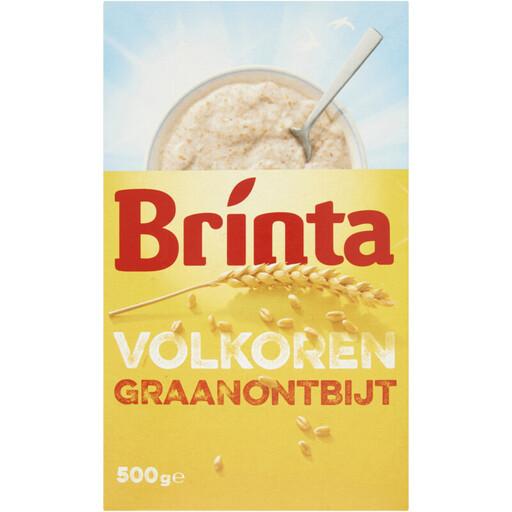 Image unavailable
Brinta wholegrain breakfast cereal 500 g
An option if you’d like to make a warm wholegrain wheat breakfast. For this variety, the product information lists wholemeal wheat flour and salt, with 64 g of carbohydrates, 10 g of fibre and 4,6 g of sugars per 100 g. Calculate these figures for the amount in your bowl.
View on Joybuy
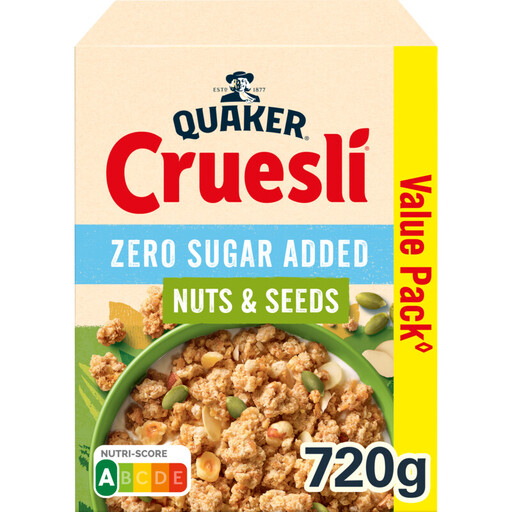 Image unavailable
Quaker Zs Cruesli Nuts & Seeds 720 g
For anyone looking to compare cruesli with nuts and seeds as a breakfast option. Check the ingredients, allergens and the basis for the nutrition figures on the packaging before calculating the carbohydrates in your portion.
View on Joybuy
 Image unavailable
Quaker Oatmeal 600 g
An oat-based option if you’d rather make a warm bowl than eat crunchy cruesli. Check the product format if you’re specifically looking for flakes, and calculate the carbohydrates for your portion, including any additions.
View on Joybuy
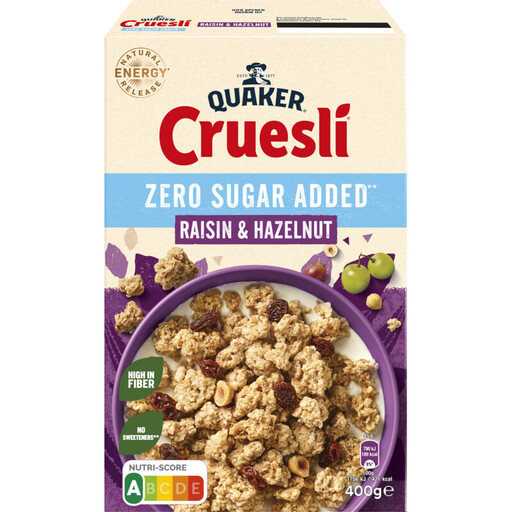 Image unavailable
Quaker Zs Cruesli Raisin & Hazelnut 400 g
For anyone considering cruesli with raisins and hazelnuts. Read the ingredients and allergen information, and check what quantity the nutrition figures refer to before comparing products per portion.
View on Joybuy
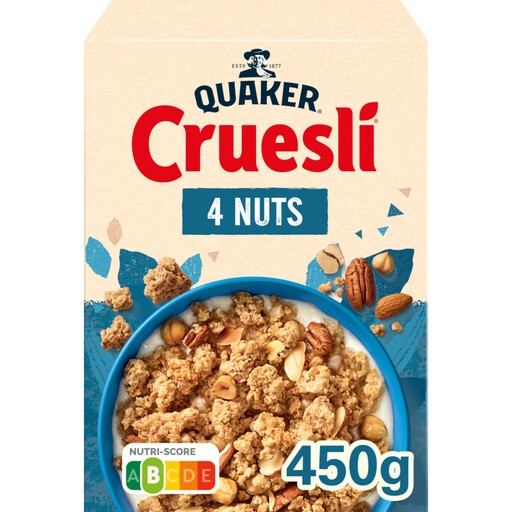 Image unavailable
Quaker Cruesli 4 Nuts 450 g
For anyone weighing up nutty cruesli against simpler wholegrain cereals. Compare the ingredients, sugars and carbohydrates on the same basis, and include yoghurt or anything else you add to your bowl.
View on Joybuy
Frequently asked questions
Is every wholegrain breakfast product suitable if I have diabetes?
No. The ‘wholegrain’ claim doesn’t determine whether a product fits your personal diet. Compare the carbohydrates in the portion you eat, and also check fibre, sugars, salt and ingredients.
Are breakfast flakes with no added sugars also low in carbohydrates?
Not necessarily: the claim refers to added sugars, not all carbohydrates. For example, Jumbo lists 22,8 g of carbohydrates per 30 g portion of Special Flakes and includes maltitol in the ingredients list.
How do I work out the carbohydrates in my whole breakfast bowl?
Start with the amount of cereal you actually use, then count the carbohydrates in milk, yoghurt, fruit and other additions separately. Kitchen scales can help you compare the amount you use with the nutrition information on the packaging.
Is ‘diabetes-friendly’ a reliable claim on breakfast cereals?
The claim alone doesn’t tell you whether a cereal is right for your situation. The European Commission says there is no specific EU legislation setting composition requirements for foods for people with diabetes. So assess the nutrition information and your portion rather than relying on this term.


