
Holidaymakers looking for a wholegrain option
You want a simple breakfast at your holiday home that you can customise with fruit, milk or yoghurt. The Netherlands Nutrition Centre describes wholegrain products as being made from the entire grain.


For a wholegrain breakfast at your holiday home, first look for a clear wholegrain description, then compare fibre, sugars and salt per 100 g. Porridge oats or cereal porridge are good choices if you want to decide on portions and toppings yourself. Bran flakes are another option if fibre is your main priority, while wheat biscuits can make portioning easier. Also check the preparation instructions, storage advice and the label on the pack you actually buy.
You want a simple breakfast at your holiday home that you can customise with fruit, milk or yoghurt. The Netherlands Nutrition Centre describes wholegrain products as being made from the entire grain.
You check the fibre per 100 g, but also want to know how much sugar and salt the product contains. According to the Netherlands Nutrition Centre, breakfast cereals can vary considerably in these respects.
You want to match the amount of breakfast cereal to the length of your stay and the kitchen space available. A product that can be stored dry according to the label, or one with pre-portioned servings, could work well.
First decide what matters most for breakfast at your holiday home: confirmed wholegrain content, the balance of nutritional values, or ease of storage and portioning. Then compare products that meet your preference by checking their labels.
| What to consider | What should you check? | Who is this important for? |
|---|---|---|
| Wholegrain and fibre | Check the wholegrain description and ingredients list; compare fibre per 100 g. | I want to be able to tell whether my breakfast cereal is wholegrain and how much fibre it contains; this is the main priority for around 42% of consumers. |
| Sugars and salt | Compare the sugar and salt values per 100 g with the fibre content. | A high fibre figure isn’t enough for me if I also want to weigh up sugars and salt; this comparison is the main priority for around 33% of consumers. |
| Storage and portioning | Check the storage advice and choose a pack size and portions to suit the length of your stay. | For a short stay, I want to store breakfast cereal easily and measure out a portion each morning; this is the top priority for around 25% of consumers. |
A high fibre content doesn’t tell you how much sugar or salt a product contains. Jumbo lists 26 g of fibre, 15 g of sugars and 0.9 g of salt per 100 g for Kellogg's All-Bran Fibre Plus.
Compare all three values per 100 g rather than looking only at the front of the pack.
The Netherlands Nutrition Centre explains that wholegrain refers to the entire grain. The shape of the flakes doesn’t tell you which grains they’re made from.
Look for a wholegrain description and read the ingredients list before comparing products by fibre content.
Milk, yoghurt and fresh fruit need different planning from dry breakfast cereal, especially if fridge space at your holiday home is limited.
Choose how much fresh food to bring based on the fridge space available and the length of your stay.
If fridge space is limited, it may be more practical to buy milk, yoghurt or fruit in smaller quantities.
Albert Heijn points out that a product’s ingredients, nutritional values and allergen information can change. That’s why it’s important to check the pack you receive if you’re looking for a particular product composition.
Check the label on the pack before use, especially the ingredients and allergen information.
Brinta is worth considering if you’re looking for a wholegrain breakfast cereal that you can customise.
Within the range, All-Bran Fibre Plus is a specific product you can compare by nutritional value; its figures don’t apply to all Kellogg's breakfast cereals.
AH Bran flakes volkoren is a supermarket own-brand product you can compare with other types of breakfast cereal.
Jumbo Ontbijtpap Volkoren is an example of a supermarket own-brand porridge you can compare per 100 g with other grain-based breakfasts.
These products include a range of porridge oats, cereal breakfasts and granola to compare for a stay at a holiday home. Check the ingredients, nutritional values and preparation instructions on each pack to make sure they suit your needs; granola isn’t necessarily a fully wholegrain alternative.
 No image available
A porridge oat option if you want to prepare breakfast at your holiday home. Check the pack for preparation instructions and any toppings you’ll need.
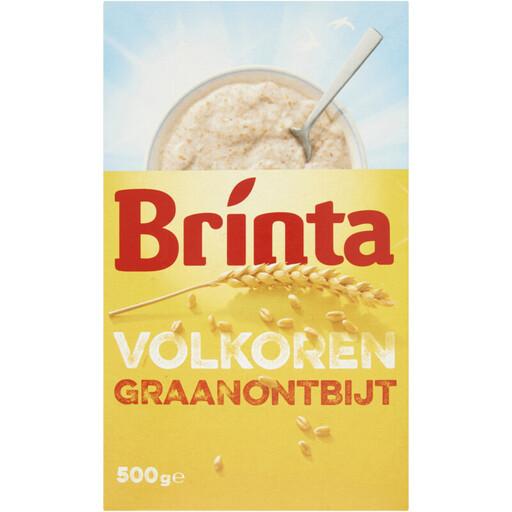 No image available
A cereal breakfast to consider if you want to put together your own breakfast. Before buying, check how to prepare it and compare the nutritional information per 100 g.
 No image available
A porridge oat product for anyone who wants to customise their breakfast cereal base. Compare the ingredients and the fibre, sugars and salt values on the label.
 No image available
A larger pack of porridge oats if you’re planning breakfast for several mornings. Check the portion guidance, preparation instructions and full nutritional information on the pack.
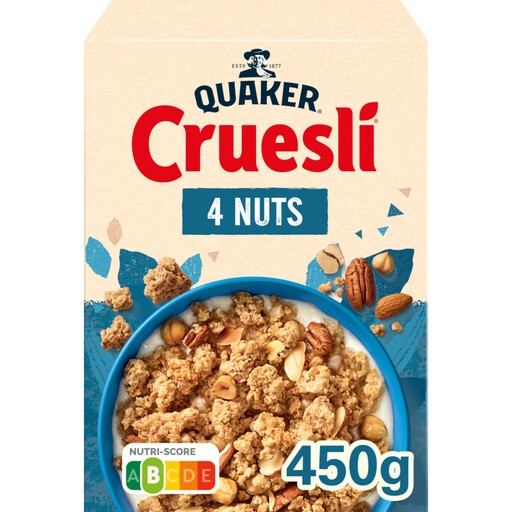 No image available
A granola to compare if you’d like something with a different texture from porridge or oats. If fully wholegrain cereals are a must for you, check the ingredients and read the latest nutritional and allergen information.
Look for a wholegrain description and check the ingredients list. The Netherlands Nutrition Centre explains that wholegrain cereal products are made from the entire grain; then compare the nutritional information per 100 g, as products described as wholegrain can still differ in other ways.
Choose porridge or oats if you want to decide on the amount and toppings yourself, bran flakes if you mainly want to compare fibre content, or wheat biscuits if individual portions make serving easier. Check the preparation instructions for porridge and the fibre, sugars and salt values for all three types; product composition varies between options.
Follow the storage advice on the breakfast cereal pack and plan separately for milk, yoghurt or fruit. The Netherlands Nutrition Centre advises buying perishable foods in small quantities and using suitable refrigeration when you’re on holiday with limited cooling facilities.
Read the allergen information on the label of the pack you receive, even if you’ve bought the product before. The Netherlands Food and Consumer Product Safety Authority provides information about how allergens are listed on food labels; an online product listing doesn’t replace checking the current packaging.