
If you’re consciously choosing wholegrain
You want a product for your Easter brunch that’s clearly labelled as wholegrain. The label and fibre content per 100 g help you compare products; check the salt and ingredients too.


For lots of small, ready-to-serve brunch bites, wholegrain Melba toast is a good fit. For larger portions you want to serve warm, wholegrain toastie bread is the better choice. Wholegrain crackers or crispbread are alternatives if you’re after a flat, crunchy base, but they’re not shaped like classic toast pieces. Check the wholegrain claim, nutritional information and allergens on the current packaging for each product.
You want a product for your Easter brunch that’s clearly labelled as wholegrain. The label and fibre content per 100 g help you compare products; check the salt and ingredients too.
Choose your base to suit how you plan to serve it: small, cold bites on thin Melba toast, or larger portions on toastie bread that you toast yourself.
If you’re keeping an eye on salt, allergens or baker’s salt, the information for the specific product matters. Ingredients and allergens can vary between varieties; a wholegrain label doesn’t tell you what they are.
First decide whether you want to serve small, ready-to-eat pieces of toast, larger portions of warm toast or a cracker-style base. Then compare the labels of products that suit the shape you’re looking for.
| What to consider | What to check when buying | Who it matters to |
|---|---|---|
| Wholegrain and fibre | Look for an explicit wholegrain label and compare fibre per 100 g. According to the Netherlands Nutrition Centre, a brown colour alone doesn’t prove that a product is wholegrain. | If I want to replace white toast, I need to know whether my chosen base is genuinely wholegrain. This would be the main consideration for around 40% of consumers. |
| Shape and toppings | Choose small Melba toast for individual bites, toastie bread to toast yourself, or a larger, flat cracker base; check the size of the variety you choose. | When serving a platter with different toppings, the way I plan to serve them determines which base will work best. Shape would be the top priority for around 30% of consumers. |
| Salt and ingredients | Compare salt per 100 g and read the current allergen information. Check separately whether baker’s salt is listed as an ingredient if that matters to your choice. | If I need to consider salt or particular ingredients, checking the label comes before presentation. Around 20% of consumers are expected to make this their main consideration. |
| Packaging and availability | Check current availability, net weight and how much you’ll need for brunch. | For a small brunch, I want to be able to buy a suitable quantity without basing my menu on a variety that isn’t available. This would be the main consideration for around 10% of consumers. |
The colour and a general fibre claim don’t tell you whether toast or crackers are made entirely from wholegrain flour. The Netherlands Nutrition Centre recommends checking for a wholegrain label.
Read the product description and ingredients list, and compare fibre per 100 g on a like-for-like basis.
Albert Heijn lists 1.9 g of salt per 100 g for Van der Meulen Melba Toast Wholegrain; Jumbo lists 0.98 g per 100 g for its Wholegrain Toastie Bread. The products also differ in shape and preparation.
Compare the salt content on the current labels of products that suit your planned bites, and take the toppings into account too.
Baker’s salt is iodised, but according to the Netherlands Nutrition Centre, bakers aren’t required to use it. The type of product alone won’t tell you which salt has been added.
Check the ingredients list for the specific variety if baker’s salt is relevant to your purchasing decision.
Jumbo says that Jos Poell Wholegrain Toast 90 g is no longer part of its online range. You should also check the ingredients of your chosen variety are up to date.
Before buying, check the availability, packaging and allergens of the product you want to serve.
These brands offer different product shapes; always check the nutritional information and ingredients for the specific variety.
Melba Toast Wholegrain is a thin base for small topped bites.
Wholegrain Toastie Bread is a loaf you can toast yourself for larger, warm portions.
Wholegrain crackers and crispbread offer a flat, crunchy base if you’re not looking for classic toast pieces.
Wholegrain Toast 90 g is a product you can use to compare the nutritional information for wholegrain toast.
ALDI includes wholegrain toast in its range of toast products.
These wholegrain crackers and crispbreads are for anyone looking for a crunchy base for brunch toppings. They’re not small pieces of Melba toast or toastie bread for serving warm.
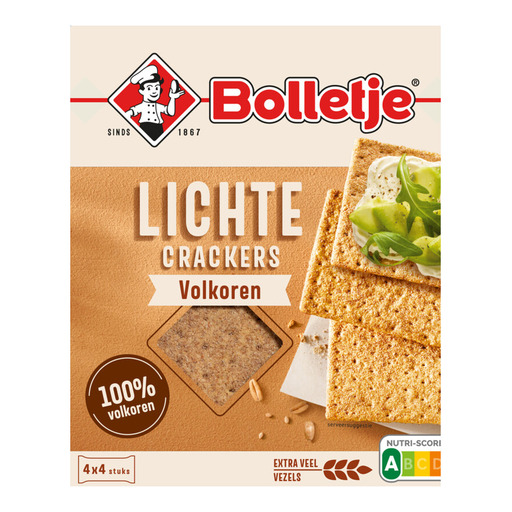 Image unavailable
A cracker option if you want a flat base for toppings at Easter brunch instead of classic toast pieces. This Light variety comes in a 190 g pack; check the current ingredients and allergens if they’re relevant to your guests.
 Image unavailable
A crunchy alternative when crispbread suits your toppings and presentation better than small pieces of toast. The pack contains 265 g; before buying, check the current ingredients and allergens if they’re relevant to your choice.
Check whether the product is explicitly labelled as wholegrain. According to the Netherlands Nutrition Centre, a brown colour or the word ‘multigrain’ alone doesn’t mean that toast or crackers are made entirely from wholegrain flour; if in doubt, check the ingredients list too.
No. Check the salt content per 100 g for the specific variety. Albert Heijn lists 1.9 g per 100 g for Van der Meulen Melba Toast Wholegrain, while Jumbo lists 0.98 g per 100 g for Jumbo Wholegrain Toastie Bread; these are different types of product.
You can’t tell from the wholegrain label. Baker’s salt is iodised, but according to the Netherlands Nutrition Centre, its use isn’t compulsory. Check the label or ask the manufacturer about the variety you’ve chosen if this matters to your purchase.
Read the current allergen information for every product you plan to serve. The information for Van der Meulen Melba Toast Wholegrain lists cereals containing gluten, sesame and soya, among other things; for its Wholegrain Toastie Bread, Jumbo lists cereals containing gluten and possible traces of milk, sesame and soya, among other things.
Yes, if a larger, flat and crunchy base works with your toppings. Crispbread doesn’t come in the small shape of Melba toast, so choose according to the portions you want to serve and check the label for the variety you’ve picked.