Choose a wholegrain melba toast for a small, crunchy base for toppings or dips; a wholegrain cracker is an alternative if you prefer that shape. First check that it is labelled wholegrain, then compare fibre and salt per 100 g, your usual portion size and the allergens. A cracker is not the same product as melba toast.
Who is this choice relevant to?
If you’re focused on wholegrains and fibre
You want to swap your usual toast with your coffee for a wholegrain version. The wording on the pack is a good first check; the nutrition information shows how much fibre the product provides per 100 g and per portion.
If you want a crunchy base for toppings
You want to use melba toast or a cracker for cheese, sweet toppings or a spread, for example. The choice between melba toast and a thin cracker matters: they are different types of product.
If you check ingredients carefully
If certain ingredients or allergens matter to you, read the pack for the version you choose. The product information for the melba toast and crackers discussed here does not list the same allergens for every product.
What should you look for when choosing?
First decide whether you want melba toast or a cracker. Then use the packaging to compare products on a like-for-like basis: per 100 g for nutritional values, and per portion for what you actually eat during your coffee break.
| What to consider |
What to look for |
Who is this most important to? |
| Wholegrains and fibre |
Check the wholegrain wording, ingredients and fibre per 100 g; also consider your portion size. |
I choose wholegrain specifically because the grain base and fibre content matter most to me. This is the top priority for around 36% of consumers. |
| Shape for toppings |
Choose between melba toast and a cracker, and think about what topping or dip you’d like with it. |
With my coffee, I mainly want a crunchy base that works with what I put on it. Around 29% of consumers prioritise this use. |
| Allergens and salt |
Read the allergen information and compare salt per 100 g; if you have questions about iodine, check the type of salt in the ingredients list. |
I need to know before buying whether an ingredient matters to me, and I also want to be able to assess the salt content. This label check matters most to around 21% of consumers. |
| Pack size and usage |
Check the net weight, best-before date and storage instructions after opening. |
I only eat toast occasionally and want to choose a pack I can use up. Around 14% of consumers prioritise this practical consideration. |
Common mistakes
-
Assuming a brown colour means wholegrain
The colour or a mention of several types of grain doesn’t tell you how much of the flour used is wholegrain. According to the Voedingscentrum, the ‘wholegrain’ label on toast and crackers means the product is made from 100% wholemeal flour.
Use the wholegrain wording as your first check, then read the ingredients list and nutrition information.
-
Comparing fibre alone
A wholegrain label doesn’t tell you which allergens are present or how much salt a product contains. For example, the Van der Meulen Melba Wholegrain Toast described by Jumbo lists 1.9 g of salt per 100 g and names barley, rye, sesame, soya and wheat as allergens.
Compare nutritional values per 100 g and check the allergens on the pack of the version you buy.
Brands to consider
Van der Meulen
Van der Meulen Melba Wholegrain Toast is an example of wholegrain melba toast to serve with toppings or a dip. It comes in a 120 g pack.
- Jumbo lists 9.7 g of fibre and 15 g of protein per 100 g for this version.
- The same product information lists 1.9 g of salt per 100 g and names barley, rye, sesame, soya and wheat as allergens.
Bolletje
Bolletje Light Wholegrain Crackers are a thin-cracker alternative to classic melba toast for your coffee break.
- Bolletje says these crackers are made from 100% wholegrains.
- They are still crackers, not melba toast. Check the pack for wheat, barley and sesame for this version.
Products for a crunchy coffee break
These crackers and crispbreads are worth considering as a crunchy base with your coffee. If you’re specifically looking for melba toast, treat them as alternatives with a different shape; compare the nutrition information and ingredients on the exact pack.
 Image unavailable
Wasa Sourdough Rye Crackers, 235 g
A rye cracker to consider if you’re looking for a crunchy alternative to melba toast. Check the pack for nutritional values per 100 g and any allergens relevant to you.
View at Joybuy
 Image unavailable
Wasa Lightweight Crackers, 300 g
Consider this cracker if you’d prefer a thin base for toppings rather than melba toast. Compare the nutrition information per 100 g on the pack and think about how many crackers you usually eat.
View at Joybuy
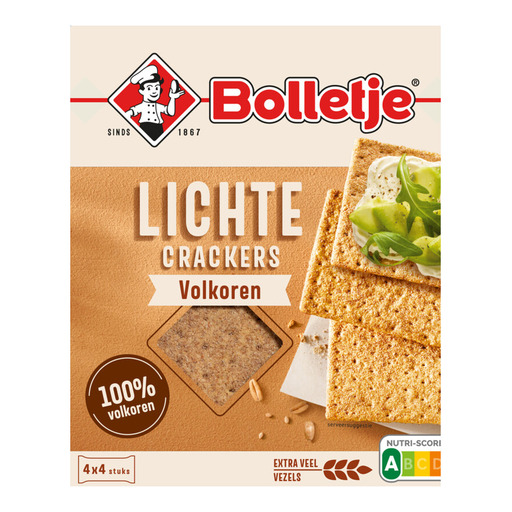 Image unavailable
Bolletje Light Whole Grain Crackers, 190 g
A cracker to consider if you’re looking for a thin base for toppings. Before comparing it with melba toast, check the ingredients, allergens and nutrition information on this pack.
View at Joybuy
 Image unavailable
Bolletje Whole Grain Crispbread, 265 g
This crispbread is a different type of product from small melba toast. Think about what portion you’d like with your coffee, and check the ingredients and nutrition information on the pack.
View at Joybuy
Frequently asked questions
How can I tell if toast is wholegrain?
Check whether the pack describes the product as ‘wholegrain’ and read the ingredients list. According to the Voedingscentrum, this label on toast and crackers means the product is made from 100% wholemeal flour; a brown colour or the words ‘with wholemeal flour’ alone don’t mean the same thing.
Does ‘wholegrain’ tell me how much fibre I eat during a coffee break?
No, you’ll also need the nutrition information and your portion size. First compare fibre per 100 g, then think about how many pieces of toast or crackers you actually eat. Melba toast and crackers can also vary in size.
Does wholegrain mean the toast contains iodised salt?
No, ‘wholegrain’ describes the grain base, not the type of salt used. If the use of baker’s salt or iodised salt matters to your choice, check the ingredients list for the specific toast or cracker.
How should I store toast or crackers after opening?
Seal the pack tightly after use and follow the storage instructions on the packaging. When choosing a pack size, also think about how often you eat toast or crackers so the amount suits your needs.


