
Parents who are mindful of fibre
Your child enjoys rusks and you want to compare wholegrain options. Check the fibre per 100 g and, if you like, per rusk, without assuming this tells you anything about the chocolate sprinkles.


Wholegrain rusks with chocolate sprinkles can add variety if your child enjoys rusks, but the wholegrain base doesn’t change the sugar and saturated fat content of chocolate sprinkles. For everyday breakfasts for children aged 1 to 3, the Netherlands Nutrition Centre recommends wholemeal and brown bread; keep chocolate sprinkles to a minimum, and check the ingredients and allergens on the rusk and topping separately.
Your child enjoys rusks and you want to compare wholegrain options. Check the fibre per 100 g and, if you like, per rusk, without assuming this tells you anything about the chocolate sprinkles.
Your child asks for chocolate sprinkles, but you also want to consider how much you use and try less sweet toppings. The Netherlands Nutrition Centre advises not eating chocolate sprinkles too much or too often.
As well as choosing the rusk and topping, it’s important to check the labels on the packs you choose and the childcare setting or school’s allergy policy.
Assess the rusks and chocolate sprinkles separately. If this is an everyday breakfast, also compare wholemeal bread with less sweet toppings; the Netherlands Nutrition Centre recommends wholemeal and brown bread for children aged 1 to 3.
| What to consider | What to check when buying | Who is this most relevant to? |
|---|---|---|
| Wholegrain rusk base | Read the ingredients and compare fibre per 100 g. Only use the figure per rusk if the serving size is clear. | If my child enjoys rusks, I want to know which wholegrain option I’m buying. For around 42% of consumers, the rusk base comes first. |
| Amount of chocolate sprinkles | Compare sugars and saturated fat for the same amount, and decide how much you’ll sprinkle on. | My child likes chocolate sprinkles, but I want to vary sweet toppings. Around 33% of consumers give limiting chocolate sprinkles top priority. |
| Allergens when packing food to take away | Check both packs for ‘contains’ and ‘may contain’ statements, and ask about the childcare setting or school’s policy. | When I pack food, I need to know whether the products I’ve chosen meet the agreed allergy requirements. This is the main concern for around 25% of consumers. |
The fibre in rusks doesn’t change the ingredients in chocolate sprinkles. The Netherlands Nutrition Centre says chocolate sprinkles are not included in the Wheel of Five, partly because of their sugar and saturated fat content.
Compare the nutritional information for the rusks and topping separately, and alternate chocolate sprinkles with less sweet toppings.
Bolletje Vezelrijk boeren beschuit volkoren, as listed by Albert Heijn, contains ingredients including wheat, oats, barley and sesame seeds. These ingredients may matter for a child or a childcare group.
Check the current allergen information and ask the childcare setting or school about its own requirements before packing rusks.
The amount of chocolate sprinkles determines how much sugar and saturated fat the topping adds to a portion. A nutritional value per 100 g doesn’t automatically tell you how much you use on one rusk.
Decide how much to use before serving, and compare products on the same nutritional basis.
Worth considering if you want to compare different wholegrain rusk options.
A supermarket own-brand option for looking at wholegrain rusks and chocolate sprinkles separately.
The rusk range lets you compare plain, wholegrain and varieties with grains or seeds.
Worth considering if you want to compare different types of chocolate sprinkles as a topping.
Another brand to compare dark and milk chocolate sprinkles.
These products cover the two parts of the combination: wholegrain rusks as the base and dark chocolate sprinkles as a possible topping. Don’t compare them as if they were the same type of product.
 Image unavailable
A dark wholegrain rusk option if you’re looking for a crisp base. If serving it to a child, check the current label for wheat, other cereals containing gluten and sesame, especially if you’re packing the rusks for childcare or school.
 Image unavailable
A wholegrain rusk option if you want to choose the base for breakfast. Only compare fibre with other rusks if the pack clearly states whether the figure is per 100 g or per rusk; also check the information for wheat, egg and sesame.
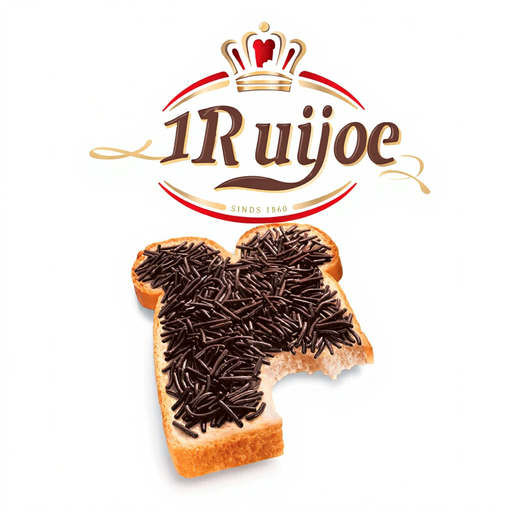 Image unavailable
Dark chocolate sprinkles for an occasional topping on rusks. The Netherlands Nutrition Centre advises not eating chocolate sprinkles too much or too often, so decide how much to use. To compare sugars and saturated fat, check the basis used on the pack and look for allergen information about milk and soya.
It’s best to think of this combination as an occasional change rather than an automatic everyday choice. The Netherlands Nutrition Centre recommends wholemeal and brown bread for children aged 1 to 3, and advises not eating chocolate sprinkles too much or too often.
Compare the ingredients and fibre per 100 g for different rusks, and check the serving size if a figure per rusk is also given. The nutritional information for the rusk won’t tell you how much sugar or saturated fat the topping adds.
You can’t tell from the word ‘wholegrain’ alone; check the label of the variety you choose. AH Beschuit volkoren lists wheat and cereals containing gluten, and also contains egg. The Vezelrijk boeren beschuit volkoren listed by Albert Heijn also contains ingredients including oats, barley and sesame seeds.
No. The rule doesn’t confirm what’s in any specific rusk. According to the Netherlands Food and Consumer Product Safety Authority, iodine compounds may be present in bread, bread substitutes and other bakery products when baker’s salt is added, with a maximum of 65 mg of iodine per kg of salt. Check the pack label for the ingredients in a particular rusk.