What should you look for when buying?
First, choose a rusk that suits your fibre preferences and portion size. Then assess the chocolate sprinkles as a separate topping and check the ingredients in the combination you plan to eat.
| What to consider |
What to check |
Who it’s most relevant to |
| Wholegrain base and fibre |
Look for the wholegrain label and compare the fibre per 100 g. If you choose by the piece, also check the weight of each rusk. |
If fibre is my main reason for choosing rusks, I want to know what the specific variety provides and how much I eat per piece. For around 50% of consumers, choosing a wholegrain base comes first. |
| Amount of chocolate sprinkles |
Compare the sugars per 100 g across different varieties of chocolate sprinkles and decide how much you want to scatter over one rusk. |
I want to keep the sweet taste but choose the amount of topping myself. That’s the most important consideration for around 30% of consumers. |
| Ingredients and allergens |
Read the current ingredients list and allergen information for both products; if necessary, also check for warnings about possible cross-contamination. |
If certain ingredients are a problem for me, I need to check both the base and the topping before combining them. Around 20% of consumers say checking the labels is their priority. |
Rusks and chocolate sprinkles at Joybuy
These products include two wholegrain rusks as a base and three types of chocolate sprinkles as a topping. Choose each separately: the type of chocolate sprinkles tells you nothing about the fibre in the rusks, and choosing wholegrain rusks doesn’t determine how much topping you use.
 Image unavailable
Bolletje dark wholegrain rusks, 10 pieces
A rusk base for anyone looking for a wholegrain variety with oats and seeds.
The variety reviewed lists 10 g of fibre per 100 g. Check the current packaging for allergens, including wheat, oats, barley and sesame, and check the weight per rusk if you’re comparing them by the piece.
View at Joybuy
 Image unavailable
Bolletje wholegrain rusks, 13 pieces
A wholegrain base if you want to enjoy chocolate sprinkles on rusks while keeping fibre in mind.
The variety reviewed lists 11 g of fibre per 100 g. Check the weight per rusk and the allergens, including wheat and egg, on the exact pack.
View at Joybuy
 Image unavailable
De Ruijter dark chocolate sprinkles, 390 g
A topping for anyone who wants to decide how much chocolate sprinkles to put on their wholegrain rusks.
The variety reviewed lists 64 g of sugars per 100 g and contains milk and soya as allergens. Assess the rusk base separately.
View at Joybuy
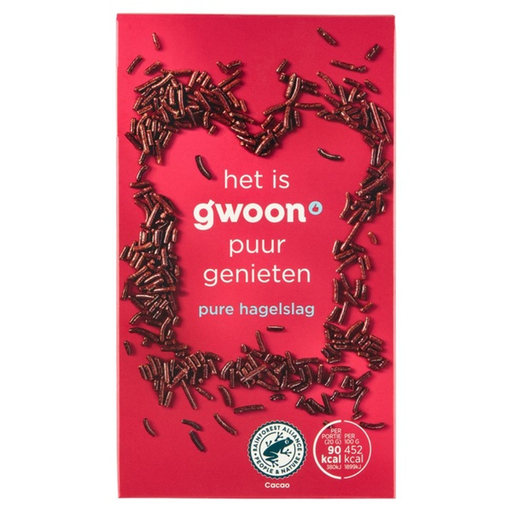 Image unavailable
g'woon dark chocolate sprinkles, 400 g
Chocolate sprinkles to use as a topping with a separately chosen wholegrain rusk.
Compare the sugars per 100 g on the packaging and decide how much you want to scatter over each rusk. Also check the current allergen information.
View at Joybuy
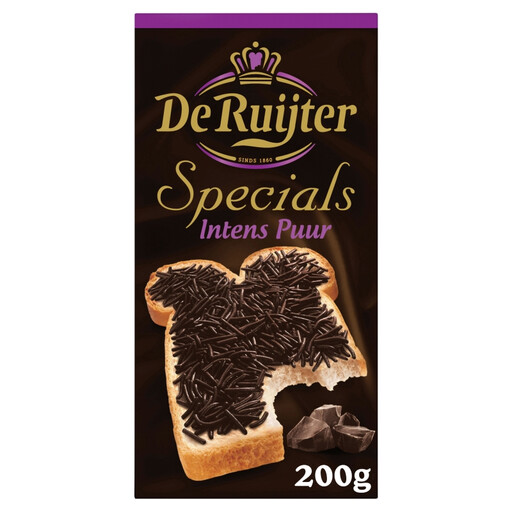 Image unavailable
De Ruijter Intense dark chocolate sprinkles, 200 g
A variety of chocolate sprinkles for anyone looking for a dark chocolate topping to go with wholegrain rusks.
Use the nutrition information per 100 g on the packaging to compare the sugars with other toppings. Also read the allergen information for this exact variety.
View at Joybuy
Frequently asked questions
When should I choose wholegrain rusks instead of ordinary rusks?
If fibre is your main consideration when choosing rusks with chocolate sprinkles, wholegrain rusks are a sensible base: according to the Netherlands Nutrition Centre, wholegrain cereal products contain more fibre than white cereal products. Then compare the nutritional information for the specific rusks per 100 g and check the weight of each piece.
How can I compare rusks and chocolate sprinkles without mixing up portion sizes?
First compare rusks with other rusks, and chocolate sprinkles with other chocolate sprinkles, per 100 g. For rusks, look at fibre and salt; for chocolate sprinkles, look at sugars and fat. Then decide how much of each you’ll actually use. When comparing food labels, the Netherlands Nutrition Centre recommends using the values per 100 g as a common basis.
Which allergens should I check in this combination?
Check the allergens in both the rusks and the chocolate sprinkles, as ingredients vary by variety. The wholegrain rusks reviewed list wheat and egg, among other things; the De Ruijter and Venz dark chocolate sprinkles reviewed list milk and soya. Before use, read the current packaging of the products you choose.
Can I assume that all rusks contain iodine-enriched baker’s salt?
No, don’t assume this is true of every variety of rusk. Check the ingredients list on the exact pack if the type of salt used is relevant to your purchasing decision.


