What should you look for when choosing?
Start with the ingredients and any gluten-free requirements. Then choose the flake type or level of convenience that suits your lunch, and think about what you’ll have with your oats.
| What to consider |
What to check when buying |
Who is it important to? |
| Wholegrain oat base |
Check that wholegrain oats or wholegrain oat flakes are listed in the ingredients. Compare nutritional values on the same basis, for example per 100 g. |
If I want to put my own lunch together, I want to know which grain I’m buying as a base. For around 40% of consumers, a recognisable wholegrain oat base is the top priority. |
| Preparation and texture |
Compare fine and coarse oats to find the texture you prefer. For quick-cook varieties, check the preparation instructions and serving size. |
When I have lunch at work, I need to be able to prepare it during my break and want the texture I prefer. Convenience is the main consideration for around 30% of consumers. |
| The whole lunch |
Choose a base that goes with the ingredients you want to add, and assess the meal as a whole, not just the oats. |
I want to add other ingredients to my bowl of oats so that my lunch isn’t made up of just one portion of grain. For around 20% of consumers, the overall combination is the most important factor. |
| Gluten-free suitability |
If you need to follow a strict gluten-free diet, check both the gluten-free label and the allergen information on the packaging. |
If I need to choose strictly gluten-free products, I can’t rely on the word ‘oats’. For around 10% of consumers, this assurance is the highest priority. |
Brands and retailers to explore
These examples can help you distinguish between oat products, different types of packaging and other porridge products. Always check the information for the product you’re buying.
Quaker
Offers plain oats and Express varieties.
- Quaker lists 100% wholegrain oats as an ingredient in its Havermout Original.
- The same product information states that it may contain barley and wheat. If you need to follow a gluten-free diet, check the packaging of the variety you choose.
Albert Heijn
The range includes fine and coarse wholegrain oat flakes, as well as a separately labelled gluten-free variety.
- These product types make it easy to compare texture and on-pack labelling.
- Check the ingredients, allergens and nutritional values for the specific pack you choose; a range name doesn’t apply to every variety.
Jumbo
Offers its own-brand fine and coarse wholegrain oats, among other products.
- Jumbo Grove Vlokken Volkoren lists wholegrain oats in its ingredient information.
- The product states that it contains gluten and may contain barley, rye and wheat.
Lidl
Lists coarse oat flakes in a 500 g pack.
- The coarse texture is worth considering if you prefer more distinct oat flakes.
- Check the packaging to see which ingredients and allergens apply to this product.
ALDI / Golden Bridge
Golden Bridge lists coarse wholegrain oats in a 500 g pack.
- The product name makes both the wholegrain base and coarse flake texture clear.
- Check the packaging of the product you choose for ingredient and allergen information.
Brinta
Brinta Volkoren graanontbijt is a wheat porridge product for anyone who isn’t specifically looking for oats.
- According to the product information at Albert Heijn, this variety is made with wholemeal wheat flour and salt.
- The product contains wheat and gluten, so it isn’t oatmeal or a gluten-free alternative.
Oat products at Joybuy
These products offer a choice between a plain oat base and Express varieties for anyone who prioritises preparation time and portion sizes. For each product, compare the ingredients, allergens and instructions on the packaging with your own lunch plans.
 Image unavailable
Quaker Express Oatmeal, 324 g
An Express variety to consider if preparing lunch during a short break is important. Check the portion sizes and preparation instructions on the packaging; the product listing mentions gluten and possible traces of wheat and barley.
View at Joybuy
 Image unavailable
Zonnatura Organic Whole Wheat Oatmeal, 500 g
Consider this product if you’re looking for a base to build your own lunch around. As the product name refers to both wheat and oatmeal, check the ingredients list on the packaging to confirm which grain you’re buying. Check the preparation instructions and allergen information there too.
View at Joybuy
 Image unavailable
Quaker Oatmeal, 600 g
A plain oat variety to compare if you want to decide for yourself what goes into your lunch. Check the type of oats if texture matters to you; the product listing states that it may contain wheat and barley.
View at Joybuy
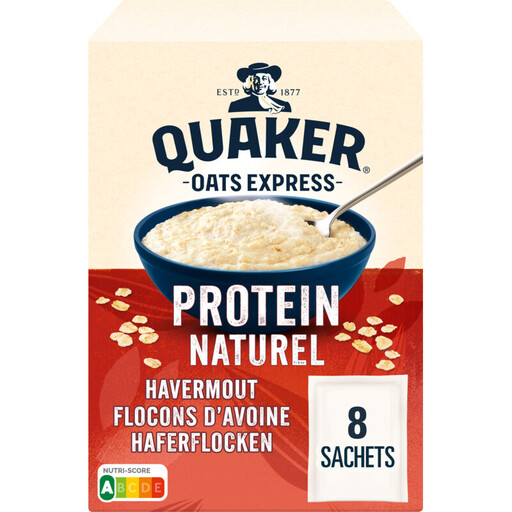 Image unavailable
Quaker Oats Express Protein, 302 g
An Express variety to compare if quick lunch preparation is your priority, but don’t treat it as a replacement for plain oats without checking the ingredients. If you have a soya allergy, check the allergen information: the product listing mentions soya protein and soya lecithin. Also check the portion sizes and whether gluten is listed.
View at Joybuy
Frequently asked questions
Can I have oats for lunch?
Yes, oats can be part of your lunch. The Netherlands Nutrition Centre (Voedingscentrum) emphasises that the meal as a whole matters. Add other suitable ingredients to your oats as you like, and keep your meals varied.
Can I replace bread with oats at every lunch?
Don’t make this a regular change without considering the rest of your diet. Bread is an important source of iodine in the Netherlands, whereas oats don’t provide the same role. So if you regularly replace bread, pay attention to your other sources of iodine.
Are plain oats suitable for people with coeliac disease?
Don’t assume they are. If you have coeliac disease, choose only oats with an explicit gluten-free label that suits your diet, and check the allergen information on the current packaging too.
What should I check with quick-cook or flavoured oats?
Compare the ingredients, nutritional information, allergens, serving size and preparation instructions on the pack you choose. The word ‘Express’ alone doesn’t tell you how its nutritional value compares with plain oats.
How should I store an opened pack of oats?
Follow the instructions on the packaging. Jumbo recommends storing its coarse wholegrain oat flakes in a cool, dry place and sealing the bag tightly after use. For other products, check their own storage instructions.


