
Parents looking for a simple breakfast option
You’re looking for wholegrain muesli for a child aged 1 to 3, as an alternative to bread. The Voedingscentrum recommends checking for added sugar and salt when making your choice.


Looking for muesli for a child aged 1 to 3? Choose a variety made with wholegrain cereals and check whether sugar or salt has been added. The Voedingscentrum recommends these types of breakfast cereal as an alternative to bread. Before serving, check the texture too: children under 4 should not be given whole nuts or peanuts. If your child has allergies, or breakfast is going to childcare or school, always check the current packaging and follow the setting’s rules.
You’re looking for wholegrain muesli for a child aged 1 to 3, as an alternative to bread. The Voedingscentrum recommends checking for added sugar and salt when making your choice.
Your child is under 4 or is still learning to chew confidently. Before serving the muesli, you want to check whether it contains whole nuts, peanuts or other hard pieces.
You need to take a food allergy, a gluten-free diet, or childcare or school rules into account. In that case, the ingredients and allergen information on the current packaging are important when choosing a product.
Start with the ingredients, then check the texture for your child, and only then choose a breakfast format that works well at home. A warm cereal breakfast can be an alternative, but it isn’t muesli.
| What to consider | What to check when buying | Who it matters to |
|---|---|---|
| Wholegrain ingredients | Check which cereals are wholegrain, and separately check whether sugar or salt has been added. Sugars in ingredients such as raisins are not the same as added sugar. | I want ordinary muesli as an alternative to bread, with ingredients that fit the Voedingscentrum’s breakfast advice. For around 42% of consumers, this would be the top priority. |
| Texture and allergens | Check for whole nuts or peanuts if your child is under 4. If your child has allergies, also read the ingredients and allergen information on the packaging. | My child is still young, or I need to take allergens into account, so the form of the ingredients is important to me. For around 33% of consumers, this check would come first. |
| Breakfast format | Consider whether your child is happy eating loose muesli flakes, or whether you’d prefer to prepare a warm cereal breakfast. If you choose an alternative, check its ingredients too. | I’m looking for a breakfast my child can eat comfortably, and that fits into our morning routine. For around 25% of consumers, ease of use would be the main consideration. |
The Voedingscentrum says that many crunchy breakfast cereals have sugar, honey or chocolate added. So a product made with wholegrain cereals may still contain other added ingredients.
Read the full ingredients list for the variety you choose, and check separately for added sugar and salt.
The Voedingscentrum advises against giving whole nuts and peanuts to children under 4 because of the risk of choking. Jumbo also warns that hard, naturally occurring fragments cannot be completely ruled out in its organic wholegrain fruit and nut muesli.
Check the actual texture before serving muesli, and don’t give whole nuts or peanuts to a child under 4.
Muesli may contain cereals that contain gluten and other allergens. The Netherlands Food and Consumer Product Safety Authority requires allergens in pre-packed foods to be clearly listed on the label.
Check the current ingredients and allergen information every time you buy. If breakfast is going with your child, also ask about the rules at their childcare setting or school.
The Voedingscentrum lists muesli as an alternative breakfast option for children aged 1 to 3, not as a reason to overlook the rest of their diet.
Consider your child’s breakfast alongside what they eat at other times of the day.
Compare specific products rather than just brand names: plain muesli, nut muesli, crunchy breakfast cereals and warm cereal breakfasts won’t necessarily have the same ingredients or texture.
AH Plain Wholegrain Muesli is an example of a simple muesli made with wholegrain wheat, oat and barley flakes, and raisins.
Brinta Whole Wheat Cereal Breakfast is a warm alternative to loose muesli, not muesli itself.
The range includes, among other options, an organic wholegrain muesli with fruit and nuts.
The Coconut & Vanilla variety described is a crunchy cereal product, with a different texture from ordinary muesli.
These products are a wholegrain cereal breakfast and porridge oats for anyone who prefers to prepare a warm breakfast. They aren’t muesli, so first decide which breakfast format you’re looking for, then check the texture once prepared to make sure it’s right for your child.
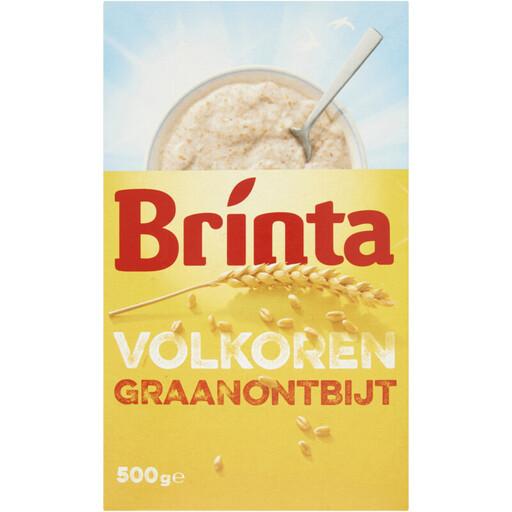 Image unavailable
Worth considering if you’d like to prepare a warm cereal breakfast instead of muesli. This pack contains 500 g, and the product is made with wholegrain wheat. If your child has allergies, check the current packaging, and assess the texture after preparation before serving.
 Image unavailable
Oatmeal to consider if you’d prefer a prepared breakfast to loose muesli. The pack contains 600 g. Check the label for details such as salt content and allergen information, and assess the texture after preparing the oats.
Yes. The Voedingscentrum recommends muesli and other wholegrain breakfast cereals with no added sugar or salt as an alternative to bread. Also check that the ingredients and texture are suitable for your child.
The Voedingscentrum advises against giving whole nuts or peanuts to children under 4 because of the risk of choking. Read the ingredients and check the size and shape of the pieces before serving the muesli.
No. ‘Wholegrain’ doesn’t mean gluten-free: muesli may contain wheat or barley, for example. If your child follows a gluten-free diet, check the current ingredients and allergen information, and look for a gluten-free label on the specific product.
Check the allergen information on the packaging and ask about the rules at the childcare setting or school. Also make sure the muesli’s texture is suitable for your child and for the way breakfast is eaten there.