
Choose your own level of sweetness
You want a sweet breakfast, but would rather add the flavour yourself with fruit than choose a muesli with sources of added sugar.


For a sweet breakfast, start by choosing a wholegrain muesli whose ingredients and nutritional values match the level of sweetness you’re looking for, rather than relying on the front of the pack. With a plain variety, you can add your own fruit; with fruit, nut and crunchy varieties, pay extra attention to total sugars, sources of added sugar and allergens. Crunchy doesn’t automatically mean sugar has been added, so check the exact variety.
You want a sweet breakfast, but would rather add the flavour yourself with fruit than choose a muesli with sources of added sugar.
You’re looking for a wholegrain base and comparing fibre per 100 g, even if a simpler muesli has a milder flavour.
You prefer a crunchy texture or a mix with nuts and seeds. In that case, check the ingredients list, nutritional values and allergens for the variety you choose.
First, decide what matters most to you in a wholegrain muesli for a sweet breakfast: limiting sources of added sugar, comparing the grain base and fibre, or choosing a particular texture.
| What to look for | What to check before buying | Who it matters to |
|---|---|---|
| Sweetness and sources of sugar | Check the ingredients list for things like sugar, honey and syrup. Compare total sugars per 100 g and any information about added sugars. | If I’d rather choose my own level of sweetness with fruit, I want to know what has already been added to the muesli. For around 39% of consumers, checking for sources of added sugar is a top priority. |
| Wholegrain cereals and fibre | See which cereals make up the base and compare fibre per 100 g. Don’t compare a per-portion value with a per-100 g value. | I’m mainly looking for a wholegrain cereal base and want to compare the fibre content of different varieties. Around 38% of consumers prioritise this. |
| Crunch, nuts and seeds | Check the types of nuts and the allergen information. For crunchy varieties, also compare sugars, fat and energy per 100 g. | The texture of nuts, seeds or toasted flakes matters most to me, as long as the ingredients suit my needs. This is the main priority for around 23% of consumers. |
Wholegrain describes the cereal, not all the other ingredients. Voedingscentrum points out that sugar or honey, for example, may be added to crunchy muesli and cruesli.
Read the ingredients list for the exact variety and compare the nutritional information per 100 g.
Raisins and other dried fruit can contribute to the total sugar content, even when a muesli is sold as having no added sugars.
Check the ‘sugars’ line in the nutrition table as well as the ingredients that give it its sweet flavour.
A muesli may contain different types of nuts and cereals containing gluten. A warning about possible cross-contamination may also be important if you have an allergy.
Before eating, check the allergen information on the exact pack, including any ‘may contain’ statement.
A product’s composition can change. That makes the packaging especially important if you’re checking ingredients because of an allergy or a specific dietary choice.
Compare products beforehand, but check the label again when you buy or receive the product.
These brands offer a range of breakfast options. Always compare the exact variety, as ingredients and nutritional values can differ within the same product range.
Albert Heijn offers plain, nut and fruit muesli, as well as a crunchy wholegrain variety.
Crunchy cereal mixes for anyone looking for a toasted texture.
Brinta Wholegrain Cereal Breakfast is a base for hot porridge if you prefer a soft, warm breakfast to individual muesli flakes.
Golden Bridge Wholegrain Muesli is a muesli range made with cereal flakes and raisins.
Lidl lists a 300 g ‘7-grain breakfast with wholegrains’. This isn’t necessarily the same type of product as muesli.
These products mainly include crunchy wholegrain varieties with fruit, nuts, cocoa or a plain flavour. For a sweet breakfast, compare the flavour you want with the ingredients and allergens listed on the pack.
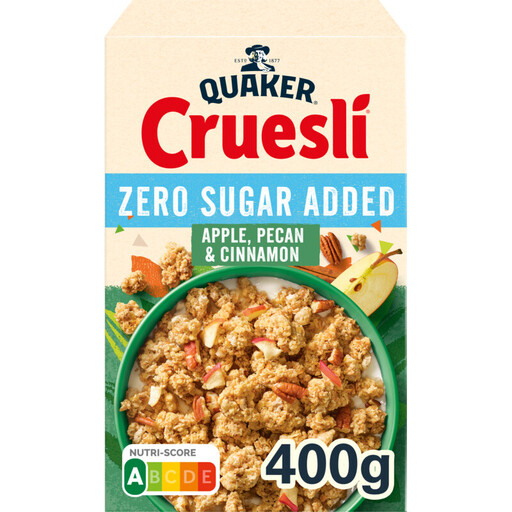 Image unavailable
A crunchy option if you like apple, pecan and cinnamon in your breakfast. If you have a nut allergy, check the ingredients and any ‘may contain’ statement on the label. Also read the nutritional information rather than relying on the product name.
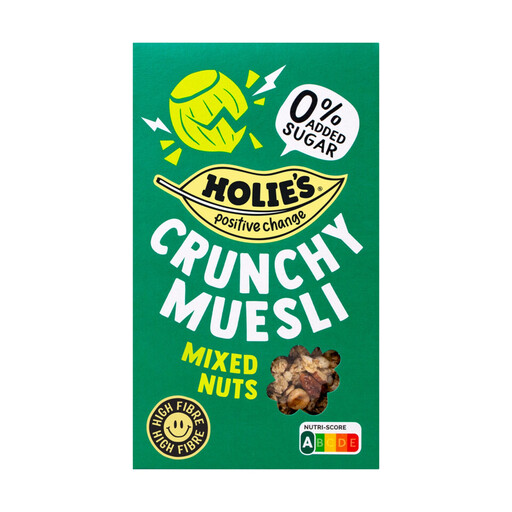 Image unavailable
For anyone looking for crunchy muesli with mixed nuts. If you have allergies, check which nuts and cereals are listed on the pack, and look out for any warnings about other allergens.
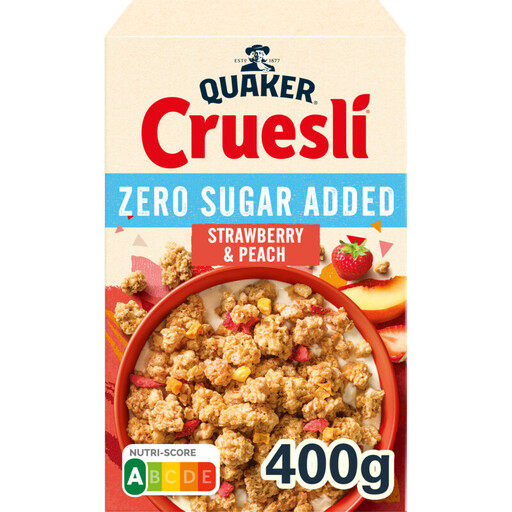 Image unavailable
A crunchy fruit variety if strawberry and peach suit your breakfast better than nuts. Check the amount of fruit in the ingredients list and the total sugars in the nutrition table; the product name alone doesn’t tell you enough.
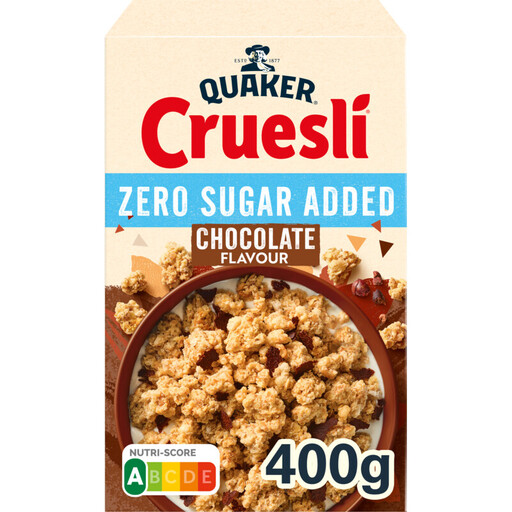 Image unavailable
For anyone looking for a cocoa flavour in a crunchy breakfast. As well as the name, check the ingredients and nutritional information for this variety. If you have allergies, also check for milk, cereals and nuts.
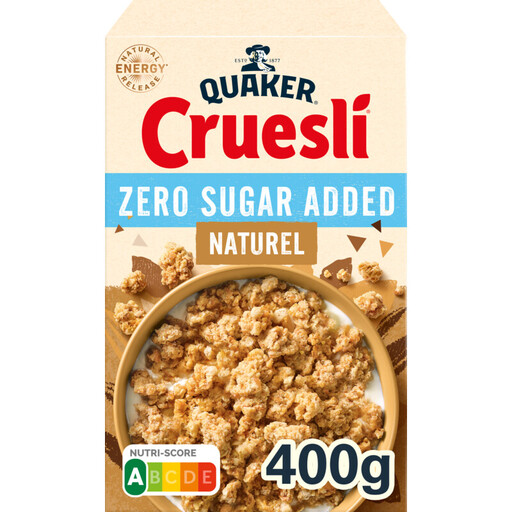 Image unavailable
A plain, crunchy base if you’d like to add your own fruit for a sweeter bowl. Compare its ingredients and nutritional values with those of regular plain muesli: crunchy cruesli and loose muesli flakes aren’t the same product.
Check which wholegrain cereals are listed in the ingredients and compare fibre and sugars per 100 g. Then see whether the sweetness comes from dried fruit, for example, or whether sugar, honey or syrup has also been added. Voedingscentrum recommends checking breakfast cereals for added salt and sugar.
No. Wholegrain and added sugar are separate things. Albert Heijn’s organic crunchy four-nut muesli lists both wholegrain cereals and glucose syrup and sugar; other crunchy varieties may have different ingredients. So always check the exact pack.
Only choose it after checking the allergen information on the exact pack. Nut varieties may contain different types of nuts, and muesli may also contain cereals with gluten. Check for any ‘may contain’ statement too.
Follow the storage instructions on the pack and seal it securely after use. For the AH varieties described, the advice is to store the muesli in a cool, dark and dry place.