
Families planning their food shop
If several members of your family eat muesli, the pack size will affect how often you need to buy more. Compare the pack size with how much you get through.


For a large family, start by choosing a muesli that explicitly lists wholegrain cereals in the ingredients. Then check that the pack size suits how much you get through. Plain muesli is different from a crunchy variety: with the latter, check the added ingredients too, and always check the current label for allergens.
If several members of your family eat muesli, the pack size will affect how often you need to buy more. Compare the pack size with how much you get through.
If you want to serve muesli with milk or yoghurt, start by checking which cereals are listed, then compare the nutritional information per 100 g. The Netherlands Nutrition Centre also recommends checking the amount of added salt and sugar in breakfast cereals.
If an allergen is relevant to anyone at the table, check the current label for the specific variety you choose. Look at both the ingredients and any statement about possible traces.
Start by checking the wholegrain ingredients and whether the muesli is suitable for everyone who will be eating it. Then compare the nutritional information, the texture you prefer and the pack size.
| What to consider | What to check when buying | Who is this important for? |
|---|---|---|
| Family-sized supply | Compare the weight in grams with how much muesli your family uses and how often you want to restock. | If several people eat from the same pack every day, I don’t want to have to buy a new one all the time. Having enough in the cupboard is the top priority for around 36% of consumers. |
| Wholegrain content and nutritional information | Look for cereals explicitly described as wholegrain in the ingredients list, and compare fibre, sugars and salt per 100 g. | I want to see which cereals the muesli contains and how its nutritional values compare with other varieties. Around 29% of consumers say this comparison is their top priority. |
| Allergens | Check both the ingredients and any statement about possible traces of relevant allergens on the current packaging. | If not everyone at the table can eat the same ingredients, you need to choose a pack for the family carefully. Suitability for everyone eating it is the top priority for around 21% of consumers. |
| Flavour and texture | Choose between loose muesli and a crunchy variety; if you’re considering one with fruit, nuts or cocoa, check the ingredients too. | If several family members eat from the same pack, I want to choose a flavour and texture they’ll enjoy. Around 14% of consumers put this preference ahead of the other considerations. |
A large pack isn’t automatically the right wholegrain muesli for everyone at the table. A smaller pack may simply mean you need to restock more often.
As well as the pack size, check the ingredients and allergens, and choose a number of packs that suits how much your family uses.
Crunchy cereal mixes can contain ingredients such as honey, syrup or oil as well as wholegrains. The name alone doesn’t tell you how much sugar, fat or fibre the product contains per 100 g.
Read the ingredients list and compare the nutritional information per 100 g before choosing plain muesli or a crunchy variety.
Ingredients and statements about possible traces vary between products. That means the product category alone isn’t a reliable basis for choosing if someone has a relevant allergy.
For every relevant allergen, check the ingredients and any ‘may contain’ statement on the pack you’re buying.
Jumbo offers, among other options, organic wholegrain muesli with raisins and a variety with fruit and nuts, both in 500 g packs.
Albert Heijn offers, among other options, an organic crunchy wholegrain muesli with four types of nuts.
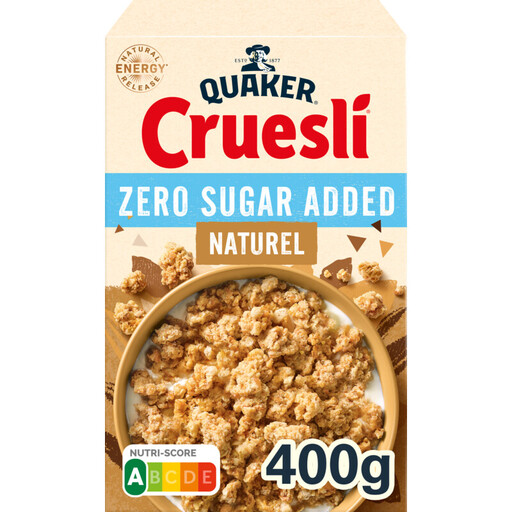
Quaker Cruesli includes crunchy cereal mixes such as Zero Sugar Added Naturel.
ALDI has featured Golden Bridge Wholegrain Muesli in a 1 kg pack.
Lidl describes a policy of offering wholegrain alternatives in relevant product categories.
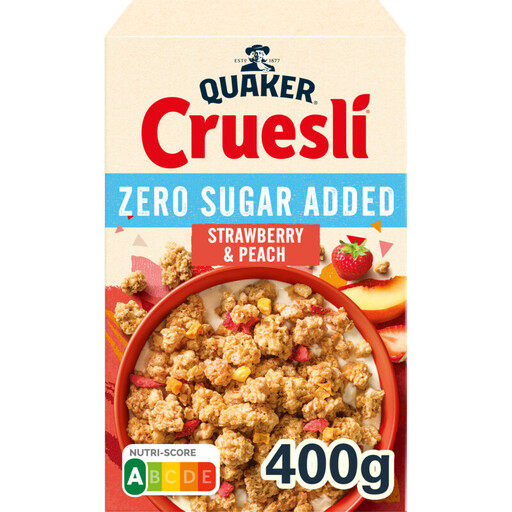
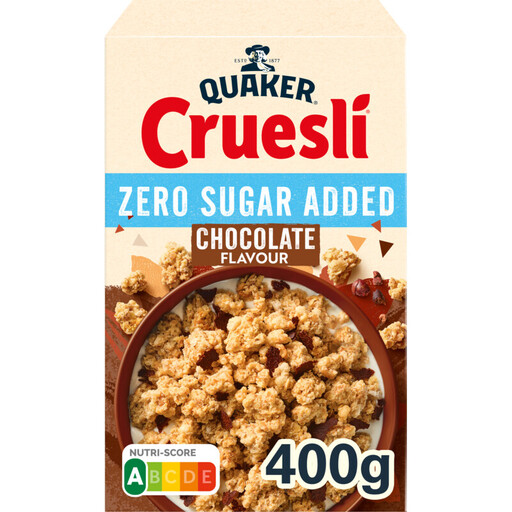
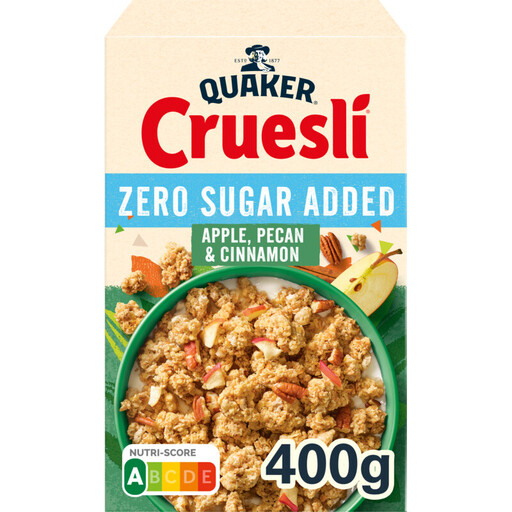
These Joybuy products are 400 g varieties of Quaker Cruesli for anyone considering a crunchy cereal mix. When buying for your family, compare the flavours, ingredients and allergens; none of these packs is a generous family-sized supply on its own.
 No image available
For anyone looking for a plain crunchy Cruesli. The pack contains 400 g; check the ingredients and allergens on the packaging.
 No image available
For anyone looking for a crunchy variety with strawberry and peach flavour. For this 400 g pack, compare the nutritional information per 100 g too, and read the allergen label.
 No image available
For anyone who wants a crunchy variety with a chocolate flavour. The pack contains 400 g; check the nutritional information and allergens for this Choco variety separately.
 No image available
For anyone looking for a crunchy mix with apple, pecan and cinnamon. This variety contains 400 g; pay particular attention to the nut information if allergens are relevant to your family.
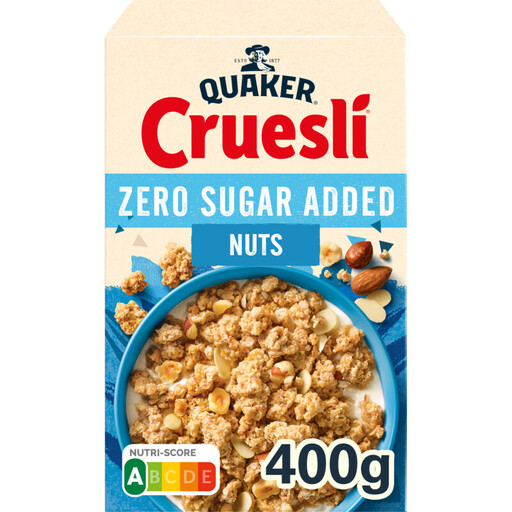 No image available
For anyone considering a crunchy nut variety. The pack contains 400 g; before buying it for the family, check which nuts and other allergens are listed on the packaging.
Look in the ingredients list for explicit descriptions such as wholegrain oat, wheat, barley or rye flakes. Also compare the nutritional information per 100 g; the product name or image won’t show you the full ingredients.
Not necessarily: dried fruit can contain naturally occurring sugars. Also check whether sugar, honey or syrup has been added as an ingredient, and look at the total sugars per 100 g.
Read the allergen information on the current packaging for the specific variety, including any ‘may contain’ statement. The Netherlands Food and Consumer Product Safety Authority explains that allergens must be clearly identified on labels of pre-packed foods; relevant allergens in muesli may include cereals containing gluten, nuts, peanuts, milk and soya.
Follow the storage instructions on each pack. The product information for the Jumbo varieties mentioned recommends storing them in a cool, dry, dark place; seal an opened pack tightly to protect the contents from moisture.