Choose plain wholegrain muesli if you’re looking for a simple base, or compare nut, seed and crunchy varieties if ingredients and texture matter more to you. If you need a gluten-free option, check the information on the specific pack. Whatever you choose, compare the wholegrain ingredients, fibre and added sugars per 100 g, the serving size and the allergens.
Who this choice is for
For anyone comparing wholegrains and fibre
You’re looking for a quick breakfast base and want to see on the label which wholegrains it contains and how much fibre the muesli provides per 100 g. Extra nuts or a crunchy texture aren’t your main priorities.
For anyone weighing up flavour and ingredients
You enjoy nuts, seeds or crunch, but also want to compare the sugars, energy and serving size of your chosen variety. These details can vary between plain and crunchy muesli.
For anyone choosing based on allergens
The ingredients and allergen information are what matter most to you. Even if a product is labelled gluten-free, you still need to check which other allergens are listed on the pack.
What to look for when buying
Decide what matters most for your weekday breakfast, then compare the nutritional information for the specific varieties on a like-for-like basis.
| What to consider |
What to check when buying |
Who it matters to |
| Wholegrains and fibre |
Check which grains are wholegrain and compare the fibre per 100 g. Albert Heijn lists 9.5 g of fibre per 100 g for its plain wholegrain muesli. |
When I make a simple breakfast bowl, I mainly want to know which grains it contains and how much fibre the muesli provides. Around 33% of consumers are said to prioritise wholegrains and fibre. |
| Sugars and crunchy flavour |
Compare the ingredients and added sugars per 100 g, where listed separately. Albert Heijn lists 0 g per 100 g for its plain variety and 8.4 g per 100 g for its organic crunchy four-nut variety. |
I like a bit of crunch, but I’ll check the sugars and my serving size before deciding whether that variety is right for my breakfast. For around 27% of consumers, this would be the main consideration. |
| Allergens and gluten-free labelling |
Check the ingredients, allergen information and, if needed, the gluten-free labelling on the exact pack you’re buying. |
If I need to avoid certain ingredients, the front of the pack doesn’t give me enough information to choose. Allergens or gluten-free labelling would be the primary selection criterion for around 20% of consumers. |
| Serving size and texture |
Check the stated serving size and decide whether you want loose flakes, a nut mix or crunchy muesli. Only compare serving values when the quantities are the same. |
On weekdays, I want to be able to prepare breakfast quickly, in a serving size and texture that appeal to me. Around 20% of consumers are said to consider this their most important selection criterion. |
Common mistakes
-
Assuming all wholegrain muesli has the same sugar content
Wholegrain tells you about the grains used, not necessarily the other ingredients. Albert Heijn lists 0 g of added sugars per 100 g for its plain wholegrain variety and 8.4 g per 100 g for its organic crunchy four-nut variety.
Read the ingredients and, where listed, compare the added sugars in the exact varieties you’re choosing between.
-
Checking only the front of the pack for wholegrain or gluten-free claims
The muesli varieties reviewed contain a range of grains, nuts and soya, or state that other allergens may be present. A gluten-free claim doesn’t mean a product is free from all other allergens.
Check the current ingredients and allergen information on the pack, even if the product name seems to match what you’re looking for.
-
Comparing different serving sizes directly
The Albert Heijn mueslis reviewed use a 40 g serving; Quaker Cruesli 4 Nuts lists a 45 g serving. This means the nutritional values per serving don’t refer to the same quantity of muesli.
Compare the values per 100 g first, then consider what the nutritional information means for the amount you actually eat.
-
Treating an old product page as the definitive label
Albert Heijn notes that product information can change. When it comes to ingredients and allergens, what matters is the information on the pack of the variety you choose.
Use online information to narrow down your options, then check the label and best-before date again when you buy.
Brands to help you compare
These examples show how specific breakfast products can differ. A brand name alone won’t tell you which ingredients or nutritional values a variety has.
Albert Heijn
The own-brand range includes plain wholegrain muesli, a nut and seed variety, crunchy wholegrain muesli and a separate gluten-free muesli.
- According to Albert Heijn’s product pages, its plain wholegrain muesli contains 9.5 g of fibre and 0 g of added sugars per 100 g.
- Its organic crunchy wholegrain muesli with four nuts lists 8.4 g of added sugars per 100 g. Check the details for the variety you’re buying.
Jumbo
Jumbo’s organic wholegrain muesli with raisins combines several wholegrain flakes with raisins.
- For this variety, Jumbo lists wholegrain wheat, oat, barley and rye flakes, and 8 g of fibre per 100 g.
- The nutritional information lists 20 g of sugars per 100 g. Check the allergens on the pack for this grain mix too.
Brinta
Brinta Wholegrain Cereal Breakfast is a porridge-style breakfast, not a muesli made with loose flakes, nuts or fruit.
- The product information at Jumbo lists wholegrain wheat flour and salt as ingredients in this variety.
- Don’t choose this as a muesli substitute if you want a similar texture: it’s prepared differently and contains wheat.
Quaker Cruesli
Quaker Cruesli 4 Nuts is a crunchy grain mix for anyone looking for a toasted texture and nuts.
- Albert Heijn’s product information lists wholegrain oats, wholegrain wheat and four types of nuts for this specific variety.
- The ingredients also include glucose syrup, oil and sugar. The nutritional information lists 9.5 g of sugars per 45 g serving.
Crunchy muesli at Joybuy
These crunchy muesli varieties are for anyone who prioritises texture or a particular flavour for a weekday breakfast. Before you choose, compare the nutritional and allergen information for each product; English wording in product names is not a substitute for checking the current label.
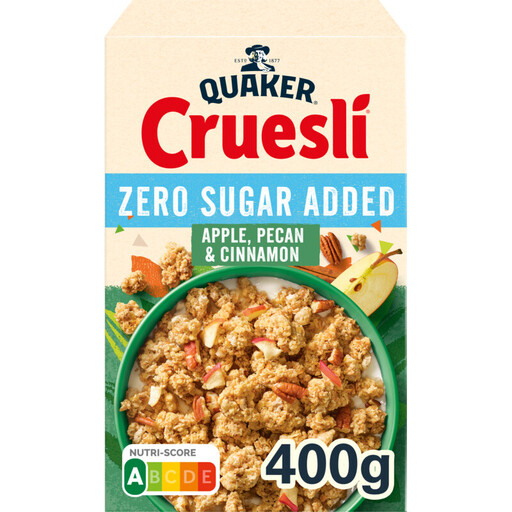 Image unavailable
Quaker Cruesli Zero Sugar Added Apple, Pecan and Cinnamon 400 g
Worth considering if you’re looking for crunchy muesli with apple, pecan and cinnamon. The pack contains 400 g; check the nutritional and allergen information on the label, especially if nuts or grains are a concern for you.
View at Joybuy
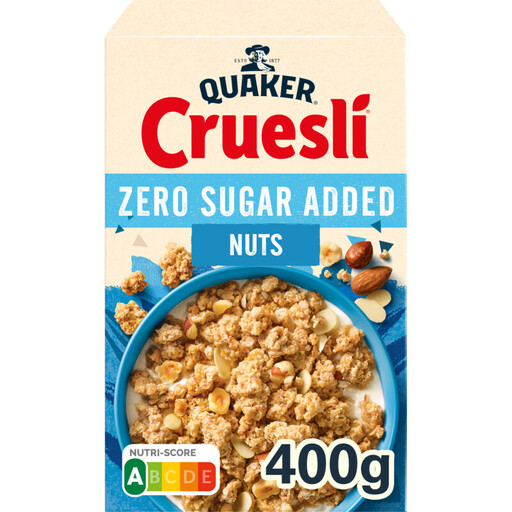 Image unavailable
Quaker Cruesli Nuts Zero Sugar 400 g
For anyone who wants to compare a crunchy nut variety with muesli that doesn’t contain nuts. The pack contains 400 g; check the allergen information on the pack you choose before deciding.
View at Joybuy
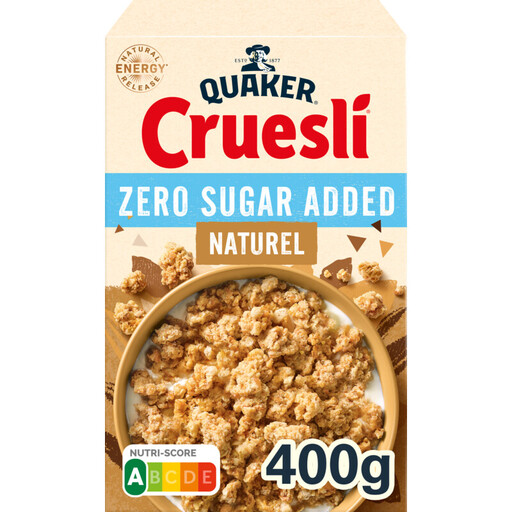 Image unavailable
Quaker Zs Cruesli Natural 400 g
A plain variety to consider if you want a crunchy texture but aren’t looking for fruit or nut flavour in the product name. The pack contains 400 g; check the ingredients and allergens on the label.
View at Joybuy
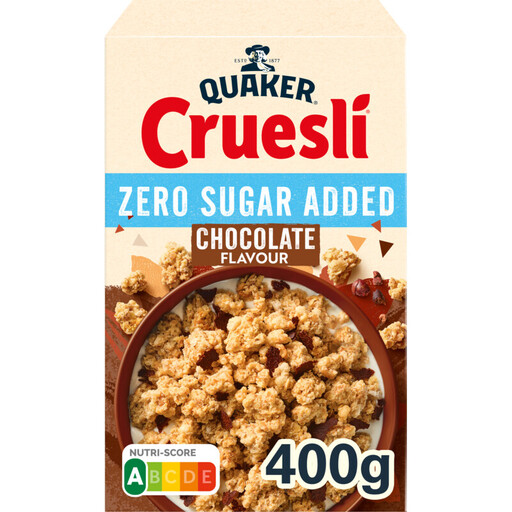 Image unavailable
Quaker Cruesli Choco Zero Sugar 400 g
For anyone considering crunchy muesli with a chocolate flavour. The pack contains 400 g. If you’re comparing fibre, check both the value and the unit on the pack, and look at the allergen information too.
View at Joybuy
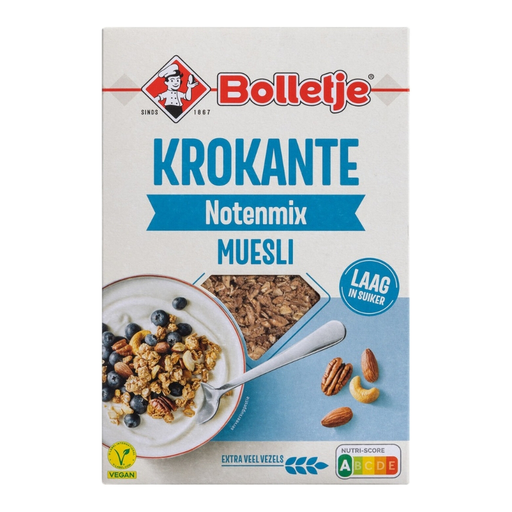 Image unavailable
Bolletje Crunchy Muesli Nut Mix 375 g
A crunchy nut mix to compare with other muesli varieties. The pack contains 375 g; check the ingredients, nutritional information and allergens on the label if they’re important to your choice.
View at Joybuy
Frequently asked questions
Is wholegrain on its own enough to help me choose muesli?
No. As well as the wholegrain ingredients, check the fibre, sugars, allergens and serving size for the specific variety. For example, Albert Heijn lists different amounts of added sugars per 100 g for its plain wholegrain muesli and its organic crunchy wholegrain muesli with four nuts.
When should I pay extra attention to grains and nuts in muesli?
If you need to avoid certain ingredients, the allergen information on the specific pack is what matters. The Netherlands Food and Consumer Product Safety Authority highlights the declaration of allergens in the ingredients list; also check for any warnings about other allergens.
What should I look for if I need gluten-free muesli?
Choose a product whose specific pack is labelled gluten-free, and check the other ingredients and allergens too. For example, AH Gluten-Free Muesli lists oats and soya and warns that it may contain nuts; the gluten-free claim doesn’t replace these checks.
How should I store muesli for weekday breakfasts?
Follow the storage advice and best-before date on the pack. The product information reviewed advises sealing the pack tightly after use and storing the muesli in a dry place.


